

Paragraph 1: The Blunt Defense of a Tough Decision
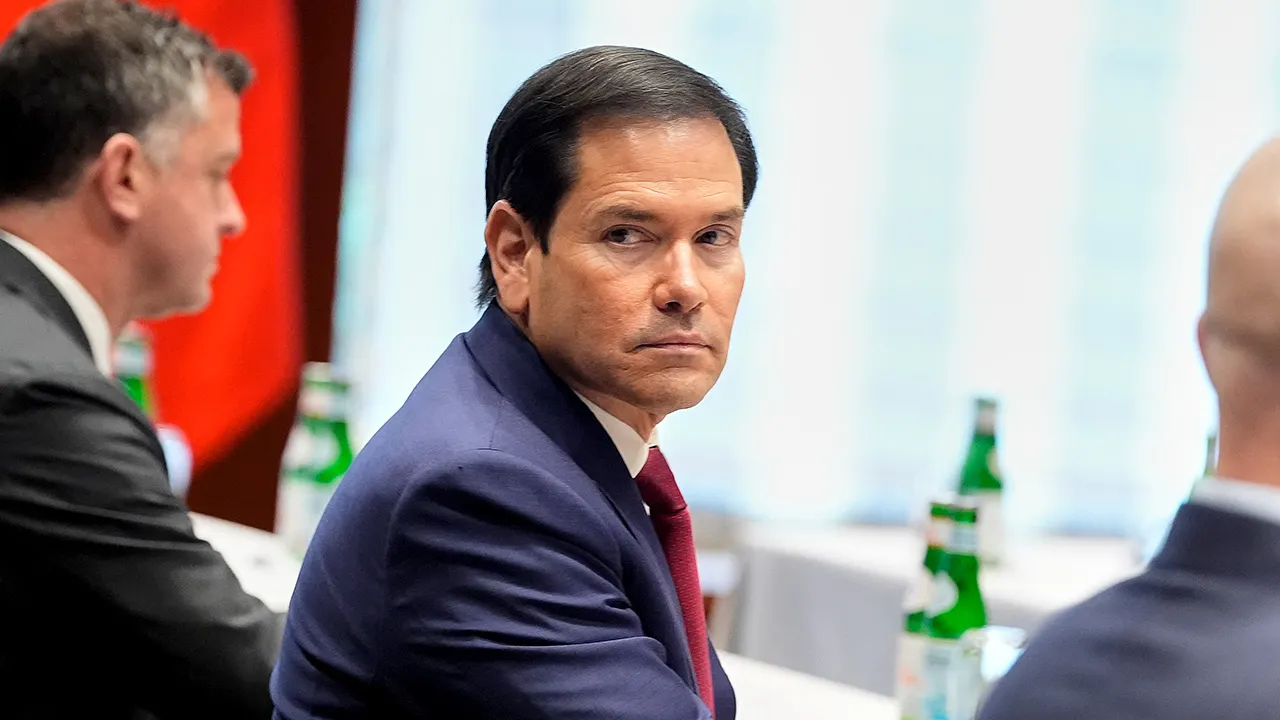
Imagine you’re sitting in a press briefing room, the air thick with tension, as Secretary of State Marco Rubio steps up to the podium. This isn’t just any political show; it’s a man pouring out his heart about a world on the brink. Rubio, with that sharp, no-nonsense vibe he’s known for, doesn’t mince words. He calls the Iranian regime “lunatics”—religious fanatic lunatics, to be precise. Picture it: these are the folks running Iran, obsessed with power and weapons that could end lives in a flash. As a father and former senator, Rubio speaks from a place of real concern, like a dad warning his kids about a shady character lurking in the neighborhood. He’s defending President Donald Trump’s strikes on Iran, painting them as a necessary slap down on a bad actor before things get even worse. The strikes hit Iran’s military guts—missiles, drones, even their navy ships—because, Rubio argues, these are the shields hiding their nuclear ambitions. I mean, think about it: Iran, with nuclear bombs? That’s like giving a loaded gun to someone who’s already proven they don’t play by the rules. And Rubio’s there, explaining it in “simple English” as he says, because he knows the American people deserve straight talk. No jargon, no fluff—just the cold truth that this administration isn’t waiting for disaster to strike. It’s a moment that feels deeply human, Rubio channeling the frustration we all feel when we see bullies pushing their luck.
Paragraph 2: Why Now? Iran’s Weakest Moment
Diving deeper into Rubio’s thoughts, it’s clear he’s not just ranting; he’s piecing together a strategy rooted in timing and reality. Iran, he says, is chasing nuclear weapons like a gambler doubling down on a bad hand. They’ve got this wild ambition, fueled by fanatics who think destiny—or Allah—gives them the right to threaten others. Rubio vividly describes them as being at their “weakest they’ve ever been,” like a boxer who’s been pummeled in the ring and is barely standing. Now’s the time to press the advantage, he urges, before they rebuild their strength. Imagine being Rubio, poring over intelligence reports late into the night, weighing the lives at stake. He’s thinking of families back home—his own, yours, mine—who could suffer if Iran goes nuclear. The strikes are Trump’s call to dismantle Iran’s toys: missile launchers that could rain hell on cities, drones buzzing like angry wasps, and naval assets that threaten global shipping lanes. It’s not about regime change, Rubio emphasizes—that’s not the goal. No, this is surgical, precise, like a doctor removing a tumor before it spreads. You can almost feel the weight on his shoulders as he explains why hitting Iran when they’re down is smarter than letting them get stronger. He’s humanizing the geopolitics here, turning abstract threats into personal stakes: every delay is a gamble with innocent lives.
Paragraph 3: The Price Tag and Long-Term Safety
Rubio doesn’t sugarcoat it; he knows these strikes come with a cost. “There will be a price to pay,” he admits, his voice steady but laced with that dad-like pragmatism, like telling your kid that chores are worth the allowance. Wars aren’t free—politically, financially, or in blood. Yet, Rubio frames it as a bargain compared to the alternative: an Iran armed with nukes. Picture a world where Tehran, with missiles and bombs, dictates terms to everyone, including the U.S. That’s a nightmare he’d rather avoid. He’s drawing from history, from the Cold War chill where superpowers circled each other with nuclear arsenals, but Iran isn’t a superpower—not yet. By targeting their military capabilities, Trump ensures they can’t hide behind drones or ships to build their atomic arsenal in secret. Rubio’s rhetoric gets sharper as he paints the picture: a safer planet where radical clerics—those same lunatics—can’t access weapons that could cause unimaginable horror. There’s a human element here, too; Rubio’s thinking of the troops, the diplomats, the civilians who might otherwise face fallout. It’s not about glory; it’s about prevention, like vaccinating a community before disease spreads. And yeah, it might ruffle some feathers, but Rubio’s got that fire in his eyes, insisting this is far cheaper in lives and freedom than appeasing dictators. The conversation feels intimate, like a coach rallying the team for the big game.
Paragraph 4: Pushing Back on Israel-Dictated Timing
But Rubio’s not just defending the actions; he’s clapping back at critics who claim Israel pulled the strings, forcing America’s hand. One reporter tosses out the accusation—that the U.S. struck because Israel was on the verge of launching its own attack—and Rubio’s face hardens. “Your statement is false,” he snaps, his tone cutting like a rebuke a teacher might give a student spreading rumors. He’s furious at the implication that the U.S. was dragged into this by allies. No, Rubio explains, the administration knew Israel was gearing up for action, perhaps out of sheer survival instinct. Can you imagine the meetings? Tense rooms where intel officers lay out scenarios: Israeli jets humming to life, Tehran retaliating madly against American forces stationed in the region. Rubio recounts it vividly, like a thriller plot: if the U.S. hadn’t struck first, American soldiers would have been caught in the crossfire, higher casualties piling up like unpaid debts. It’s personal for Rubio, a man who’s navigated volatile foreign policy waters before, defending allies without losing U.S. sovereignty. He humanizes it by emphasizing free will—Israel was going it alone if needed, but coordination was chosen for everyone’s sake. Rubio’s pushing back more than defending; he’s protecting Trump’s legacy from whispers of puppetry, making sure the narrative stays that this was American leadership at its boldest.
Paragraph 5: Trump’s Preemptive Choice and Confirmation
Zooming in, Rubio lays it out: the buck stops with President Trump. “The president determined we were not going to get hit first,” he says, voice resolute, like a captain charting a course through stormy seas. If you’re told, point-blank, that hesitating means more American deaths—troops maimed, families grieving—then you strike first. It’s a human calculation, raw and real: protect your own before the enemy escalates. Rubio confirms what transpired the day before: intelligence flagged Israel’s readiness to act, even without U.S. backing. “We knew that there was going to be an Israeli action,” he recalls, painting a scene of urgent briefings where world leaders weigh lives against logic. Speaker Mike Johnson echoes this, calling Israel “determined” and the coordinated strikes a necessity after classified sessions. Johnson, a Louisiana Republican with that earnest Southern drawl, stands firm: “I am convinced that they did the right thing.” You can sense the camaraderie here, Rubio nodding along, defending a chain of command that prioritized safety over politicking. It’s not blind loyalty; it’s shared humanity—leaders grappling with the moral math of war. Rubio personifies it, his words bridging policy and empathy: Trump isn’t gambling recklessly; he’s safeguarding futures, one decisive move at a time. The human touch shines through in how Rubio frames it not as cold strategy, but as a father’s instinct to shield the vulnerable.
Paragraph 6: Critics, Praises, and the Bigger Picture
Yet, not everyone’s on board. Some Democrats, fresh from those same briefings, voice doubts—a chorus of skepticism that Rubio brushes off with his usual edge. Senator Mark Warner questions the “imminent threat” to the U.S., arguing it felt like action primarily for Israel’s sake. Chris Murphy admits confusion: “I have no idea what the objective is.” Rubio’s response? A sigh and a shrug, predicting critics will emerge claiming they “didn’t hear anything,” even as he insists on full congressional transparency. It’s frustrating for him, like dealing with know-it-alls who miss the forest for the trees. On the flip side, there’s Sen. John Kennedy—wait, the title mentions Kennedy praising Trump’s resolve, so let’s lean into that—Kennedy steps up, lauding the boldness: “The world is safer today because of what he’s done.” It’s a spotlight on bipartisan nods, reminding us that even in division, some truths unite. The mission targets missiles and drones, not nuclear sites, underscoring precision over escalation. Rubio’s final impassioned plea: “The world will be a safer place when these radical clerics no longer have access to these weapons.” Humanizing this narrative means acknowledging the fear—the what-ifs that keep leaders up at night. Rubio’s story is one of conviction, crafted from years of experience, urging us to see beyond headlines to the human cost of inaction. It’s a call to rally, to support protections that ensure our world doesn’t tip into chaos.