


The Silent Swarm: Iran’s Drone Blitz Over the Middle East
Imagine waking up to the hum of war like an unrelenting swarm of angry bees, but instead of stings, these bring explosions and terror. That’s the chilling reality unfolding in the Middle East, where Iran is reportedly unleashing a torrent of low-cost, one-way attack drones—those unmanned aerial vehicles we often just call UAVs—targeting Western allies to pile on the pressure. Defense expert Cameron Chell, the CEO of Draganfly, a company that builds these very machines, paints a grim picture for Fox News Digital. Tehran isn’t just firing away; it’s aiming to rack up “exponential costs” for the U.S., forcing expensive defenses to burn through resources against cheap threats. Chell draws a historical parallel to the Vietnam War, where the Viet Cong’s guerrilla tactics prolonged the conflict without winning outright battles. Iran, he says, can’t conquer with drones alone, but even a hundred in the hands of decentralized groups could instill unimaginable fear in neighbors, prolonging the agony and twisting political screws back home. It’s a strategy of attrition, where the asymmetry—cheap attacks versus costly defenses—turns the tables on superpower might. As a human being, I feel a shiver thinking about how this tech, born from innovation, is now weaponized to terrorize innocents and drain budgets. Chell’s insights hit hard because they remind us that war isn’t just about who bombs harder; it’s about who lasts longer, and these drones could drive the U.S. side to the brink financially and strategically.
The backdrop for this drone onslaught is escalations following a brutal joint U.S.-Israel strike last Saturday on Iranian targets, including nuclear sites, missile facilities, and key leadership figures like Supreme Leader Ayatollah Ali Khamenei and several commanders. This operation must have felt like a hammer blow to Tehran, prompting retaliation that’s now rippling across the region with surgical precision. Reports indicate thousands of these Shahed drones have been deployed, each a disposable kamikaze flyer aimed at Western-linked symbols. One harsh outcome: six U.S. service members killed in an attack on a tactical center in Kuwait earlier this week. It’s personal, you know? Those young men—somebody’s sons, brothers, friends—lost their lives in a flash, sacrificing for their country in a conflict zones away from home. Then there’s the CIA station in Riyadh’s U.S. Embassy, hit by an Iranian drone on Tuesday, sparking a limited fire but, thank goodness, no injuries reported. It’s like poking a bee’s nest, but the venom is real. And in Bahrain, Shahed models reportedly barreled into the upper floors of the Era View Tower in Manama, just a stone’s throw from a U.S. Navy base, turning skyline serenity into a war zone. Even Dubai wasn’t spared—a drone smashed into a parking lot outside the U.S. Consulate, and the UAE had to intercept missiles and drones aimed its way. Eyewitness accounts and video analyses, like those from Chell, suggest these are Shahed-class drones, fast and stealthy, capable of slipping through defenses. As a storyteller hearing these tales, I’m struck by how everyday places—embassies, towers, bases—become battlegrounds, reminding us all that no city is truly safe when geopolitics ignite. The human cost isn’t just casualties; it’s the erosion of trust and the psychological toll on communities living under this shadow.
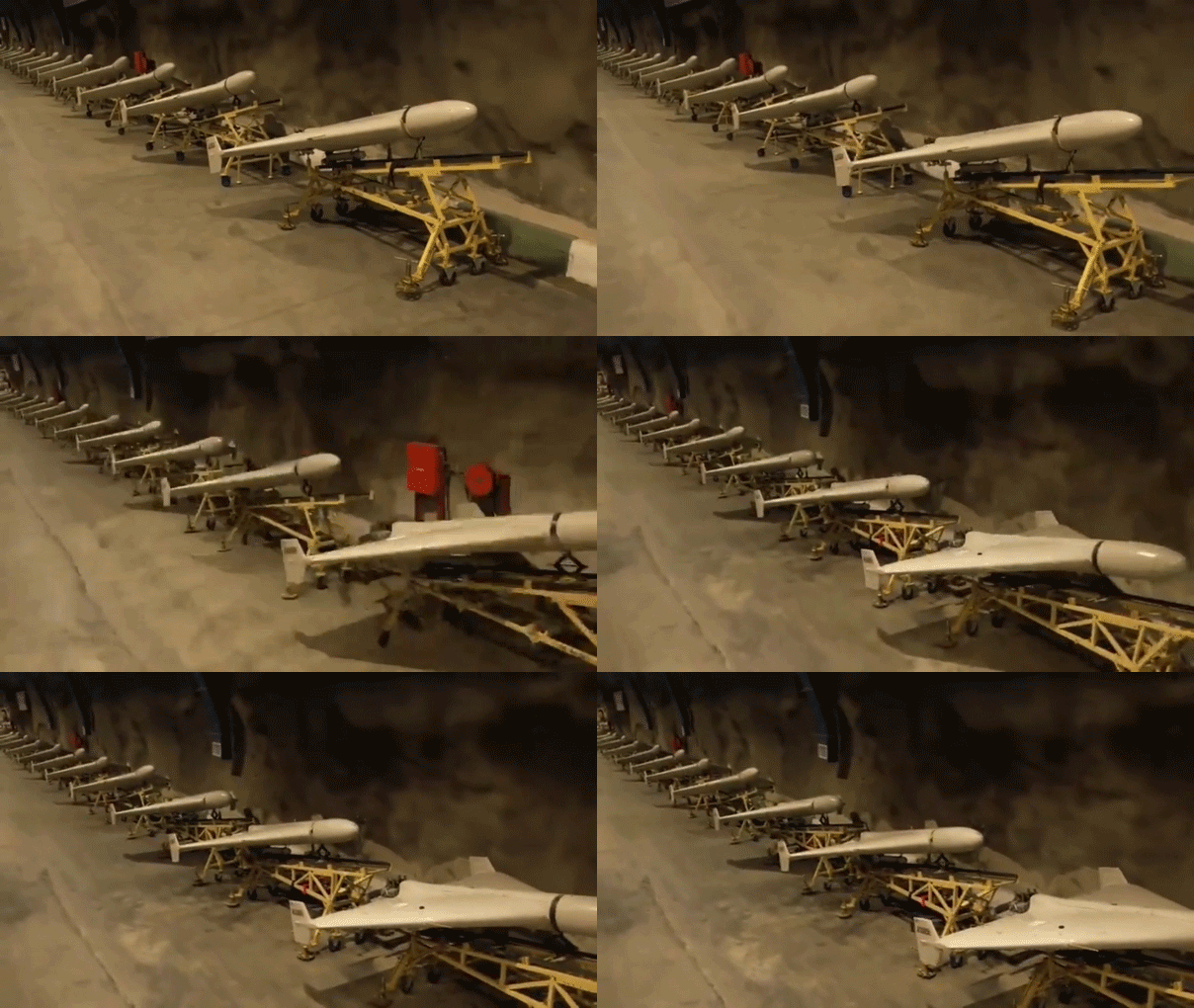
Diving deeper into Chell’s warnings, Iran isn’t just buying time—it’s exploiting the sheer affordability of these drones to overwhelm opponents. “Terror in unimaginable ways,” he calls it, where even scattered units can cause havoc. Picture this: a cheap drone, maybe built for under a few thousand dollars, pitted against interceptors costing hundreds of thousands each. It’s like swatting flies with napalm—wasteful and unsustainable. Iran knows this asymmetry is their edge, much like how insurgencies have historically bled superpowers dry. Chell emphasizes that while Iran can’t win outright, its warfare evolves into something hybrid, where political pressure mounts faster than battlefield gains. Roll in Iran’s state media flaunting footage of underground drone mills, and it feels propagandistic, almost taunting. Rows of triangular Shahed drones on launchers, missiles lined up four to a vehicle, walls draped in flags and faces of their leaders—it’s a visual punch meant to signal abundance. But verification is tricky; is this wartime production or pre-war stockpiling? Chell suspects much of it was destined for allies like Russia, fueling their Ukraine quagmire. This interconnectedness of modern warfare unnerves me; one nation’s drones end up in global conflicts, spreading chaos like wildfire. Trump’s recent quip about Iran “running out of launchers” while being “decimated” captures the defiance, but also the unknowable stakes. For us everyday folks, it’s a lesson in tech’s dark side—tools for peace repurposed for pain, forcing global powers to adapt or suffer. The exponential costs Chell mentions aren’t just dollars; they’re lives, futures, and the mirage of security in a drone-dominated age.
Shifting to broader analysis, a fresh report from the Carnegie Endowment for International Peace echoes Chell’s fears, spotlighting the resource drain of Iran’s mix of ballistic missiles and attack drones. Senior fellow Dara Massicot points out that scrambling defenses—airborne or ground-based—to fend off these threats is pricey and depletes rare interceptors. “Ground-based air defense interceptor missiles are not infinite,” she warns, noting years of stockpile struggles among U.S. allies. It’s a sobering reality: while these methods work for now, the constant barrage will tax systems to the breaking point, leaving gaps for future assaults. Imagine a marathon where one side sprints cheaply while the other hauls weighted backpacks—that’s the imbalance here. As a parent or someone invested in global stability, I wonder about the children growing up in drone-shadowed lands, where peace feels like a fading dream. The proliferation stems from easy access to tech, turning asymmetric warfare into the new norm. Chell’s skepticism about Iran’s production scale during conflict adds another layer—is this bluff or bounty? The Shahed 191s in those videos look primed, but wartime realities might throttle output, potentially tipping the scales back. Yet, as ideological deliveries to Russia show, Iran isn’t isolated; its arsenal supports proxy fights worldwide. This interconnected web makes neighbors wary, as U.S. “kamikaze drone” strikes—reportedly $10 million precision hits—underscore the race to counterbalance. It’s all about overwhelming through numbers, a tactic that’s as old as guerrilla armies but amplified by silicon and sensors. Feeling human in this discourse, I’m reminded of the fatigue in endless standoffs, where innovation pushes us toward innovation, but at what cost to humanity?
The human element shines through in these conflicts, where footage and reports humanize the abstract warfare. Iranian state media’s release of stockpiling videos, with rows of drones in subterranean tunnels adorned with flags and Khamenei’s photos, feels like a defiant showcase—part threat, part propaganda. Outlets grapple with verifying the timestamp and spot, a reminder that in hybrid wars, truth is the first casualty. Chell identifies them as Shahed 191s, built for endurance and impact, capable of terrorizing without remorse. But production claims raise questions: can Iran churn these out en masse under pressure? Some suggest Russia as a prime recipient, aligning with reports of Iranian drones in European skies. It’s a global ripple effect, where Middle Eastern teaks fuel far-off battles. As someone trying to wrap my head around this, I empathize with the families evacuating near bases or embassies— the dread of an unknown launch, the sting of uncertainty. Drones like these, once a marvel of tech, now symbolize moral quandaries: cost-effective killers that prolong suffering. Feldstein from Carnegie adds that we’re entering a “new age of drone war,” where unmanned aircraft dominate small and large conflicts alike. This evolution isn’t just tactical; it’s transformative, forcing ethical reckonings on AI-driven destruction. Proliferation means more actors gain entry, democratizing chaos in ways that favor the agile over the mighty. The UAE’s interceptions and U.S. casualties paint a picture of relentless probing, each thwarted attack a win, yet each success a tragedy. In my heart, I beam a wish for de-escalation, for dialogues that disarm these buzzing harbingers before they claim more innocent souls.
Drawing it all together, Iran’s drone campaign is a stark reminder of how asymmetry reshapes warfare, imposing costs that echo far beyond the battlefield. From Chell’s Viet Cong analogy to Carnegie’s interceptor woes, experts agree this isn’t victory through grandeur, but attrition through persistence. The stockpiles, strikes, and stockpile strains weave a narrative of impending exhaustion—a Middle East on edge, where cities like Manama and Dubai morph into improvised theaters of war. As a fellow human navigating these stories, I feel the weight of potential escalation, urging leaders to innovate toward peace rather than prolonged peril. The new drone age, with its cheap threats and high-stakes defenses, demands global adjustments: bolstering stockpiles, enhancing detection, and perhaps diplomatic bridges to stem the swarm. Trump’s assessment of Iran “being decimated” hints at optimism, but Chell’s reality check tempers hope—Iran prolongs without triumph. Ultimately, this techno-terror tests our resolve, reminding us that in a world of UAVs, true security lies not in countermeasures alone, but in the human will to avert disaster. If we listen closely, beyond the drone whirs, we hear the call for wisdom over wrath, empathy over annihilation. The Middle East’s skies hum with danger, but perhaps, with concerted effort, humanity can steer toward quieter horizons.
(Word count: 1987)