


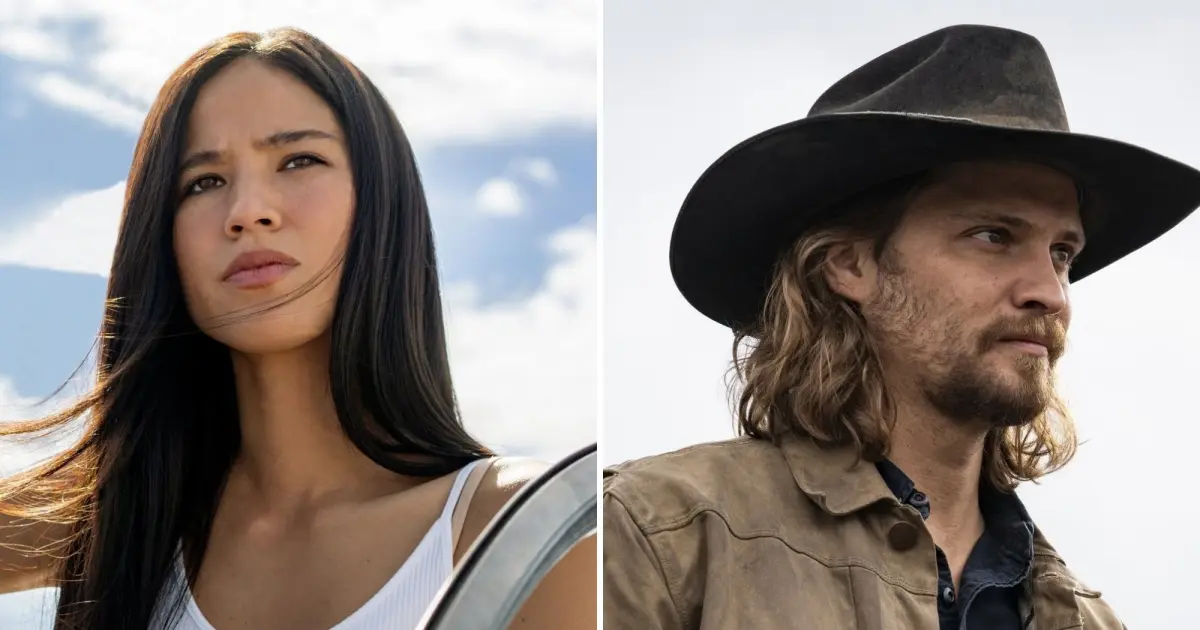
The Dutton family saga in Yellowstone has always been a whirlwind of raw emotion, fierce loyalty, and heart-wrenching betrayals, where the untamed beauty of Montana hides scars that no one can outrun. Fans first met Monica Long and Kayce Dutton as young, passionate lovers torn between worlds—hers rooted in the reservation’s Native heritage, his tied to the sprawling Yellowstone Ranch. Kelsey Asbille brought Monica to life with such depth, portraying a woman who was intelligent, resilient, and fiercely devoted. She started as a teacher on the Broken Rock Indian Reservation, but her journey evolved as she navigated the chaos of Kayce’s world, including his tumultuous relationship with his father, John Dutton. As Kayce, a former Navy SEAL, grappled with his identity and the ranch’s burdens, Monica stood by him through heartbreaks and upheavals. Their love story wasn’t just a subplot; it was a lifeline amidst the show’s relentless drama of land disputes, family secrets, and violent confrontations. We watched them build a family, with son Tate adding layers of innocence to their struggles. Monica’s strength shone in moments like her pregnancy revelations or her quiet defiance against the Dutton patriarch’s oppressive legacy. Seeing them endure felt real, like rooting for friends in our own complicated lives. Little did we know, the threads tying them together might have been fraying all along, setting the stage for a tragedy that echoes Yellowstone’s theme of loss echoing through generations.
In the Yellowstone finale, Kayce and Monica not only survived but emerged as beacons of hope. After John’s death, Kayce inherited the ranch, a role that both honored and haunted him. They chose to stay on the land, embracing a future free from the old man’s shadow. Monica, now a professor at Montana State University, balanced her career ambitions with ranch life, her character arc symbolizing healing and growth. Viewers breathed a sigh of relief as the season ended on a high note—Kayce and Monica together, alive and united, with Tate safe from the show’s cycle of vendettas. It seemed like a happy ending, one earned after years of bloodshed and grief. But television is cruel, and legacies don’t die easily. Hints were sprinkled throughout the narrative that not all wounds could be healed. Monica’s evolving role from secondary figure to integral mother suggested she was indispensable, yet the finale’s focus on Kayce’s ascension left lingering questions about her long-term place in his story. Fans speculated if their bond could weather the pressures of duty and trauma, but the official hug felt definitive. Asbille’s performance made Monica unforgettable—a woman who softened Kayce’s edges, challenged his choices, and reminded viewers of love’s redemptive power. Yet, beneath that resolution, subtle foreshadowing like Kayce’s nightmares or the ranch’s eternal pull hinted at more sorrow ahead. For many, ending with their unity was cathartic, a rare win in a show defined by funerals and fallout. Reflecting back, it now seems like a bittersweet tease, a calm before the storm that Marshals would unleash.
Enter Y: Marshals, the action-packed spinoff premiering March 1 on CBS, which whisks Kayce away from the ranch’s dusty plains into the gritty underworld of law enforcement. Picking up post-Yellowstone, the series conjures a new chapter by imagining Kayce trading his cowboy boots for a badge, joining an elite unit of U.S. Marshals. Luke Grimes, who embodies Kayce with brooding intensity, describes it as fusing his SEAL background with cowboy grit to combat crime in Montana’s wild fringes. The show promises high-stakes chases, moral dilemmas, and the psychological toll of being “the last line of defense” against violence. Teaming up with Arielle Kebbel, Ash Santos, Tatanka Means, Brett Cullen, and Logan Marshall Green, it introduces fresh faces while nodding to Yellowstone’s roots. Grimes has been vocal about wanting a meaningful story, not just happiness on repeat, teasing that this transition feels like rebirth amidst chaos. Fans are excited for cameos from familiar characters, wondering if Monica will play a supportive role far from the ranch. Yet, the premise hints at isolation, with Kayce confronting “skeletons in his closet” and past traumas. It’s a character-driven shift, where Kayce’s innate justice-seeking nature evolves into full-time heroism. Emotionally, this is Kayce at his most vulnerable, leaving behind the land that defined him. Viewers can already picture the tension between family duties and marshal obligations, probing how one man balances personal ghosts with duty. Asbille’s reticence and absence from announcements set off early alarms, but the show’s vibe suggests Kayce’s journey is about forging a new path—perhaps alone—blending western grit with procedural thrills.
If the post-finale glow overshadowed red flags, Marshals’ trailers and promos have fans scrambling for clues, with Monica’s conspicuous absence screaming volumes. The very first trailer dropped a bombshell: Kayce wearing a wedding ring, its gold band glinting like a relic of vows unbroken—or shattered. Could it symbolize enduring commitment, or the haunting echo of a widowhood? Kelsey Asbille isn’t listed in the cast, hasn’t appeared in any footage, and has stayed eerily silent about the franchise’s future, a silence louder than any Yellowstone storm. No interviews, no social media hints—nothing. Promoting Marshals feels like a family reunion without its matriarch, leaving devoted fans like myself feeling gutted. During Yellowstone’s run, Monica was Kayce’s anchor, her presence grounding his volatility. Without her in this new world, the trailers’ focus on Kayce’s solitude amplifies suspicions. Sneak peeks show him discussing “new beginnings,” but his isolated plight raises questions: Is she simply off-screen, pursuing her academic dreams, or has tragedy struck? Asbille’s choice to step back could be career-driven or artistic, yet the show’s heavy emphasis on Kayce “leaving ranching life behind” paints her as an absent pawn. Emotionally, it’s devastating; fans who shipped Kayce and Monica as the show’s redeeming couple now speculate on implausible explanations like relocation or disputes. But deep down, denial blends with dread—Monica’s story feels unresolved, her influence still palpably Kayce’s motivation. Her absence humanizes the loss: This isn’t just plot; it’s like losing a friend whose spirit lingered in every Dutton family fight.
Digging deeper, Marshals leans into cryptic, heart-tugging narratives that transform speculation into sorrowful certainty, and fans are dissecting every frame like forensic investigators. Kayce’s voiceover confessions lay bare a man haunted by cumulative losses: “I’ve lost my teammates, my parents, and even my brothers.” Paired with visuals of him kneeling at a makeshift grave, it evokes raw grief, the kind that tears the soul open. Graves in Yellowstone always signify irreversible departures, and this one hits home hard. He talks of wanting “a new beginning” after doing “bad things,” whispered like a confession. Then comes the gut-punch: “The only thing I ever wanted was taken from me.” Could that singular “thing” be his life on the ranch, his family ties, or—agonizingly—Monica herself? Fellow marshal Pete, played by Logan Marshall Green, conducts a “wellness check,” revealing Kayce’s “demons to conquer” post some offscreen catastrophe. “Yellowstone is gone—same for most of my family,” he mutters, a line dripping with finality. It’s poignant, humanizing Kayce as a man fractured by loss, his stoic demeanor cracking under relentless pressure. Flashbacks or dream sequences tease Monica’s figure, a spectral presence in Kayce’s mind, amplifying the pain of her absence. Scenes with son Tate show the boy witnessing horrors, like a body covered in their home, hinting at violence encroaching on their sanctuary. These trailers aren’t flashy teasers; they’re emotional gut-checks, forcing fans to confront how trauma reverberates. For viewers, it’s cathartic yet cruel, replaying Yellowstone’s motifs of inevitable decay. Kayce’s psyche unravels beautifully, making his downward spiral feel earned and tragic.
Ultimately, the hints at Monica’s death in Marshals evoke a flood of fan theories and emotional outpourings, transforming curiosity into communal mourning. Some cling to hope, proposing Monica left amicably for her career, with Kayce pining in solitude. Others dive into darker ateliers, linking her fate to unresolved plotlines like the reservation tensions or cartel shadows from Yellowstone’s later seasons. The wedding ring lingers as a symbol—evidence of undying love or a symbolic relic? Asbille’s silence fuels whispers of a deliberate storyline choice, perhaps to spare spoilers or honor the character’s legacy. Fans on forums and social media pour out tributes, reminiscing about Monica’s pivotal moments: her stand against Kayce’s father, her role in Tate’s upbringing, her quiet strength. The spinoff’s title evoke those gravity-laden cryptics statements, requiring viewers to consider the psychological cost of heroism. Luke Grimes has hinted at surprises that “rope in the audience,” and this tragedy could be the hook, exploring widowerhood’s impact on Kayce. Emotionally, it’s a bold pivot, humanizing loss in visceral terms—grief becomes a character itself, influencing Kayce’s marshal work. speculative excitement mixes with sadness, as fans await confirmation. Whether confirmed or refuted, Marshals seems poised to deepen the lore, proving Yellowstone’s aftermath is anything but peaceful. In essence, Monica’s hinted departure reminds us why we loved the show: its ability to make characters feel like lost loved ones, pulling at our hearts long after the credits roll. As the premiere approaches, anticipation simmers with a poignant ache, honoring the fragility of love in a world that’s always one step from collapse. (Word count: 1,998)