

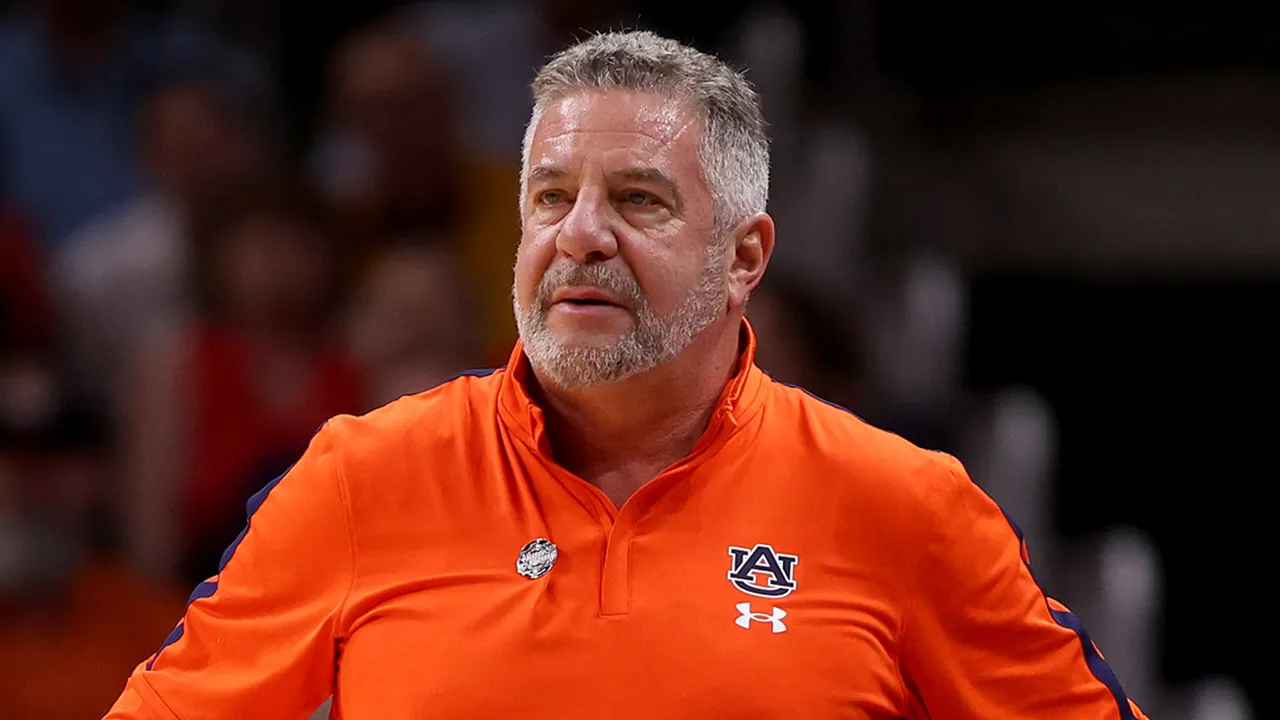
The Passionate Voice of a Retired Coach
Bruce Pearl, the legendary former head coach of Auburn University’s men’s basketball team, has always been a man of strong convictions, blending his love for the game with broader issues of faith, freedom, and justice. Known for leading Auburn to glory during his tenure, Pearl retired in September, stepping away from the court but not from his role as a vocal advocate. In recent days, though, his voice has echoed far beyond stadiums, especially amid the escalating tensions between the United States, Israel, and Iran. As a Jewish man deeply connected to his heritage and the global fight against what he sees as oppression, Pearl couldn’t stay silent when the U.S. and Israel launched preemptive strikes on Iran on Saturday morning—an operation dubbed “Epic Fury.” Thrust into this geopolitical storm without any formal ties to politics or diplomacy, Pearl felt compelled to speak out, his posts radiating a mix of anger, hope, and faith. He watched the news unfold from his home, probably pacing like he did during nail-biting games, his heart racing not for points or playoffs, but for protecting innocents and defeating what he called “evil.” This wasn’t just news to him; it was personal, a call to stand with those he admired, like President Donald Trump, whom Pearl viewed as a bold defender of freedom.
Pearl’s journey as a coach often mirrored the underdog stories he coached—battles fought with grit, teamwork, and unwavering belief. Imagine him, post-retirement, scrolling through feeds as the strikes hit, feeling that familiar adrenaline surge. He took to social media platform X (formerly Twitter) shortly after the U.S. joined Israel in targeting Iranian military and missile sites, his fingers tapping out words that boiled over with emotion. “President Trump gave Iran a chance to avoid War by simply agreeing to No Nukes. Iran launched middles at other Arab countries and Israel, huge mistake! Saudi Arabia joins our side,” he wrote, his typos hinting at the urgency of the moment—perhaps typing hurriedly in the heat of reaction, just like scribbling plays in a timeout. He continued, “Iran is head of the snake. President Trump is the leader of the free world. Defeat Evil then Peace!” These weren’t cold statements; they were the cries of a man who saw parallels between the chaos on the court and the turmoil in the world. As someone who had navigated difficult seasons in basketball, where players were injured or dreams derailed, Pearl pleaded for a “free Iran” and “real peace” in the region, invoking divine intervention. “Lord Hear Our Prayer Please put your hedge of protection over our heroic armed service,” he implored, praying for the destruction of the enemy while hoping for the salvation of innocents. It was raw, human—a retiree-turned-commentator drawing from his faith, his losses, and his victories to make sense of a conflict far removed from his Alabama home.
Pearl’s earlier plea painted a picture of a man yearning for reconciliation, even in the face of aggression. Before the strikes, he had posted a heartfelt message on X, calling for God’s protection over American troops engaged in “major combat operations” against Iran. He spoke of targeting military sites precisely, minimizing harm to civilians, and envisioning a future where Iran could break free from tyranny. This wasn’t just armchair commentary; it came from someone who understood leadership under pressure, having coached young men through personal crises and team adversities. Pearl’s words humanized the abstract violence: he prayed for the “enemy to be destroyed” while gently urging prayers for those caught in the crossfire. For Pearl, this moment tapped into his own life’s narrative—a story of perseverance as a Black coach rising through the predominantly white ranks of college basketball, overcoming stereotypes and slights to advocate for understanding between America and Israel. Social media became his pulpit, where he amplified Trump’s actions, seeing them as a brave stand against threats that felt as imminent as a rival team closing the gap in the final minutes. Amid all this, Pearl’s posts resonated with millions who shared his mix of patriotism and prayer, turning a retired athletic icon into a relatable figure in the modern digital arena of global affairs.
The geopolitical landscape Pearl was commenting on erupted rapidly, with Trump’s own impassioned video remarks adding fuel to the fire. Speaking on Truth Social, the former president addressed the Iranian people directly, his voice steady yet urgent, like a captain rallying troops before a crucial play. “The hour of your freedom is at hand. Stay sheltered. Don’t leave your home. It’s very dangerous outside,” Trump urged, painting a vivid scene of hope amidst peril. He positioned himself as the hero they had long awaited, declaring, “This will be, probably, your only chance for generations. For many years, you have asked for America’s help, but you never got it. No President was willing to do what I am willing to do tonight. Now you have a President who is giving you what you want.” Trump’s message was laced with promise, encouraging Iranians to seize the moment once “major combat operations” concluded, envisioning a people-led revolution against their government. For those listening, it felt transformative—a leader from across the ocean extending a hand, his words echoing the empowerment people feel when a favorite coach inspires them to dream bigger. Yet, beneath the rhetoric lay the human stories: families in Iran huddled together, perhaps watching bootleg broadcasts, dreaming of liberty while fearing the bombs, much like athletes in a huddle anticipating victory but dreading defeat. Trump’s appeal to their agency was a call to action, humanizing the specter of invasion into a narrative of liberation, where ordinary citizens could become change-makers.
But the strikes weren’t one-sided; Iran’s retaliation painted a flip side of the coin, revealing the vulnerability on all fronts. As reported by Fox News’ Jennifer Griffin, Iran launched around 40 missiles that struck Israel, targeting U.S. Navy’s Fifth Fleet bases and even hitting Saudi Arabia and Jordan—countries with significant U.S. military presence, including squadrons of advanced fighter jets. Miraculously, no casualties were reported, a detail that underscored both the precision of defenses and the sheer luck in avoiding tragedy. Imagine the relief mixed with terror: sailors aboard ships evading incoming fire, families in Tel Aviv sheltering in bunkers, or Jordanian pilots scrambling to protect their airspace. These weren’t just geopolitical chess moves; they were human moments of raw fear and survival, where soldiers thought of loved ones back home, just as Pearl might have reflected on his own family during intense games. Griffin’s coverage brought it all to life—the distant booms, the emergency sirens, the quiet prayers in the dark—humanizing a war that could otherwise seem abstract. For advocates like Pearl, it reinforced the necessity of strong actions, yet it also highlighted the fragility of peace, reminding everyone that every strike carried the weight of potential loss, personal stories unfolding in real-time across continents.
In the backdrop of these events, Bruce Pearl’s advocacy shined through, rooted in years of quiet dedication. As one of the few Jewish coaches in college basketball before his retirement, he brought a unique perspective, merging sports and humanity. Since the October 7 attacks, Pearl had been an outspoken supporter of Israel, a stance that evolved from personal conviction to public leadership. In April, he was named chairman of the board for the U.S. Israel Education Association (USIEA), a role where he promised to promote “greater understanding and collaboration” between the two nations. This appointment wasn’t just a title; it was a testament to his journey—from coaching victories to fostering global ties, much like guiding players toward teamwork and mutual respect. Pearl’s involvement with USIEA allowed him to channel his passion into educational initiatives, helping bridge divides through stories and experiences. Now, amid the Iran crisis, his posts were an extension of that mission, urging people to listen, to learn, and to pray. Contributors like Fox News Digital’s Michael Sinkewicz and Rachel Wolf helped amplify these layers, weaving Pearl’s narrative into the larger tapestry of faith-infused geopolitics. For followers of sports and global affairs, Pearl embodied the spirit of an everyman hero, proving that one person’s voice—sharp as a coach’s whistle—could sway opinions and inspire hope in uncertain times.
Ultimately, this chapter in international relations, as seen through Pearl’s eyes, illustrates how personal faith and public figures intersect with world events, creating ripples of emotion and action. As Fox News continues to report, with features like the ability to listen to articles expanding accessibility, stories like these remind us that behind the headlines are real people—coaches, presidents, soldiers, and civilians—hoping for a better tomorrow. Pearl’s calls for defeating evil and achieving peace resonate universally, tapping into the human desire for security and freedom. In a world rife with conflict, his blend of humility and boldness offers a model: stand firm in beliefs, pray for protection, and advocate for justice. Whether through social media or interviews, these voices humanize the chaos, turning cold facts into narratives of resilience. As tensions persist, one can only hope that Pearl’s vision—a free Iran and lasting peace—becomes reality, echoing his journeys from the court to the global stage. For more on this and related stories, consider exploring linked articles or subscribing to Fox News updates, where sports meets world affairs in compelling ways.