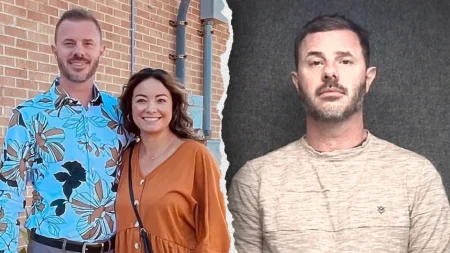




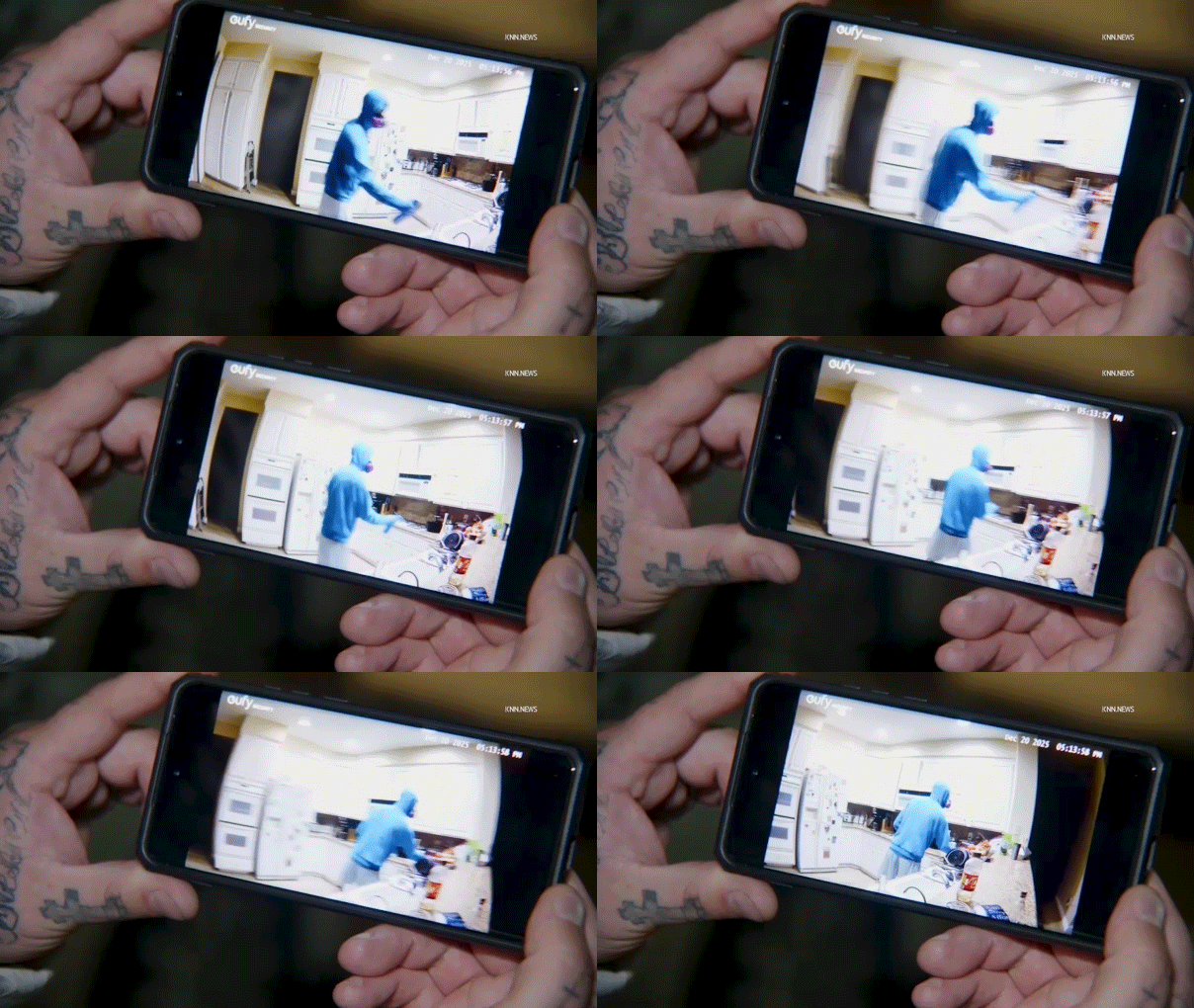
Billy and David Sonhopper thought they were building a stable life in their quiet California home, a place where they could settle down after years of bustling city life. Billy, a vibrant woman in her late 30s with a nurturing spirit, worked in local events planning, while David, her steady husband in his early 40s, juggled odd jobs to make ends meet. Their shared dream was simple: a peaceful haven away from the chaos of the world. But that dream turned into a waking nightmare when they stumbled upon something unimaginable in their own kitchen. Trust, once a cornerstone of their home, had been shattered by their roommate, Timothy Bradbury. On a seemingly ordinary day, as Billy prepared their morning coffee and David sorted through groceries, they reviewed footage from the security cameras their landlord had installed months prior. What they saw on that grainy video chilled them to their core: their 42-year-old roommate, clad in a blue hoodie and a gas mask, methodically spraying everything in sight with a mysterious blue bottle. It wasn’t a prank or an accident; it was deliberate, calculated, and terrifying. For Billy and David, this wasn’t just about spoiled food—it was a violation that made their sanctuary feel hostile. They felt exposed, vulnerable in the place they called home, wondering how long this had been going on without them knowing. The video replayed in their minds like a bad dream, each frame heightening their fear and disbelief. How could someone they lived with, shared laughs and spaces with, harbor such malevolence? They combed through their memories, piecing together signs they might have missed—subtle behaviors, fleeting glances—that now screamed danger. Billy recalled the times Bradbury seemed too eager to help in the kitchen, offering to grab things from the pantry, his vast knowledge of spices a red flag in hindsight. David, pragmatic and protective, kicked himself for not questioning the odd smells or the way Bradbury always hovered nearby during meals. As they watched the footage loop, their hearts raced, emotions swirling from shock to anger. This wasn’t just an invasion of privacy; it was an assault on their well-being, eroding the trust essential for any cohabitation. They confronted the reality that their roommate had crossed an unforgivable line, turning domestic routines into potential traps. The discovery forced them to relive every shared moment with paranoia, second-guessing the safety of their own home. Yet amidst the horror, there was a flicker of resolve—they refused to let this fear define them, pushing them toward action and accountability.
The footage revealed a scene straight out of a thriller, unfolding in the heart of their suburban kitchen. Timothy Bradbury moved with eerie precision, his gas mask concealing his expression as he wielded the blue bottle like a weapon. He started with the pantry shelves, spraying across bags of cereal, chips, and canned goods, the liquid misting indiscriminately over their carefully stocked spices and dried herbs. Then he turned to the refrigerator, dousing fruits and vegetables—juicy oranges, crisp apples, leafy greens—that Billy had picked out fresh from the market just days before. Not even the coffee pot escaped, the one appliance they depended on for their ritualistic morning brew, now tainted with whatever noxious substance he carried. David described how the suspect lingered, almost methodical, ensuring no corner was untouched, as if savoring the act. The video’s timestamp showed this occurred at night, when the couple slept soundly upstairs, unaware that their daily sustenance was being sabotaged. They played it back repeatedly, noting the blue residue visible in some frames, a visual reminder of the poison’s intended harm. For Billy and David, this wasn’t mere vandalism; it struck at the core of their intimacy. Cooking meals together had been their bonding ritual, a way to unwind and connect after long days. Now, those memories were poisoned too, tainted by the image of Bradbury intruding on their space. They imagined the rage or madness that might drive someone to this—perhaps a grudge they never saw coming, or a deeper psychological break. The gas mask added another layer of dread, suggesting Bradbury knew the substance was dangerous, perhaps even lethal. They wondered if he’d done this before, to others, or if this was a spontaneous escalation. As they shared the video with close friends and family, the reactions ranged from outrage to pity, mirroring their own emotional turmoil. Friends offered perspectives on toxic roommates gone wrong, stories of silent resentments building over shared bills and chores. For the couple, humanizing this horror involved grappling with the why—why would a seemingly ordinary man descend into such cruelty? It made them question their own instincts about people, fearing they’d invited danger into their home through naivety.
Suspicions had been brewing for months, but the evidence confirmed their worst fears. Billy and David connected the dots after a frightening ER visit, where blood tests hinted at possible poisoning. Symptoms like nausea, fatigue, and unexplained illnesses plagued Billy especially, attributing them to stress initially. But the doctors’ words lingered: “This looks like something more,” prompting the couple to dig into their security system. Reviewing footage beyond the poisoning revealed a pattern of bizarre behavior. Bradbury’s actions extended to attempts to sabotage their lives in subtler ways—allegations surfaced of him trying to ignite a fire in the house, perhaps by tampering with electrical outlets, and slashing their clothing in hidden fits. They recalled cut holes in David’s favorite shirts and burns on Billy’s dresses, discoveries that now seemed intentional, not accidents. Living with him had been a year-long ordeal, marked by unease and dread. Bradbury’s presence loomed like a shadow, his mood swings unpredictable, turning routine conversations into tense standoffs. They’d reported concerns to police before, but without proof, claims of harassment fell on deaf ears. Now, with the video, it all made sense—the late-night noises, the lingering stares, the way he’d monopolize common spaces. For Billy, a woman dealing with her own health struggles, this added layer of betrayal was crushing. She felt targeted, as if her vulnerabilities made her an easy mark. David, the protector, wrestled with guilt for not sensing the danger sooner. They pondered Bradbury’s mental state, wondering if untreated issues drove his actions, prompting discussions on mental health support in society. Friends advised them to lean on each other, sharing stories of resilience after betrayals. The couple humanized this trauma by acknowledging their vulnerability—not just as victims, but as fallible humans who trusted too easily. It sparked reflections on societal warnings about roommates, underscoring how cohabitation can blur boundaries between comfort and cruelty. Yet, in their pain, they found solidarity, vowing to rebuild their lives without such toxicity.
When police arrived on February 24, the confrontation turned dramatic. Officers from the Santa Clarita Valley Sheriff’s Station found Bradbury barricaded inside, refusing to leave. The lungenant arose when family members informed them of his mental health disability, prompting a sensitive approach. They enlisted the Los Angeles County Sheriff’s Department Mental Evaluation Team, experts trained to de-escalate situations involving individuals with psychological conditions. For two tense hours, the team negotiated, their voices echoing through the door, urging Bradbury to come out peacefully. Billy and David watched from a safe distance, hearts pounding, fearing escalation. They empathized with the complexity—hospitals, not handcuffs, might have been needed days ago. Finally, Bradbury emerged voluntarily, his demeanor subdued, perhaps the culmination of built-up pressure. Officers seized him without incident, executing a search warrant that unearthed physical evidence: remnants of the blue bottle, chemicals consistent with poisons, and items linking back to the kitchen sabotage. The couple breathed easier momentarily, but the ordeal’s shadow lingered. Humanizing the scene involved recognizing Bradbury’s humanity too— a man whose undisposed struggles led to this point, not a monstereasing but a product of broken systems. Billy urged compassion, despite her anger, while David focused on justice. Neighbors chimed in with support, sharing how community vigilance could prevent such isolates. This incident highlighted broader issues like access to mental health care, the dangers of ignoring red flags in shared living, and the toll on families caught in the crossfire. For Billy and David, it was a lesson in strength, transforming their fear into advocacy for better protections against domestic threats.
The emotional toll on Billy and David was profound, weaving through every aspect of their lives. “It’s been hell living with him the past year,” David lamented, his voice cracking with exhaustion after the arrest. They described a year of constant stress, sleepless nights filled with anxiety, and a pervasive fear that permeated their routines. Billy, battling her health issues amid this, felt especially drained, her body and mind paying the price for the psychological warfare. “With her health issues, we were extremely concerned,” David added, emphasizing how the poisonings compounded her challenges, making recovery feel elusive. They longed for normalcy, tired of jumping at every creak in the house. In interviews, they expressed a universal yearning: “We don’t want to be in fear anymore. We’re tired of it. We just want to be safe.” Humanizing their story meant delving into the human cost—the friendships strained by constant complaining about their predicament, the romantic evenings lost to paranoia, the simple joys like cooking a meal tainted by dread. They opened up about therapy sessions, where they processed the betrayal, and support groups for victims of domestic harassment. Friends rallied, offering homemade meals and respite stays, reminding them of the kindness in humanity. This ordeal underscored themes of resilience, how victims often second-guess their experiences, and the importance of speaking out. Billy reflected on her strength, drawing from it to help others, while David channeled his protectiveness into community advocacy. Their narrative served as a cautionary tale, humanizing the abstract statistics of roommate disputes into a poignant reminder of how trust, once broken, can fracture lives.
Timothy Bradbury’s arrest on charges of willful poisoning brought a semblance of closure, though the deeper questions endured. The 42-year-old faced accusations of intentionally contaminating food, drink, medicine, or water with the aim to cause injury, a felony that carried severe penalties. Authorities noted his mental health condition as a factor in the incident, handled by specialists during the arrest to ensure no harm came to him. ForBilly and David, this raised mixed emotions—relief tempered by concern for a broken system. They wondered if earlier interventions could have averted this, sparking broader discussions on society’s duty to support the mentally ill before crises. Bradbury’s background, as pieced together from police reports, painted a picture of a troubled individual, possibly isolated and unhelved. Humanizing him involved acknowledging the loneliness that might fuel such acts, without excusing them. The couple used this as a platform to advocate for better mental health resources, sharing their experience on social media and community forums. Friends and family stood by, helping them navigate legal proceedings and emotional recovery. In the aftermath, Billy and David focused on healing, transforming their home into a fortress of safety with new locks and monitoring. This story echoed across neighborhoods, prompting conversations on roommate relationships and red flags to watch for. Ultimately, it humanized the crime not as a sensational headline, but as a tragic breakdown of human connections, urging empathy, vigilance, and systemic change to prevent future nightmares.