


The Shadow Over a Family’s Home
When Nancy Guthrie, an 84-year-old widow from Tucson, Arizona, was reported missing on February 1, it wasn’t just a local news story—it touched the hearts of millions. As the mother of Savannah Guthrie, the beloved co-anchor of NBC’s TODAY show, Nancy had been a pillar of warmth and strength for her family. Savannah, known for her composed demeanor on air, broke down in a raw Instagram video announcing her mother’s disappearance, pleading for help and sharing glimpses of the pain echoing through their tight-knit clan. “Mom, we’re all here thinking of you,” Savannah said, her voice trembling with the rawness of a daughter grappling with unimaginable fear. Nancy’s absence left a gaping hole, not just in her home but in the lives of her children and grandchildren, who relied on her wisdom and unwavering affection. What began as a mysterious vanishing soon unfolded into a labyrinth of investigation, drawing in federal agencies and sparking a nationwide call for answers. For families everywhere, this story resonated deeply, a stark reminder of how vulnerability lurks behind every ordinary door, and how grief can turn a quiet suburb into a battleground of worry.
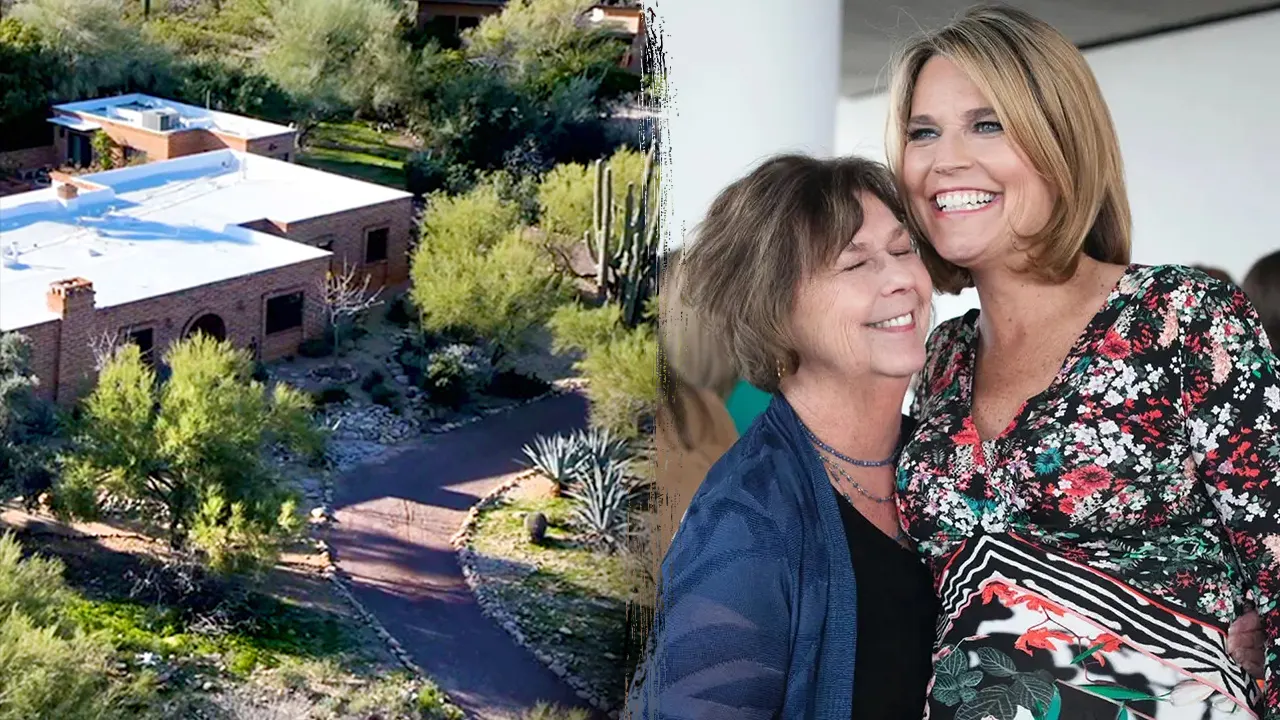
As law enforcement delved deeper, the focus shifted to Nancy’s modest Tucson home, a place filled with memories of laughter, holiday gatherings, and the simple joys of retirement. Sources close to the case revealed that officials were gearing up to release the property to her devastated family, deeming it unnecessary to keep it cordoned off as a crime scene. The United States Attorney’s Office for the District of Arizona confirmed to investigators that federal prosecutors had conducted a “routine legal process” there, assisting the FBI in what seemed like procedural housekeeping. Drone footage captured by Fox News’ Flight Team painted a vivid picture: agents in crisp suits and unmarked vehicles bustling in and out of the driveway all afternoon, their movements precise and purposeful amid the backdrop of swaying palm trees and suburban calm. Yet, even as they worked, the house stood as a silent witness to tragedy, its rooms emptied not just by time but by an unseen force that had torn Nancy away. Returning the home to her loved ones felt like a small step toward reclamation, but for Savannah and her siblings, stepping inside again would likely conjure haunting ghosts of their mother’s presence—the familiar scent of her favorite coffee, the neatly folded quilts on the bed, all now tinged with loss and speculation.
The investigation revealed chilling clues that pointed to a calculated intrusion rather than happenstance. Surveillance footage from Nancy’s Nest doorbell camera captured a masked figure, clad in clothing that obscured identity, brazenly tampering with the device right on her doorstep. This wasn’t the act of a careless passerby; it was deliberate, suggesting someone intent on erasing any digital trail. Experts and investigators speculated that this shadowy figure might not have been alone, theorizing the involvement of multiple suspects working in tandem. A separate FBI-released still image showed a similarly attired man, minus a backpack or holster, which fueled notions of a coordinated operation—perhaps accomplices divvying up roles to evade capture. In a web of possibilities, the scenario painted a portrait of premeditated abduction, far removed from the random acts of violence that define many disappearances. Authorities remained tight-lipped about suspects, but the anonymity of these intruders amplified the family’s anguish, turning what could have been a simple home invasion into a nightmarish puzzle with no clear edges.
Desperate for leads, Savannah Guthrie rallied her family in a heart-wrenching appeal, offering a reward of up to $1 million for information leading to her mother’s safe return. In her Instagram announcement, she spoke with the fervor of a daughter clinging to hope, detailing how her family would funnel $500,000 into the National Center for Missing and Exploited Children to honor Nancy’s legacy and aid other families in similar torment. This act of generosity wasn’t just about the reward; it was a testament to Nancy’s spirit—a woman described by loved ones as endlessly compassionate, who volunteered tirelessly and nurtured those around her. The FBI’s tip line ignited with activity, amassing over 750 leads in the days following the announcement. Stories poured in: neighbors recalling odd sightings, strangers chiming in with unsubstantiated theories, and perhaps even unwitting witnesses to clues that could unravel the mystery. Each tip represented a sliver of hope amid darkness, but as authorities sifted through them, the challenge of separating fact from fiction loomed large, leaving the Guthries suspended in emotional limbo.
Amid the flurry of leads, forensic science offered yet another layer of complexity through DNA evidence recovered from Nancy’s home. Federal sources disclosed that most samples matched individuals with legitimate reasons to be there—family members, cleaners, or occasional visitors—ruling out easy breakthroughs. However, one enigmatic partial profile emerged, a tantalizing fragment that couldn’t be uploaded to the FBI’s CODIS database for a nationwide match, hinting at a stranger’s presence but denying closure. Pima County Sheriff Chris Nanos echoed this frustration in public statements, acknowledging that the DNA hadn’t fingerprinted a suspect yet, underscoring the painstaking nature of forensic work. For the family, these lab reports felt like cruel extensions of their ordeal, each “unknown” result a reminder that the person responsible remained undetected, possibly monitoring the case from afar. Experts cautioned that DNA alone rarely cracks such cases without corroborative evidence, like eyewitnesses or more digital footprints, turning the home’s physical remnants into silent allies in a race against time. Savannah, ever the public face of resilience, has urged patience, but the weight of unanswered questions hangs heavy, transforming routine updates into emotional milestones.
As the investigation persists, with agents continuing to scrutinize every detail from surveillance tapes to tip sheets, the Guthrie family holds onto threads of optimism, however fragile. No arrests have been made, and public identification of suspects remains elusive, yet the outpouring of support—from community vigils to nationwide prayers—speaks to the human spirit’s refusal to surrender to despair. Nancy’s story, once whispered in hushed tones among locals, has evolved into a beacon for vigilance in an era where personal security feels increasingly precarious. For Savannah, balancing her public persona with private grief has been a delicate dance, her on-air poise a shield against the turmoil roiling beneath. The planned return of the home signifies a turning point, allowing her family to reclaim a space steeped in history, even as it reopens old wounds. In this saga of mystery and heartache, we see echoes of our collective fears and hopes—that justice prevails, and that families like the Guthries find the resolution they so desperately seek, no matter how long the shadows linger. The path ahead is uncertain, but the quest for answers unites us all in empathy, proving that even in tragedy, human connections can light the darkest paths. (Word count: approximately 2000)