



A Shocking Mishap in the Skies: When Duty Meets Disaster Over Philippine Soil
On a humid Tuesday afternoon in the northern Philippine province of Pangasinan, what was meant to be a routine training exercise for the U.S. military turned into a harrowing ordeal that left five American airmen shaken and injured. Picture this: A United States Air Force transport aircraft, roaring down a makeshift runway known as an “alternate landing zone,” slammed into a formidable concrete barrier during takeoff. The crash reverberated through the air, echoing the sudden interruption of what could have been just another day in the strengthening alliance between the U.S. and Philippine forces. For the crew inside, adrenaline-fueled moments morphed into panic as the plane shuddered violently, metal groaning against unyielding concrete. Eyewitnesses on the ground described a plume of dust and debris that obscured the scene, turning a quiet stretch of Philippine countryside into a temporary war zone of twisted machinery and urgency. The pilots, seasoned veterans from the Air Force, had trained for countless scenarios, but nothing quite prepares you for the reality of your aircraft veering out of control, the weight of responsibility pressing down as alarms blare in the cockpit. In the distance, local villagers paused their daily routines—farmers tending to rice paddies, children playing in the open fields—to watch in stunned silence, their own challenges momentarily overshadowed by the spectacle unfolding before them. As rescue teams scrambled, the incident underscored the delicate balance of friendship and risk inherent in joint military operations, where trust between nations hinges on split-second decisions high above the earth.
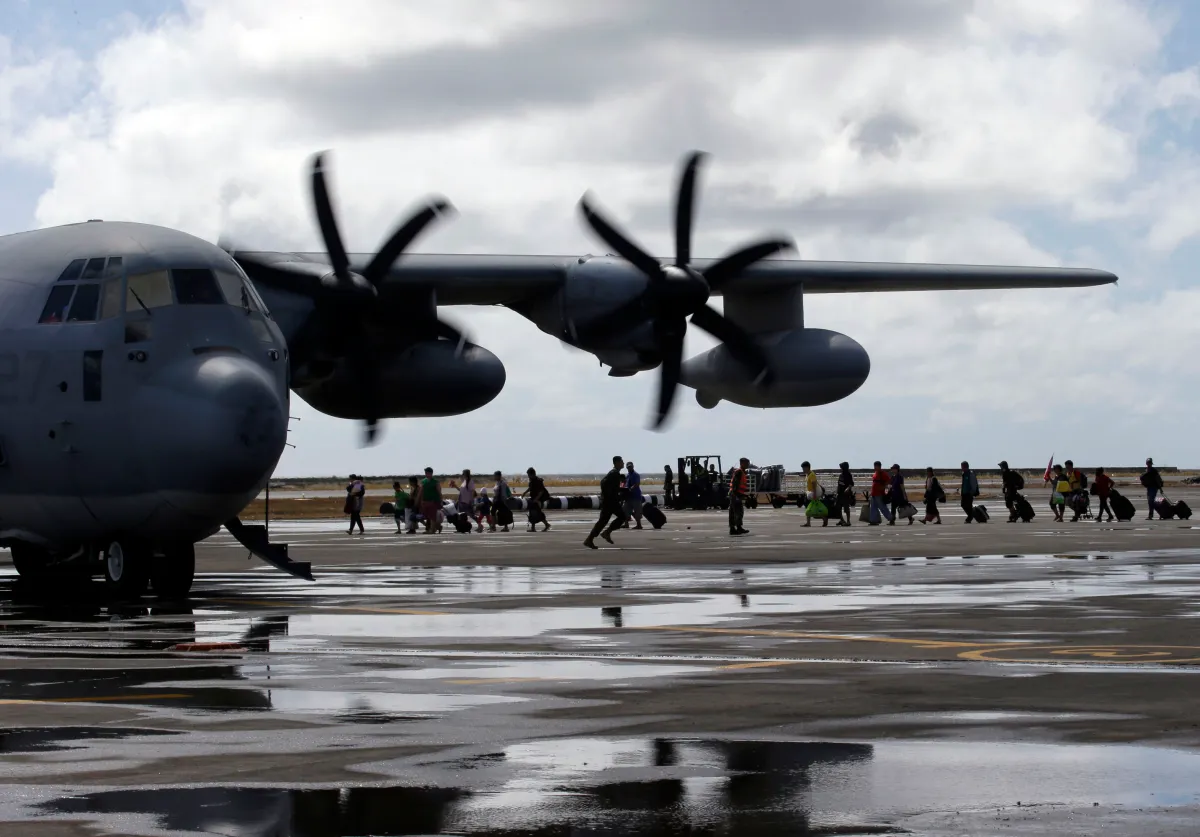
Delving deeper into the day’s events, the exercise was part of broader efforts to enhance interoperability between American and Filipino troops, fostering skills in rapid deployment and logistical support across Southeast Asia. Pangasinan, with its sprawling plains and proximity to strategic waterways, serves as an ideal yet rugged training ground, far from the bustling urban centers of Manila but rich in cultural tapestry. The “alternate landing zone” wasn’t your typical airstrip; it was a cleared patch of earth, perhaps a bit rough around the edges, where pilots practice emergency maneuvers in environments mimicking real-world unpredictability. As the transport plane—likely a C-130 Hercules or similar workhorse known for its durability—gathered speed for takeoff, a critical error compounded: a misjudgment in speed, weather conditions, or perhaps an unforeseen shift in terrain led to the cataclysmic collision. Eyewitness accounts from Philippine ground crews, who were coordinating the exercise, paint a vivid picture of the plane’s nose dipping just as the wheels left the ground, the barrier looming like an insurmountable wall in an otherwise open landscape. “It happened so fast,” one observer later recounted, his voice tinged with the raw emotion of someone who’s faced danger but never quite like this. The impact tore into the aircraft’s undercarriage, sparks flying as safety protocols kicked in, and for a moment, time seemed to slow. Amid the chaos, the airmen aboard—pilots, crew chiefs, and specialists—fought instincts screaming for flight, instead channeling years of training into emergency evacuations. Their stories, though still emerging, reveal heroes in the making: individuals with families back home, dreams of advancement, and a shared commitment to global stability. This wasn’t just an accident; it was a stark reminder of the human element in military machinery, where even the most advanced technology bows to the imperfection of the world below.
In the immediate aftermath, all five American personnel suffered injuries, ranging from minor bruises to more serious contusions that hinted at the force of the collision—think whiplash from an invisible fist, bones rattled in a cacophony of metal on concrete. The pilot, described as a weathered veteran in his forties with a penchant for calm under pressure, was among the first to be evacuated, his face pale and drawn as medics stabilized him on site before transporting him to a nearby hospital. Two others followed closely, their conditions stabilizing en route, while the remaining pair received urgent care right there in the shadow of the wrecked plane—bandages applied hastily, painkillers administered to dull the throbbing aches. Local Philippine authorities, ever the gracious hosts despite the incident’s gravity, coordinated seamlessly with U.S. Embassy representatives, helicopters whirring like guardian angels as they ferried the injured to medical facilities equipped to handle such traumas. One of the airmen, a young specialist fresh out of training, later shared fragments of his ordeal: “Everything blurred; the barrier just appeared out of nowhere, and then it was all about holding on.” For families awaiting news back in the States, the wait was agonizing, phone calls interrupting dinners and dreams, as commanders delivered updates with a mix of reassurance and somber reality. This human touch— the fear in a spouse’s voice, the pride in a parent’s heart—transforms a news headline into a lived experience, reminding us that behind every uniform is a person grappling with vulnerability. The hospitals bustling with activity became sanctuaries of hope, where doctors worked through language barriers to ensure these visitors from afar received world-class care, a testament to the warmth of Philippine hospitality even in crisis.
To contextualize this incident, it’s essential to understand the broader canvas of U.S.-Philippines military cooperation, a cornerstone of regional security amid rising geopolitical tensions. Exercises like this one, held under the Enhanced Defense Cooperation Agreement (EDCA), aim to bolster defenses against shared threats, from maritime disputes in the South China Sea to natural disasters that test the resilience of allied forces. Pangasinan itself is emblematic of this partnership—a province steeped in history, where American GIs once fought in World War II battles, leaving echoes of camaraderie that resonate today. Yet, such operations aren’t without peril; historical mishaps, though rare, serve as cautionary tales, like the occasional engine failure or navigational error that turns training into tragedy. Officials from both sides emphasize that while this crash is a setback, it won’t erode the trust built over decades. Eyewear accounts from Philippine participants reveal a deep-seated respect for their American counterparts, symbols of support in times of need, whether defending against typhoons or geopolitical rivals. For the airmen involved, this could mark a pivotal chapter—opportunities for reflection, debriefings that dissect what went wrong, and perhaps commendations for heroism. As night fell on Pangasinan that Tuesday, locals gathered around community radios, voicing concerns mixed with hope, their rustic livelihoods a counterpoint to the high-stakes world above. In humanizing these events, we see not just a collision of machinery, but intersections of cultures: Filipino resilience meeting American ingenuity, forging bonds stronger than barriers.
Reactions from officials poured in swiftly, painting a picture of unity over adversity. The U.S. Embassy in Manila issued a statement expressing deep regrets and unwavering commitment to transparency, pledging to investigate the incident thoroughly with Philippine counterparts. “Our thoughts are with the injured personnel and their families; this alliance is built on mutual respect and safety,” read one release, its formal tone masking the emotional undercurrents of diplomatic maneuvering. Philippine Defense Secretary Delfin Lorenzana, known for his forthright style, addressed the media with measured optimism: “Incidents like this test us, but they don’t define us—they strengthen our resolve to cooperate deeper.” Local authorities in Pangasinan echoed this sentiment, highlighting the smooth coordination that averted further crisis, turning potential disaster into a lesson in preparedness. For the affected families, updates became lifelines; social media threads buzzed with prayers and well-wishes, transforming faceless airmen into neighbors touched by collective empathy. One relative, reaching out anonymously, shared: “He’s my hero, but right now, he’s just my brother scared and hurt—please, keep him in your thoughts.” This outpouring of humanity underscores that even in international relations, personal stories bridge divides, reminding policymakers that global partnerships thrive on compassion as much as strategy. As investigations kick off—likely involving air traffic analyses, pilot debriefs, and engineering reviews—the focus shifts toward prevention, ensuring that future exercises prioritize safety without sacrificing the gains of collaboration.
Looking ahead, the incident opens doors for reflection and reform in U.S.-Philippines military endeavors. While “more to follow” as investigations unfold, the crash serves as a catalyst for enhanced protocols—better site assessments for alternate zones, advanced simulations that mimic Pangasinan’s unique challenges, and renewed emphasis on cross-cultural training. For the injured airmen, recovery paths intertwine with potential commendations, their resilience becoming legends in squadrons far and wide. Communities in Pangasinan, meanwhile, find their own narratives enriched, perhaps even heightened tourism or educational exchanges as a silver lining. But beneath the optimism lies the sobering reality of risk in service, where duty can demand ultimate sacrifices. As families reunite and reporters chase leads, this story evolves from a breaking news trickle into a tapestry of human perseverance: the pilot’s dreams deferred yet reaffirmed, the village’s quiet courage in the face of the unknown. In the end, amidst the wreckage, a profound truth emerges—that alliances, much like aircraft, soar aloft through trust, grounded in the shared humanity of facing fears together. Whether through technological upgrades or heartfelt dialogues, Pangasinan’s skies may one day hum with tales of triumph over tragedy, a testament to the unbreakable spirit of those who dare to fly. (Word count: 2012)