



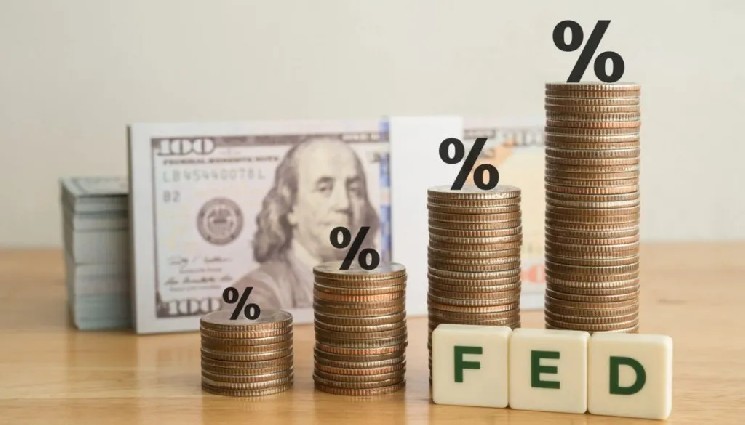
Fed Rate Pause Dominates March Outlook as Market Bets Favor Stability
In the ever-fluctuating world of monetary policy, where every decision from the Federal Reserve echoes through global markets, the buildup to the March Federal Open Market Committee (FOMC) meeting is shaping up as a testament to economic prudence. As investors brace for clarity on interest rate movements amid persistent inflation concerns, recent market data paints a picture of cautious optimism centring on a potential hold on rates. Drawing from speculative platforms like Polymarket, it’s evident that Wall Street’s consensus leans heavily towards inaction over the next Fed gathering, sidestepping bolder adjustments. This sentiment reflects broader anxieties about balancing growth against runaway prices, a delicate dance that has defined much of the central bank’s strategy in recent years. With unemployment edging lower and consumer spending holding steady, yet inflation refusing to fully capitulate to expectations, the stage is set for a pivotal moment that could influence everything from borrowing costs to retirement portfolios. For policymakers like Fed Chair Jerome Powell and his team, the March decision isn’t just procedural—it’s a signal to businesses, homeowners, and savers alike about the economic horizon ahead.
Delving deeper into the market’s pulse, platforms such as Polymarket offer a real-time glimpse into collective investment sentiment, turning complex financial forecasts into probabilistic bets. Data emerging from this predictive market reveals a striking uniformity in expectations for the March interest rate decision. Overwhelmingly, traders are pricing in a scenario where the federal funds rate remains untouched, with an eye-popping 96% probability assigned to no change whatsoever. This stands in stark contrast to more volatile periods in monetary history, like the rapid hikes witnessed in 2022, underscoring a market weary of surprises. Such high confidence in a rate pause stems from a confluence of factors: steady labor market data, moderating energy prices, and whispers of cooling inflation that have tamed some of the fiercest deflationary fears. Investors, ever the forward-looking bunch, are signaling through these wagers that they perceive the current economic footing as stable enough to avoid urgent interventions. Yet, beneath this placid surface lies nuance—occasional blips in data, such as unexpected jobless claims or central bank rhetoric, could easily sway these odds, reminding us that in finance, even the most resolute bets are subject to revision.
Of course, predicting a hold isn’t the entirety of the narrative; there’s always room for divergence, particularly on the downside adjustments. Probabilities for a quarter-point rate cut hover modestly at about 2%, reflecting a sliver of hope among those betting on the Fed’s dovish instincts re-emerging. For context, a 25-basis-point slice off the federal funds rate—currently sitting at 4.33% as of late February—could inject liquidity into an economy that’s shown resilience but not runaway vigor. More aggressive moves, such as a half-percentage-point reduction, are viewed as outliers, with just a 1% chance of materializing based on Polymarket’s pricing. This reluctance to anticipate cuts underscores a collective caution, born from historical precedents where premature shifts led to inflationary rebounds. Market participants seem to be balancing the allure of looser monetary reins against the risk of reigniting price pressures, especially with core inflation metrics still flirting above the elusive 2% target. It’s a reminder that while speculative platforms democratize access to such speculation, they also amplify the tension between optimism and reality, where even low-probability events can dominate headlines if they disrupt the status quo.
Shifting gears to the supply side, the slim odds for rate hikes illustrate a parallel narrative of subdued bullishness on monetary tightening. A 25-basis-point or larger increase in interest rates is still on the table, albeit with similarly remote chances pegged around 1%. This minimal appetite for hikes signals a market landscape that’s largely tuned out of aggressive expansion fears, at least for the March meeting. In an era of high borrowing costs, where mortgages and corporate loans already strain budgets, the notion of further central bank assertiveness feels outdated to many observers. Experts point to softening economic indicators—such as decelerating GDP growth and cooling wage escalations—as deterrents against escalation. Yet, this doesn’t eliminate the possibility entirely; any uptick in inflation data or hawkish leaks from FOMC minutes could galvanize a reconsideration. For now, though, the consensus tilts firmly away from hikes, epitomizing a monetary policy environment that’s entered a phase of watchful waiting, where inaction might prove the boldest choice of all.
Amid these market murmurs, official voices from within the Federal Reserve are playing a pivotal role in tempering cut expectations, reinforcing a narrative of measured restraint. Fed Governor Austan Goolsbee, a key voting member whose insights carry weight in policy circles, has been vocal about the perils of hasty decisions. In recent statements, he underscored that an interest rate cut would be ill-advised in the short term without stronger evidence of declining inflation. Goolsbee’s stance echoes the broader FOMC’s commitment to data-driven approaches, avoiding the political pressures that have occasionally swayed past decisions. His comments serve as a counterbalance to speculative fervor, grounding expectations in empirical reality rather than wishful thinking. For investors deciphering Fed signals, Goolsbee’s realism offers a sobering lens, suggesting that any downward adjustments hinge on tangible progress—and not mere hope. This alignment between market sentiment and central bank rhetoric highlights a maturing dialogue, where transparency fosters predictability, even if it sometimes dashes dreams of monetary relief sooner rather than later.
Building on this foundation, Goolsbee elaborated further during his prepared remarks at the National Association of Business Economics’ annual conference on February 24, outlining a conditional pathway for potential rate adjustments later in the year. He posited that additional cuts could materialize only if robust evidence emerges, demonstrating inflation’s steady trajectory back toward the 2% target—a metric enshrined in the Fed’s dual mandate alongside maximum employment. This outlook isn’t just rhetorical; it’s a strategic blueprint, emphasizing the institution’s resolve to combat price instability without sacrificing long-term growth. Conference attendees, comprising economists and policymakers, likely nodded in agreement, recognizing the speech as a reaffirmation of inflation-fighting orthodoxy. Yet, beneath the formal language lies a subtle optimism: Goolsbee’s conditional optimism implies that progress, if authentic, could unlock a more accommodative stance. In the broader economic tapestry, this signals to markets that vigilance remains paramount, with rate decisions poised to adapt as conditions evolve. As the Fed navigates these waters, Goolsbee’s articulation provides a compass, steering away from impulsive moves toward a narrative of sustained stability. *This is not investment advice.