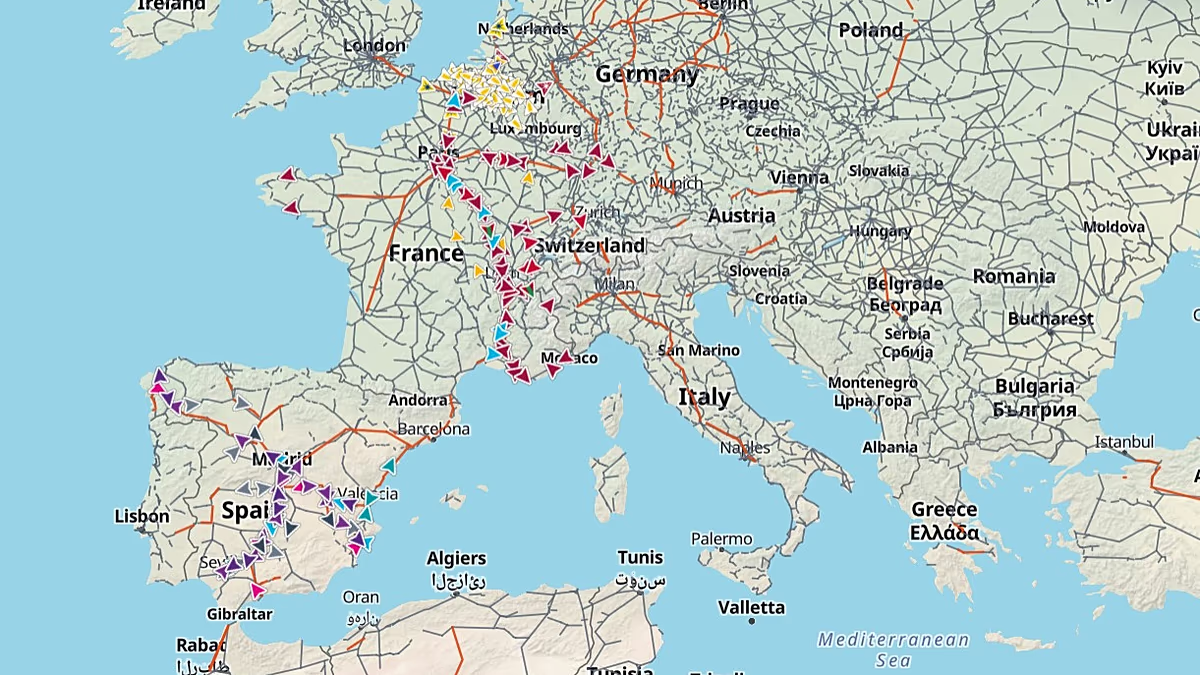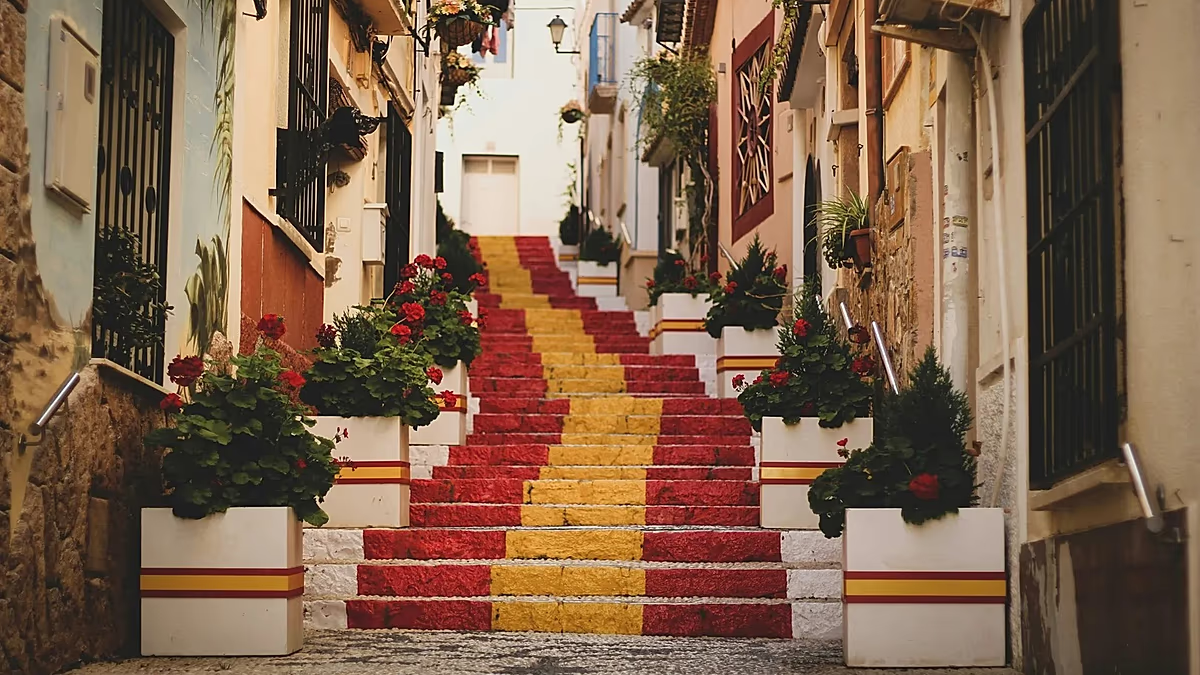



Embarking on a culinary journey through Europe isn’t just about filling your stomach—it’s about immersing yourself in the very soul of a place, where every bite tells a story of centuries-old traditions, resilient communities, and landscapes that have shaped both the food and the people who produce it. Imagine stepping off the well-trodden tourist paths and venturing into hidden nooks where local farmers, artisans, and fishermen share their passions over platters of fresh, hyperlocal delicacies. From the jewel-like blackcurrants of Burgundy to the earthy hops of Bavaria, these five food trails across France, Spain, Italy, and Germany offer more than sustenance; they promise unforgettable adventures that awaken your senses and forge connections with the cultures that birthed them. As someone who’s wandered these routes with a backpack and an open appetite, I can tell you that each one feels like a personal invitation to savor not just flavors, but the rhythms of daily life far from the crowds. Whether you’re pedaling through olive groves under a Mediterranean sun or hiking alpine meadows with the scent of ripening cheese in the air, these itineraries transform travel into a feast for the senses. They’re designed for explorers like you—solo travelers, food enthusiasts, or families seeking authentic experiences—that blend education, exertion, and indulgence, reminding us that the best way to understand a destination is through its bounty. And in an era when mass tourism often strips away the genuine, these trails stand as guardians of heritage, drawing you into communities where every meal is a celebration of patience, skill, and the land’s generosity.
Let’s start in the heart of France’s Burgundy region, where the focus isn’t just on vineyards but on a tiny, potent berry that’s earned the title “black gold.” Blackcurrants have been cultivated here since the 17th century, initially by monks who valued their medicinal punch—think remedies for everything from colds to nervousness. Today, they’re the star of Crème de Cassis, that silky liqueur that adds a tart kick to a classic kir cocktail, and a surge of flavor to sauces and desserts. The Route du Cassis, a delightful 55-kilometer path, kicks off at Le Cassissium in Nuits-Saint-Georges, a museum that’s like a time capsule of burgundy folklore, complete with artifacts, photos, and free tastings to whet your palate. As you wander or cycle west toward Dijon, the route winds through lush countryside dotted with family-run farms where the air hums with the buzz of bees and the sweet tang of ripening fruit. Picture yourself chatting with a passionate local grower who hands you a jar of homemade blackcurrant jam—bursting with sunshine and bits of berry skin that pop like tiny fireworks—while explaining how these humble globes have sustained families through generations. Or stop for a swirl of blackcurrant-infused lemonade, refreshing and slightly syrupy with a zing that dances on your tongue. Guided by an app with geo-located maps and narrated stories of monastic lore, you can walk these paths at your own pace, pausing to sip non-alcoholic spritzers or dabble in condiments like a quirky ketchup that’s equal parts tart and fun, perfect for elevating a simple cheese plate. For me, this trail felt like a revelation; after nibbling on a ketchup-drizzled sliver of brie, I realized how an everyday fruit could weave such a rich tapestry of history and taste, making me feel connected to the monks who planted the first vines centuries ago. It’s not just a route—it’s a sensory homage to Burgundy’s overlooked treasures, where every farm gate opens to warm hospitality and the kind of flavors that linger long after you’ve pedaled away.
Crossing the Pyrenees into Spain, where olive oil isn’t just a pantry staple but a cultural lifeline, the country’s Oleotourism Spain network unfolds like a treasure map for liquid gold. Spanning over 100 experiences across eight provinces, this initiative aims to lure wanderers from chaotic resorts to tranquil rural havens, where golden groves stretch as far as the eye can see. One standout is the Olive Oil Greenway near Córdoba, reborn from an old railway line that once chugged oil trains through the Andalusian hills—think iron viaducts arches against cobalt skies, buzzing with cicadas and the faint rustle of leaves. Hiking or biking here, you’re enveloped in the hypnotic green of ancient groves, where trees whisper stories of harvests past. Villages along the way host museum tours in restored presses, where you can witness the alchemy of turning olives into that peppery, grassy elixir, and even nibble on heritage varietals like the robust Picual. Venture inland to the Valencia region’s Serra Calderona Natural Park, a hiker’s paradise of craggy trails and freshwater streams, and detour into gems like Segorbe for tastings of oils from centenarian trees—oils so pure they coat your throat with a velvety warmth, a far cry from the supermarket bottles. In Huelva, the Beas trail winds through estate after estate, inviting you to workshops where locals demonstrate how to drizzle oils over fresh bread or swirl them into salads, each drop a memoir of soil, sun, and sweat. I’ve trekked these paths under a relentless sun, emerging smeared in olive oil from impromptu tastings, feeling humbled by the dedication required to produce such perfection. It’s a journey that humanizes olives from mere ingredients into emblems of resilience, teaching you about sustainable farming and the families whose livelihoods depend on each drop. Whether you’re blending oils yourself or sharing tapas with newfound friends, Oleotourism breathes life into Spain’s interior, proving that sometimes the slowest routes yield the richest rewards.
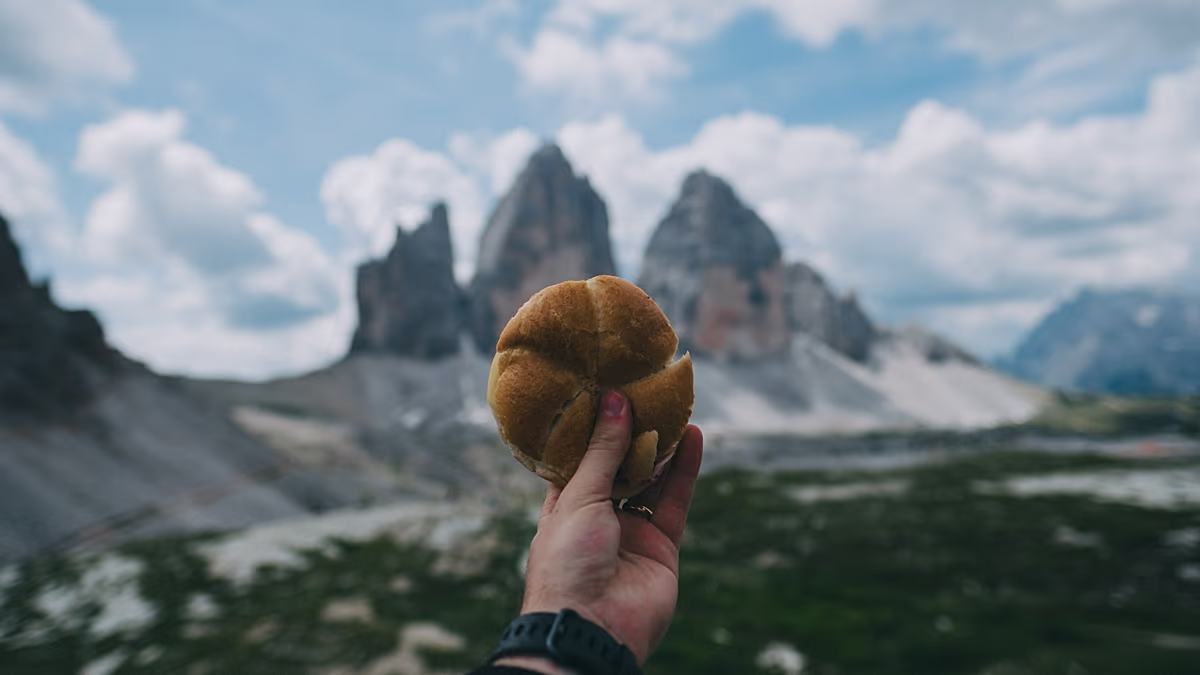
Venturing north to Italy’s Dolomites, where the Alps meet alpine cheese-making that’s as rugged as the peaks themselves, the Dolomites Cheese Route emerges as a fragrant odyssey through valleys steeped in pastoral pride. Threading 55 kilometers across Valle di Primiero, Val di Fiemme, and Val di Fassa, this path honors centuries of herding and dairying traditions, where Swiss-like huts and meadows have long been sanctuaries for cows grazing on wild herbs and flowers. Here, the air carries the sharp, comforting aroma of ripening cheeses, from the pungently aged Puzzone di Moena—its earthy funk a tongue-tingler that sneaks up on you like a mountain mist—to the creamy freshness of goat ricotta, whipped smooth and dotted with speckle. As you meander, stops at smoky mountain dairies or quaint rifugios bring encounters with artisans who curdle milk with pride, sharing plates of Tosèla, that golden pan-fried cheese slice that crisps up like a delicate omelet, redolent of butter and heritage. Between bites, the trail invites calorie-burning hikes through wildflower-strewn fields—where edelweiss nod in the breeze and pine forests echo with the calls of unseen birds—under the watchful gaze of jagged limestone spires that seem to pierce the sky. It’s a place that stirs the soul, reminding me of family picnics in my youth, where simple foods forged lasting memories; here, each cheese tasting feels like a handshake with generations past, a way to honor the transhumant shepherds who braved blizzards to produce these delicacies. The route’s appeal lies in its balance—indulgence punctuated by exertion—making it ideal for wanderers who appreciate nature’s grandiosity as much as gastronomy’s subtleties. By journey’s end, you’ll leave with a palate educated in Italy’s alpine rhythms, understanding that cheeses here aren’t commodified; they’re embodiments of territorial identity, shared with visitors as if we’re all part of the velvety, vibrant fold.
Back in Spain, but this time along the rugged Basque Country coastline, the 166-kilometer Wine and Fish Route unfurls as a salty homage to fishermen’s legacies, blending maritime bounty with vineyard vistas. Originating in the medieval charm of Oyón, fringed by stone walls and cobblestone streets, the trail follows ancient paths once trod by traders exchanging catch for grapes, climbing through vine-clad slopes before plunging into the misty Cantabrian Mountains. Along the way, the ocean’s proximity infuses every stop with briny allure: in Getaria’s bustling docks, tour an anchovy factory where sleek silver sardines are expertly salted and aged, their meaty texture a testament to artisanal precision, and pair them with crisp whites from the region’s Rioja Alavesa appellation. Pasaia beckons with fishing taverns buzzing with laughter, where plates of grilled sardines or txakoli-poached fish arrive glistening, seasoned with sea salt and a dash of Basque soul. Pedal or hike this route, and you’ll feel the pull of the tides, the wind whipping through your hair as you scale mountain passes offering panoramic expanses of rocky coves below. For me, it’s evoked memories of childhood beach explorations, but elevated to epicurean heights—each meal a lesson in sustainability, from hook to plate. The path celebrates the symbiotic dance of land and sea, where fishermen and vintners coexisted harmoniously, producing flavors that are as bold as they are balanced. It’s not merely a trail; it’s a narrative stitched with maritime folklore, inviting you to savor the Basque ethos through shared feasts, where the simple act of cracking open a shellfish becomes a gateway to deeper cultural kinship.
Finally, winding through Germany’s Bavaria, the Hallertau Hop Trail offers beer aficionados a 170-kilometer pilgrimage through the world’s largest hop-growing haven, where the air shimmers with the green essence that’s fermented into frothy lagers. Beginning on Munich’s outskirts, this scenic route guides you amid hop bines climbing seven-meter towers—emerald frames that sway like living flags against pastoral backdrops of barns and brew kettles. Information plaques dot the way, unveiling the quaint engineering of tower kilns used for drying, their conical shapes punctuating the landscape like historical landmarks. If you’re timing your visit for autumn’s nine-month harvest, the fields erupt in activity, with pickers in rhythmically moving lines, the cones exuding a grassy bitterness that hints at the magic awaiting in your stein. Breweries pepper the path, each a portal to cold ones pilsners and wheat beers, brewed with hops plucked fresh from the vine—think citrusy Hallertau varieties lending floral notes to every sip. Pause in Osterwaal at Gasthaus Spitzer for slow-food dishes infused with hops, like salads tossed with young cones or braised meats seasoned with their piney zing, transforming dinner into an aromatic ritual. Wolnzach reveals maypoles adorned with carvings, symbolizing fertility and festivity, while the German Hops Museum delves into hop history with exhibits that feel tactile, interactive—touching the cones, smelling the earthiness. As a lifelong hop enthusiast, I’ve cycled these trails under overcast Bavarian skies, my legs burning but my spirit lifted by brewery chats and steeped in hop lore, evoking the joy of a local fest. This trail isn’t for fleeting visits; it’s for those who seek the roots of brewing culture, where hops aren’t commodities but “green gold,” tying communities together in liquid tradition. By the end, you’ll cheer not just to the beer, but to the intricate tapestry of Bavaria’s agrarian heart, where every hop represents a link in the chain of tradition and taste. In weaving these trails together, Europe’s culinary routes emerge as more than paths—they’re invitations to rediscover the world’s flavors through lenses of history, community, and sheer sensory delight, encouraging us all to eat, explore, and connect in ways that nourish the soul as much as the body.