

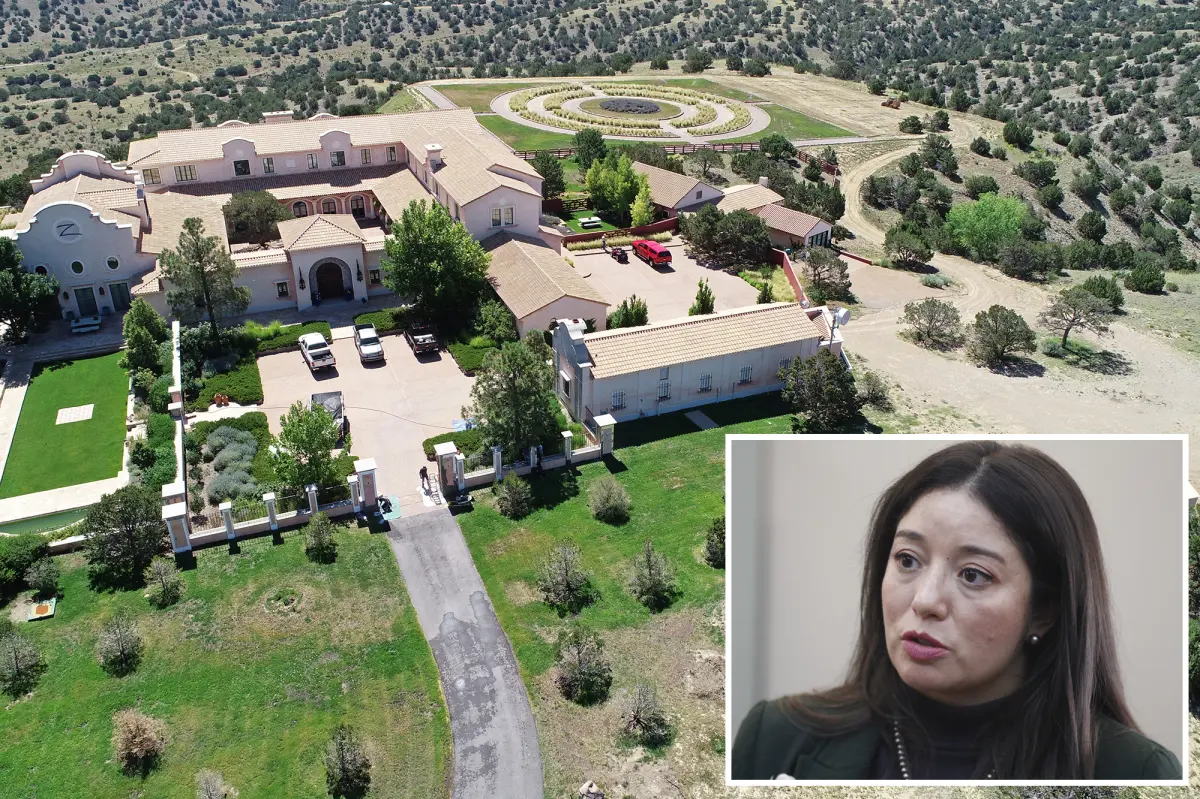
In the quiet, windswept deserts of New Mexico, where the sun beats down relentlessly on ancient red rocks and sagebrush whispers secrets to the wind, a shadow has long lingered over a secluded ranch once owned by a man whose name evokes disgust and heartache for so many. Jeffrey Epstein, the infamous financier turned notorious sex offender, transformed what was a simple piece of wilderness into a lavish hideaway known as Zorro Ranch, a sprawling estate where the ordinary luxuries of life were twisted into tools of exploitation. But as the dust settles on allegations that echo through the years, state legislators have stepped in, launching a heartfelt quest for truth that feels like a lifeline for those who suffered in silence. On a brisk Tuesday, bipartisan leaders—people from different walks of life united by a shared outrage—announced an investigation into the ranch’s dark history, probing whether it served as a hub for sexual abuse and trafficking, and questioning if local authorities turned a blind eye while Epstein roamed free.
Imagine the resilience it takes for lawmakers like Democratic state Rep. Marianna Anaya from Albuquerque to stand before cameras, her voice steady yet filled with the raw emotion of someone who has seen too many lives shattered by predators. Anaya, part of what the group calls a “truth commission,” isn’t just a politician; she’s a mother, a sister, and a woman who knows firsthand the scars that trauma leaves on families and communities. She spoke passionately about how no one commits these atrocities alone—perpetrators like Epstein need accomplices, enablers who smooth over the cracks in the system, sometimes even wearing badges or sitting in the halls of power. Her words resonated with a depth that made listeners pause: “That perpetrator could not act alone. They could not run a sex ring alone, they could not commit these types of financial crimes alone.” It’s a realization born from hours of listening to whispered confessions and poring over neglected records. Anaya urged anyone with information—victims, witnesses, even those who glimpsed something suspicious—to come forward, promising confidentiality as a shield against fear. In her eyes, this isn’t just an investigation; it’s a reclamation of dignity for the forgotten, a chance to hold not just Epstein accountable, but the tangled web of corruption that let him thrive.
As the commission digs deeper, the human stories begin to unravel, painting a picture of a ranch that was more than just property—it was a fortress of secrecy, a place where power and perversion intertwined under the guise of luxury. Epstein, whose wealthy friends included celebrities and politicians, bought Zorro Ranch in 1993 from Bruce King, the former Democratic governor of New Mexico. Over the years, he poured money into it, erecting a 26,700-square-foot mansion perched on a hilltop, complete with a private runway for jets to whisk visitors in and out undetected. It wasn’t just a home; it was a playground for the elite, where underage girls were reportedly lured and abused, their innocence traded for favors and silence. Survivors have described it as a nightmare destination, hidden in the beauty of the landscape, where the cry of coyotes at night masked cries of distress. And yet, when Epstein pleaded guilty in 2008 to soliciting prostitution from a minor, there was no registration in New Mexico, raising questions of why local officials failed to enforce the law. Was it oversight, or something more sinister? The ticking of time hasn’t erased these wounds; if anything, it has deepened them, as revelations continue to tumble out, forcing resignations from high-profile figures tied to Epstein’s circle, each departure a stark reminder of how privilege can cloak evil.
The truth commission, chaired by Andrea Romero, a state Rep. from Santa Fe, embodies the urgency of healing what has been broken. Romero, a strong advocate for justice with her own background in law and community service, shared how survivors have bravely come forward, alleging that Epstein’s sex trafficking network extended to Zorro Ranch, about 35 miles south of Santa Fe. “We’ve heard years of allegations and rumors about Epstein’s activities here,” she said, her tone laced with frustration and empathy. Federal probes, she noted, had glaring gaps, leaving the official story incomplete and victims voiceless. Now, with subpoena power and a budget exceeding $2 million, this bipartisan group—including retired FBI agent William Hall from Aztec and former district attorney Andrea Reeb from Clovis—vows to fill those voids. It’s not just about facts; it’s about restoring humanity, about recognizing that each survivor’s story is a chapter in a larger tragedy. Picture the ranch not as a relic, but as a theater of betrayal, where trust was weaponized, and where ordinary people—young girls from modest backgrounds—became pawns in a game they never asked to play. This commission is their advocate, sifting through the sands of time to expose the buried horrors and ensure accountability reaches every level, from the predator at the top to any public official who enabled him.
In 2019, amid a growing storm of allegations, Epstein took his own life in a Manhattan jail while facing charges of sexually abusing and trafficking dozens of underage girls. His death was a stark punctuation to a life of unchecked privilege, leaving behind a legacy of pain that New Mexico is now confronting head-on. Yet, even as the estate sold Zorro Ranch in 2023 to the family of Don Huffines—a Texas Republican candidate aiming for statewide office as comptroller—the property’s ghosts persist. Huffines, who renamed it San Rafael Ranch after a saint symbolizing healing, plans to turn it into a Christian retreat, a place of redemption amidst the ruins. He has pledged full cooperation with any law enforcement inquiries, a gesture that speaks to a desire for transparency in a place once shrouded in secrets. This shift feels symbolic: from a den of darkness to a sanctuary of light, but it doesn’t erase the past. The commission knows that Epstein’s operations in New Mexico, while never resulting in charges, were part of a broader empire of abuse, with the attorney general’s office confirming investigations in 2019 that included interviews with potential victims. Fast-forward to 2023, and Attorney General Raúl Torrez ordered probes into Epstein-related financial dealings, securing $17 million from banks to fund human trafficking prevention. It’s progress, but it underscores the long road ahead, as lawmakers grapple with the emotional toll of revisiting these traumas, feeling the weight of accountability, and striving to create a safer world for those who follow.
As the investigation unfolds, it’s a testament to the unbreakable human spirit that survivors and advocates refuse to be silenced, weaving their stories into the fabric of accountability. New Mexico, with its vast skies and resilient people, stands as a beacon of what can happen when communities unite against the faceless enablers of evil. Lawmakers like Anaya and Romero are not just officials; they’re guardians of memory, ensuring that Zorro Ranch’s history becomes a cautionary tale, not a forgotten footnote. Every whispered testimony, every subpoenaed document, brings us closer to justice, fostering a healing that echoes beyond the desert. In the end, this commission isn’t just about uncovering crimes—it’s about rebuilding lives, one truth at a time, reminding us all that even in the face of overwhelming darkness, the pursuit of light can transform scars into strength, and hidden atrocities into avenues for change and compassion. The journey is far from over, but with every step, New Mexico proves that empathy and action can dismantle even the most fortified walls of secrecy, offering hope to those who have waited too long for their voices to be heard.