



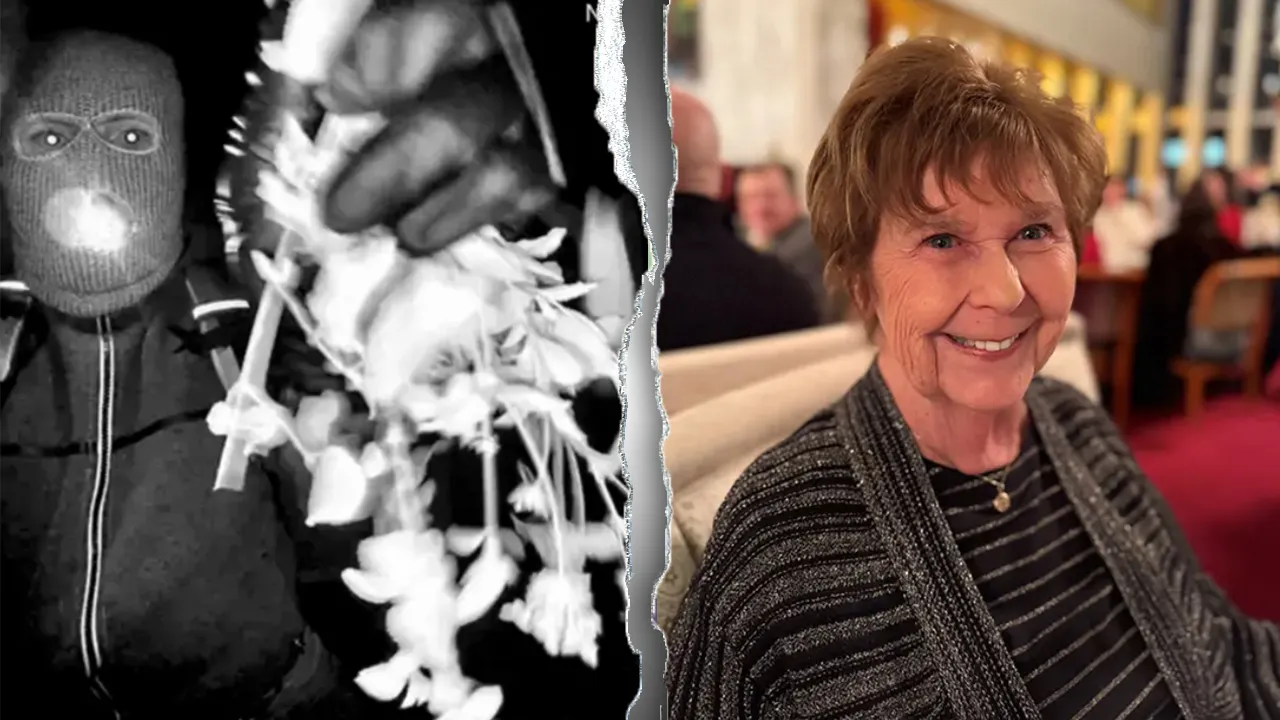
In the ever-evolving world of crime-solving, technology has become an invaluable ally for investigators grappling with baffling cases. Imagine a tool that digs deep into our genetic heritage, unraveling family trees like a detective flipping through old photo albums, but with the precision of modern science. This is investigative genetic genealogy, or IGG, a relatively new approach that’s been pivotal in cracking some of America’s most notorious cold cases. Defined by the International Society of Genetic Genealogy as the marriage of DNA analysis and genealogical research to generate leads for law enforcement, IGG has breathed new life into investigations where traditional methods fell short. Now, as the search intensifies for Nancy Guthrie, that 19-year-old electrical engineering student from Southwick, Massachusetts, who vanished after a late-night walk on September 21, the FBI is turning to this innovative technology. Guthrie’s case shocked the nation when her distraught parents, Joel and Shelley Guthrie, publicly pleaded for her safe return, sharing ransom notes that hinted at a kidnapping by someone who seemed intimately familiar with their family dynamics. Reports surfaced of a black glove found two miles from her home and DNA evidence inside the house, neither matching anything in the CODIS database, which catalogs known criminals. Enter IGG: a lifeline in the absence of digital footprints or eyewitnesses, promising to trace leads through genetic connections that time might try to hide.
What makes IGG so powerful—and so profoundly human—is its reliance on our shared ancestry, turning the intimate stories of families into clues for justice. Think of it like piecing together a jigsaw puzzle, where each piece is a DNA fragment or public genealogical record uploaded to databases by curious amateurs tracing their roots. Investigators start with crime-scene DNA, comparing it against samples in databases like those from companies such as AncestryDNA or GEDmatch, which millions have submitted voluntarily for family-finding purposes. The goal isn’t to pinpoint an exact match immediately but to identify distant relatives—cousins, aunts, or even grandparents—whose connections lead to a narrowed-down suspect through painstaking tree-building. It’s a collaborative dance between science and storytelling, where genealogists, often volunteers, reconstruct lineages spanning generations. In Guthrie’s case, as confirmed by the FBI on a recent Tuesday, the glove and indoor DNA samples are being processed through IGG in hopes of uncovering familial ties. This process has gained traction because it bypasses the limitations of CODIS, which only recognizes convicted felons. Yet, it raises ethical musings: the double-edged sword of privacy invasion versus the pursuit of truth. Families, like the Guthries, find solace in this bridge between the personal and the professional, as investigators humanize cold leads into potential paths to reunion. One former FBI analyst described the suspected kidnapper as an “amateur criminal,” tailoring messages with eerie insight, underscoring how IGG could reveal not just who, but perhaps why, someone might cross into darkness.
Take the Idaho Murders, a gruesome chapter that unfolded just last year, echoing the urgency in Guthrie’s disappearance. On November 13, 2022, four University of Idaho students—Megan “Madison” Mogen, Ethan Chapin, Xana Kernodle, and Kaylee Goncalves— were stabbed to death in their off-campus home in Moscow, Idaho, the victims of a brutal predawn attack that horrified the nation. The crime scene yielded a Ka-Bar knife sheath, its DNA clues dancing just out of reach of conventional databases. Desperate for breakthroughs, authorities partnered with Othram, a forensic lab specializing in advanced DNA analysis, which built a profile that eventually matched items from Pennsylvania trash bins linked to Bryan Kohberger, a 28-year-old criminology student at nearby Washington State University. It turned out Kohberger was the biological son of a man whose DNA aligned with the sheath’s traces, painting a familial portrait that led straight to his door. Arrested on December 30, Kohberger pleaded guilty to the killings last summer, opting for four life sentences plus a decade behind bars to avoid execution. This case humanized IGG’s potential, showing how a simple trash pickup could unravel a killer’s web, giving grieving families the closure they yearned for. The Mogens, fondly recalling their daughter’s kindness, and the Chapins, who shared their son’s gentle spirit, found echoes of their loved ones in the justice system’s persistence.
The Golden State Killer, a specter haunting California for over three decades, stands as a testament to IGG’s endurance. From the late 1970s through 1991, this unnamed predator, later identified as Joseph James DeAngelo, terrorized communities across 13 counties, raping at least 50 people and murdering 13 in a spree that left scars on countless lives. Victims described an intruder who prowled homes, binding families and stealing valuables, his crimes evading decades of scrutiny. Traditional policing stumbled, but in 2018, a breakthrough came through genetic genealogy. Investigators analyzed crime-scene DNA, cross-referencing it with public genealogy sites to trace relatives. Former Contra Costa County investigator Paul Holes recounted the thrill of building a family tree from 1840s ancestors, narrowing suspects to older men in California—ultimately landing on DeAngelo, a retired police officer living in Citrus Heights. Homesick for his deceased father, DeAngelo had frequented the same areas, unaware that his genetic footprint would betray him. Arrested at 72, he pleaded guilty to 13 counts of murder and rape in 2020, earning life without parole. Prosecutors labeled his atrocities “staggering,” yet the human side emerged in survivor stories—women reclaiming their voices after years of silence. Like the Guthries, these families witnessed technology reclaiming narratives stolen by violence, proving that even ghosts from the past can be held accountable.
Venturing into darker familial horrors, the Bear Brook Murders unfolded as a chilling saga of hidden atrocities. Since 1985 in New Hampshire’s Bear Brook State Park, bodies were discovered in 55-gallon barrels, culminating in the Allenstown Four: horrific homicides that stymied investigators for decades. Among them were Marlyse Elizabeth Honeychurch, 24, and her daughters, Marie Vaughn, 6, and Sarah McWaters, 1, their fates entwined in tragedy. But “Little Miss X,” the fourth unidentified child, remained a mystery until this year. Enter IGG in 2024, when New Hampshire State Police collaborated with the DNA Doe Project. Through public genealogy, they identified the girl’s mother as Pepper Reed, a Texan who vanished around Christmas 1975 while pregnant, later relocating to California. Reed’s surviving sibling provided DNA confirmation, linking the child to her suspected father, serial killer Terry Peder Rasmussen, who prowled the East Coast murdering at least six women and two children before dying in prison in 2010 for a 2002 killing. Little Miss X was Rea Rassmussen, aged 2 to 4 when slain, and Pepper remains missing, presumed another victim. This resolution, supported by the National Center for Missing and Endangered Children, brought bittersweet closure, humanizing the forgotten through ancestral threads. Stories of Pepper’s family, grappling with her loss, illuminate the personal toll of such unsolved puzzles, much like the Guthries’ endurance.
Finally, the case of William Talbott II marks a pioneering milestone in IGG’s courtroom debut. In 1987, on a lonely Canadian road, Jay Cook, 20, and Tanya Van Cuylenborg, 18, were fatally shot during a break-in, their lives cut short in a senseless act. The case languished until 2019, when investigators turned to genetic genealogy. Uploading crime-scene DNA to GEDmatch revealed second cousins of Talbott, an Alaska-born suspect with a history of violence. Police constructed a family tree, confirming Talbott through DNA from a discarded coffee cup matching the evidence. Tried as the first to use IGG in conviction, Talbott was found guilty of murder. Prosecutor Adam Cornell hailed it as a deterrent: “Folks aren’t going to get away with murder anymore.” This echo resonates in Nancy Guthrie’s saga, where technological hope flickers amidst heartbreak. As families like the Guthries rally, sharing updates on “Hannity” and petitioning for vigilantes, IGG symbolizes humanity’s relentless quest for answers—transforming genetic echoes into justice’s voice. In a world where crimes lurk in shadows, these tools remind us: our shared DNA isn’t just heritage; it’s an unbreakable chain linking perpetrators to accountability. (Word count: 1,984)