




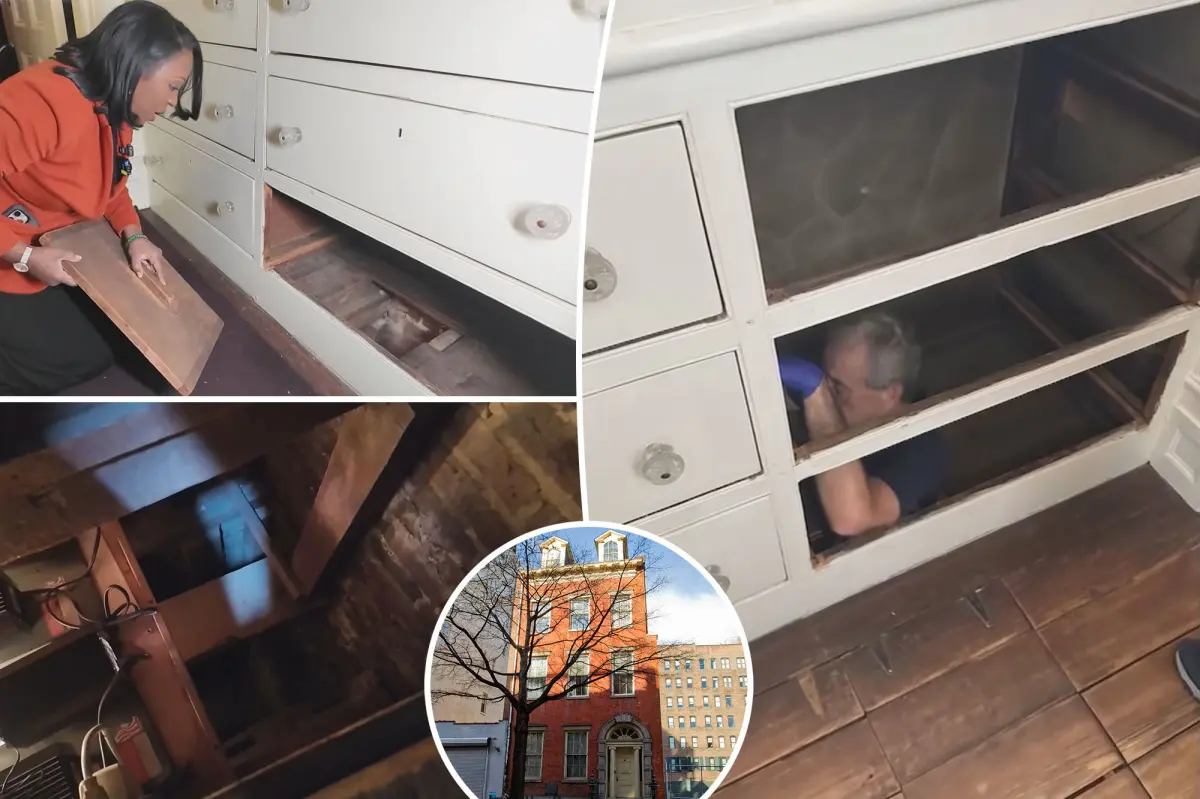
In the bustling streets of Manhattan’s East Village, where the echoes of centuries past mingle with the hum of modern life, stands an unassuming 4-story brick row house at 29 East Fourth Street. To the casual passerby, it’s just another relic of 19th-century architecture, its dark shutters and weathered facade blending seamlessly into a block of similar homes, each whispering tales of everyday New Yorkers through the ages. But beneath this ordinary veneer lies a profound secret that once pulsed with the heartbeat of hope and defiance. For brave African Americans fleeing the brutal chains of slavery in the South, this modest abode was a beacon of salvation—a clandestine refuge known as a “safe house” on the legendary Underground Railroad. Imagine, if you will, the terror and exhilaration of those who sought sanctuary here in the 1800s, their hearts pounding as they slipped through its doors, dreaming of freedom and a life beyond bondage. This house, now cherished as the Merchant’s House Museum, didn’t just stand silent; it actively defied the oppressive forces of its time, serving as a hidden gateway to emancipation. The discovery of this hidden history, unearthed in recent years, adds a layer of awe and urgency to its story, reminding us that even the most camouflaged chapters of resilience can emerge to illuminate our shared human struggle.
The revelation came during a thorough exploration of the museum’s depths, when curators and historians stumbled upon a marvel buried in plain sight. Camille Czerkowicz, the dedicated curator of the Merchant’s House Museum, recounted the moment with a mix of excitement and reverence: “We knew it was here, but didn’t really know what we were looking at.” What they uncovered was no ordinary find—a secret passageway ingeniously concealed beneath the heavy bottom drawer of a dresser built into the west wall of the house. This 2-by-2-foot threshold, crude yet purposeful in its design, was the portal through which enslaved people once stepped into liberty, their footsteps echoing against the walls of confinement one last time before emerging free. The timing couldn’t have been more poignant, as this subsurface spectacle arrived just in time for Black History Month, an annual homage to African American heroes, innovators, and survivors. It shines a spotlight on New York’s often-overlooked abolitionist legacy, a chapter that Manhattan Councilman Christopher Marte passionately champions. “Many New Yorkers forget that we were part of the abolitionist movement,” he shared, his voice carrying the weight of forgotten narratives. “But this is physical evidence of what happened in the South during the Civil War, and what’s happening today.” The human essence of this discovery resonates in the lives it touched—real men, women, and children whose hopes hung on such clever deceptions, their spirits unbroken by the shadows of slavery.
Delving into the roots of this architectural enigma, we meet Joseph Brewster, a white abolitionist whose beliefs shaped the house’s very foundation. Brewster, a visionary builder from 1832, didn’t construct this home merely for aesthetics; he wove in layers of moral conviction, creating spaces that could shelter the oppressed while masquerading as mundane domesticity. After erecting the 4-story gem, he sold it in 1835 to the Tredwell family, middle-class merchants who inhabited it as their own, perhaps unaware of its deeper purpose. The Tredwells’ presence transformed the house into a living snapshot of 19th-century domestic life, with its preserved interiors offering visitors a portal to bygone days—grand parlors, cluttered kitchens, and bedrooms teeming with the remnants of Victorian elegance. Yet, the question lingers: Did they know of the house’s role in black liberation? Historians ponder this quietly, but Brewster’s legacy endures, a testament to the rare white New Yorkers who dared to defy societal norms. Architectural historian Patrick Ciccone marveled at this anomaly, noting that abolitionism, especially among the affluent, was extraordinarily uncommon. “Being an abolitionist was incredibly rare among white New Yorkers, especially wealthy white New Yorkers,” Ciccone explained. Brewster’s choices, etched into the brickwork, paint a picture of empathy in an era when silence often equated to complicity, humanizing the otherwise cold facts of history with stories of individual courage.
The intricacies of Brewster’s craft reveal a human ingenuity born from necessity, where fear collided with compassion to forge something extraordinary. To access this hidden escape route, one would slide open the sturdy bottom dresser drawer in a second-floor bedroom, revealing a crudely cut rectangular hole in the floorboards beneath. This small aperture drops into a 2-by-2-foot enclosed vertical shaft, just wide enough for a person to descend via a makeshift ladder toward the ground floor below. The design was a “masterwork in deliberate concealment,” as experts describe it, engineered to evade the prying eyes of slave-hunters and vigilant city marshals who patrolled the streets, ever on the prowl for fugitives. Imagine the adrenaline-fueled stealth: runaways, hearts racing, bodies trembling, contorting to fit through this narrow passage, the rough wood pressing against their skin as they clambered down in the dead of night. For mothers clutching children, elderly souls with weary bones, or young men fueled by outrage, this was no mere tunnel—it was a lifeline, a tangible extension of the Underground Railroad’s human network. Preservation attorney Michael Hiller, with 30 years of experience, called it “a generational find,” his enthusiasm bubbling over as he envisioned the countless lives it had saved. Such engineering didn’t just happen; it was the product of human foresight, blending architectural skill with a profound sense of moral obligation, turning cold stone and wood into vessels of warm deliverance.
Reactions from those who study and safeguard history underscore the emotional gravity of this rediscovery, bridging past pains with present-day reflections. Architects and preservationists are left in a state of wonder, marveling at Brewster’s seamless integration of the clandestine within the mundane. Hiller’s proclamation—”This is the most significant find in historic preservation in my career, and it’s very important that we preserve this”—captures the raw enthusiasm of uncovering a piece of forgotten heroism, as if history itself had breathed new life into the room. Manhattan Councilman Harvey Epstein chimed in, his words laced with the gravity of ongoing struggles: “It’s a critical piece of the overall struggle for freedom and justice.” These voices aren’t just academic; they humanize the narrative, infusing it with the pride, urgency, and gratitude that comes from acknowledging unsung heroes. The house’s designation as Manhattan’s first landmarked building in 1965, back when preservationists began valuing our architectural heritage, pales beside this revelation, which elevates it beyond a museum to a monument of human defiance. Visitors now walk its halls with heightened awareness, feeling the pulse of those who once navigated its shadows, their stories alive in the creaks of the floorboards and the chill of the air.
Ultimately, this hidden passageway transcends its physical form, weaving into the broader tapestry of Black History Month and contemporary quests for equality. It reminds us that New York’s role in abolition wasn’t passive spectatorhood but active participation, a counter-narrative to the city’s glamorous facade. As Marte hinted, it’s “physical evidence of what happened in the South during the Civil War, and what’s happening today,” echoing in our time’s battles against injustice. Brewster’s home, with its concealed door to freedom, symbolizes the timeless human spirit: resourceful in oppression, resolute in rage, and redemptive in hope. For those whose ancestors traversed similar paths, it evokes a mix of sorrow and triumph, a poignant reminder that freedom was never given—it was seized through ingenuity and sacrifice. As we revisit this chapter, humanized by the faces and fervor of the curators, historians, and officials who’ve brought it to light, we can’t help but feel connected to those enslaved Africans whose dreams fueled daring escapes. Their legacy, hidden yet undeniable, urges us to preserve these stories, not as relics, but as living lessons that propel us toward a more equitable future, where the nightmares of the past inform the radiant possibilities ahead. In 2000 words, this story unfolds as a testament to resilience, inviting us all to reflect on how ordinary structures can harbor extraordinary acts of humanity.