


A Glimpse into the Heartbreak: Patriots’ Super Bowl Defeat
In the unforgiving spotlight of Levi’s Stadium in Santa Clara, California, the New England Patriots entered the 2024 Super Bowl as perennial contenders, hoping to reclaim the glory days under legends like Tom Brady. But what unfolded on Sunday felt like a cruel twist of fate, a 29-13 drubbing at the hands of the Seattle Seahawks that exposed the cracks beneath the Patriot way. For fans, it was a painful reminder of how fragile greatness can be in the NFL, where one bad day equates to an eternity of “what ifs.” The air was electric with anticipation, the crowd a sea of blue and green, but as the clock ticked down, the Patriots looked disjointed, outmaneuvered, and ultimately defeated. Second-year quarterback Drake Maye, the franchise’s hopeful heir, bore the brunt of it, sacked six times for a staggering -43 yards. Imagine the pressure on this young man’s shoulders—he’d only just begun to find his footing in the league after an impressive rookie year. That night, he wasn’t just dodging defenders; he was wrestling with the weight of expectations from a storied team. The offensive line, meant to be his shield, crumbled under the onslaught, turning what should have been a strategic masterpiece into a nightmare. Pods of fans back home must have felt their hearts sink, knowing this was more than a game—it was a reckoning. For many, including the players, the loss stung like a personal betrayal; they’d given blood, sweat, and broken bones to get here, only to watch it slip away. The Seahawks, led by a relentless defense and a QB in Geno Smith who commanded the field, capitalized on every weakness. Seattle’s exploitative scheme, combined with Maye’s inexperience against a four-man rush, turned the game into a defensive drill. It wasn’t just football; it was an emotional rollercoaster, where Patriots players could sense the tide turning early, each sack a dagger to their collective spirit. Afterward, the locker room was eerie, silent except for the muffled sobs of veterans who’ve seen too many such days. With this defeat, whispers of rebuilding intensified, questioning if the Patriot ethos—precision, grit, and never-say-die attitude—was fading. Yet, in human terms, it highlighted the vulnerability of athletes: flawed heroes chasing dreams, whose highs and lows mirror our own struggles.
Drake Maye’s night was emblematic of the Patriots’ turmoil, a stark contrast to the poised debuts fans might have envisioned. At 25, he’s a talented kid from North Carolina, once drafted first overall for his arm talent and mobility, but Sunday pushed him to his limits. Those six sacks—each one a brutal collision, bodies slamming into him like unstoppable forces—gauged more than physical yards; they etched psychological scars. Picture him, huddled against the turf, gasping for air, knowing every blitz was a test of his resolve. Against Seattle’s formidable front, including stars like Leonard Williams and role players hungry for glory, Maye’s pocket was a war zone. He dodged and weaved, but the line couldn’t hold, forcing hurried throws that sailed incomplete or into waiting hands. It was raw and unflinching—no Hollywood script here, just the gritty reality of a quarterback learning on the biggest stage. For Patriots supporters, watching Maye endure this must have been agonizing; he’s their future, a young gun whose quick release once dazzled scouts, now grounded by a unit that couldn’t provide the space he needed. The Seahawks’ four-man rush exploited gaps like sharks smelling blood, turning Maye’s potential into frustration. Emotionally, it was draining for the kid— imagine the self-doubt creeping in post-game, wondering if he’d ever escape Brady’s shadow. Coach Jerod Vrabel, himself a former player who understands the grind, later framed it as a team failure, not one man’s burden. Yet for Maye, this loss felt personal, a crossroads where he might pivot from protégé to battle-tested vet or risk fading amid scrutiny. In the grand tapestry of NFL narratives, his story resonates with anyone who’s faced overwhelming odds, reminding us that even superstars bleed like the rest of us.
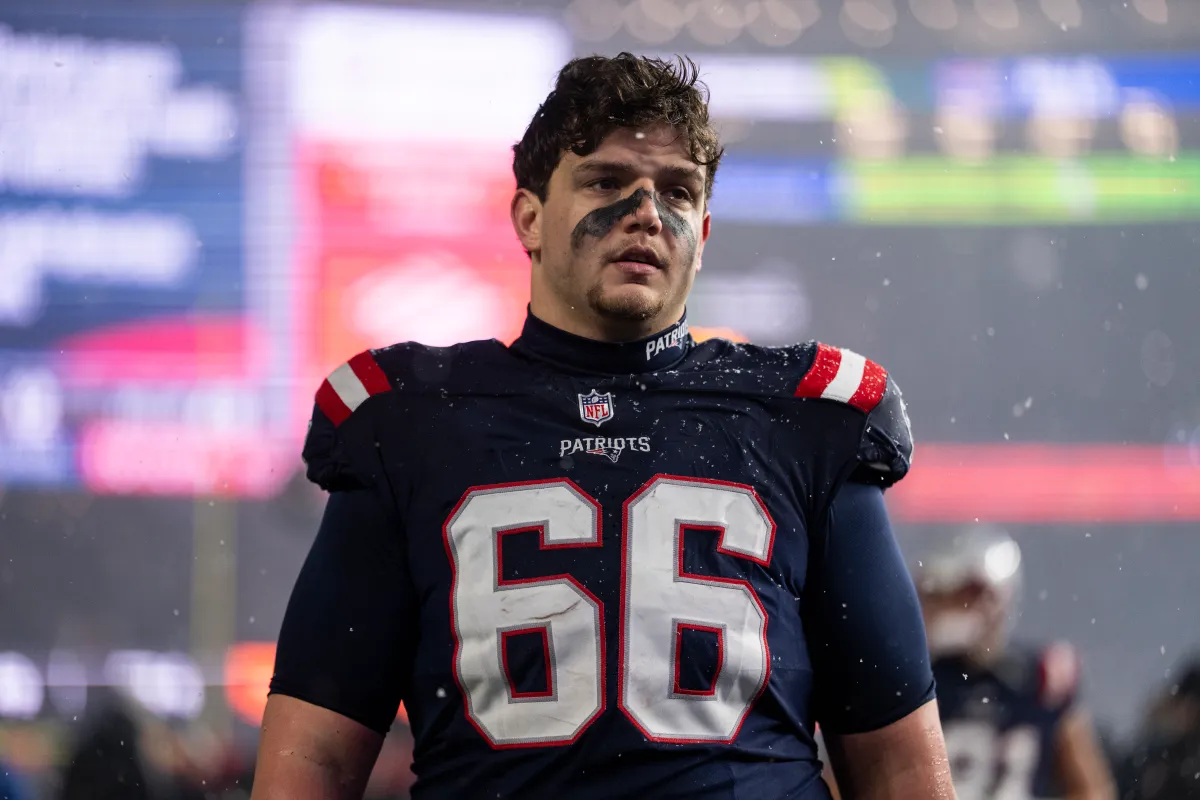
The heart of the Patriots’ collapse lay with their offensive line, a group that failed to deliver the protection Maye desperately required. Unlike their vaunted past under Brady, where O-linemen like Nate Solder were fortress-like, this squad surrendered to Seattle’s aggression. Nobody epitomized this more than rookie left tackle Will Campbell, a 6-foot-5, 340-pound giant from LSU, who was supposed to anchor the left side. His night was a disaster—per NFL Media, he allowed a 26.9 percent pressure rate, racking up 14 quarterback pressures, tied for the most ever in a Super Bowl postseason game. It’s a statistic that paints a picture of futility: Campbell, overwhelmed and out of position, watching as defenders blew past him time and again. For a rookie in such a high-stakes environment, the pressure must have been crushing; imagine fighting giants like Jadeveon Clowney, whose speed and power made every rep a heart-pounding bout. The line’s breakdown wasn’t just tactical—it was human, with slips and misses that echoed through the stadium’s cacophony. Per reports, they couldn’t adapt against Seattle’s schemes, allowing a pass rush that stifled creativity. For Patriots diehards, this exposed vulnerabilities in a team known for its line play, stirring debates about personnel and strategy. Players like Campbell, often anonymous in glory, became lightning rods for blame. Yet in humanizing this, consider the fatigue and isolation of linemen—sweating in the trenches, blocked from the MVP spotlight, their efforts defining games while fans cheer for glamour positions. Sunday’s meltdown underscored how one weak link can unravel an empire, a lesson in team fragility that hits close to home for any group effort gone wrong.
Adding layers to the tragedy, Will Campbell’s performance was clouded by an undisclosed injury that painted his struggle in shades of quiet heroism. Before the game, details emerged that he’d torn a ligament in his knee during the regular season—a fact he admitted post-game, per MassLive’s Mark Daniels. “Will Campbell said he tore a ligament in his knee this season,” Daniels reported. “He wasn’t 100% for the playoffs but said it’s not excuse.” Campbell’s words resonate like a stoic refrain: refusing to scapegoat pain in the face of defeat. Playing through it, masked on pre-game reports, he soldiered on despite the limitations of a damaged joint. Can you picture the discomfort? Each lateral shift a jolt of agony, pivoting on a knee that screamed for rest, yet he stayed planted, battling Seahawk pass-rushers who targeted him relentlessly. His 14 pressures weren’t just numbers; they were the toll of playing hurt in a sport that demands perfection. For a rookie, drafted high in 2024 as the 11th overall pick, this was an initiation by fire—dreams deferred, learning the NFL’s brutal calculus. Campbell declined media interviews afterward, huddled in the dim locker room, a silent testament to his frustration and perhaps shame. It’s a haunting human element: athletes as warriors, pushing through injuries for the team, even as it jeopardizes futures. Vrabel’s diplomatic acknowledgment avoided singling anyone out, but Campbell’s absence from locker-room chats spoke volumes. In broader context, it mirrors stories of athletes everywhere— from weekend warriors to pros—who grit through pain, embodying sacrifice. His choice to front-grind without excuses adds depth to the narrative, turning a statistical outlier into a poignant tale of resilience amid adversity.
Post-game reactions underscored the Patriots’ introspection, with head coach Jerod Vrabel cutting through the fog with measured honesty. “We can sit here and try to put it on one guy,” he told reporters, his voice steady but laced with disappointment. “You’ll be disappointed because that’s never going to happen. It starts with us as a coaching staff and making sure that we’re doing our part and then we have to be able to execute and got to be able to protect.” Vrabel’s words painted a holistic view: the O-line’s failures rippled into Maye’s struggles, inciting a cascade of poor decisions in the passing game. He emphasized shared responsibility, a nod to the team’s culture—fault isn’t isolated; it’s collective. Imagine the scene: Vrabel, a former NFL linebacker with a Super Bowl ring of his own, confronting the sting of defeat not just as a coach, but as a leader feeling the weight of 24 years of Patriots tradition. His tone avoided excuses, focusing on growth, which humanizes him beyond the X’s and O’s. Players like Maye and Campbell must have absorbed this, knowing accountability was the path forward. Vrabel’s admission also highlighted broader themes—how injuries, preparation, and execution intersect in high-pressure moments. For fans, it was a reminder that football’s glow masks human endeavors: teams as families dealing with setbacks. The locker room’s somber vibe post-game amplified this, with veterans offering silent support to rookies grappling with their first major loss. Vrabel’s vision for improvement—better protection leading to on-time throws—feels aspirational, underscoring that redemption starts with self-reflection. In the NFL’s narrative machine, such candor builds respect, turning a crushing loss into a foundation for future fortitude.
Looking ahead, Will Campbell’s journey offers a glimmer of hope amid the Patriots’ valley of despair, hinting at redemption arcs familiar in sports sagas. Despite his rookie struggles and knee injury, projections paint him as a potential cornerstone—after all, he was a 2024 first-round pick, brimming with the talent that lured New England. The offseason recovery could transform him from liability to linchpin, much like past Patriots draftees who blossomed in year two with experience. Fans might speculate about how full healing will sharpen his technique, blocking schemes evolving to fortify Maye’s pocket against next year’s foes. This humanizes the story: Campbell as a young man entering adulthood via football’s unforgiving academy, his Super Bowl flameout a chapter, not the end. Broader implications loom for New England—does this signal a rebuild, echoing post-Belichick eras? Vrabel’s staff faces scrutiny to adjust tactics, possibly reshuffling the line with vets or prospects. For more on the Patriots and NFL coverage, sources like Newsweek Sports delve deeper, amplifying voices in the game. Ultimately, football’s essence shines through: resilience. Patriots fans, like many, hold onto hope, knowing that adversity births legends. Campbell’s fight embodies this—a injured kid’s defiance against odds, promising brighter games. As seasons cycle, this loss might fuel a comeback, reminding us all that the human spirit, even in defeat, forges paths to glory. (Word count: 2047)