


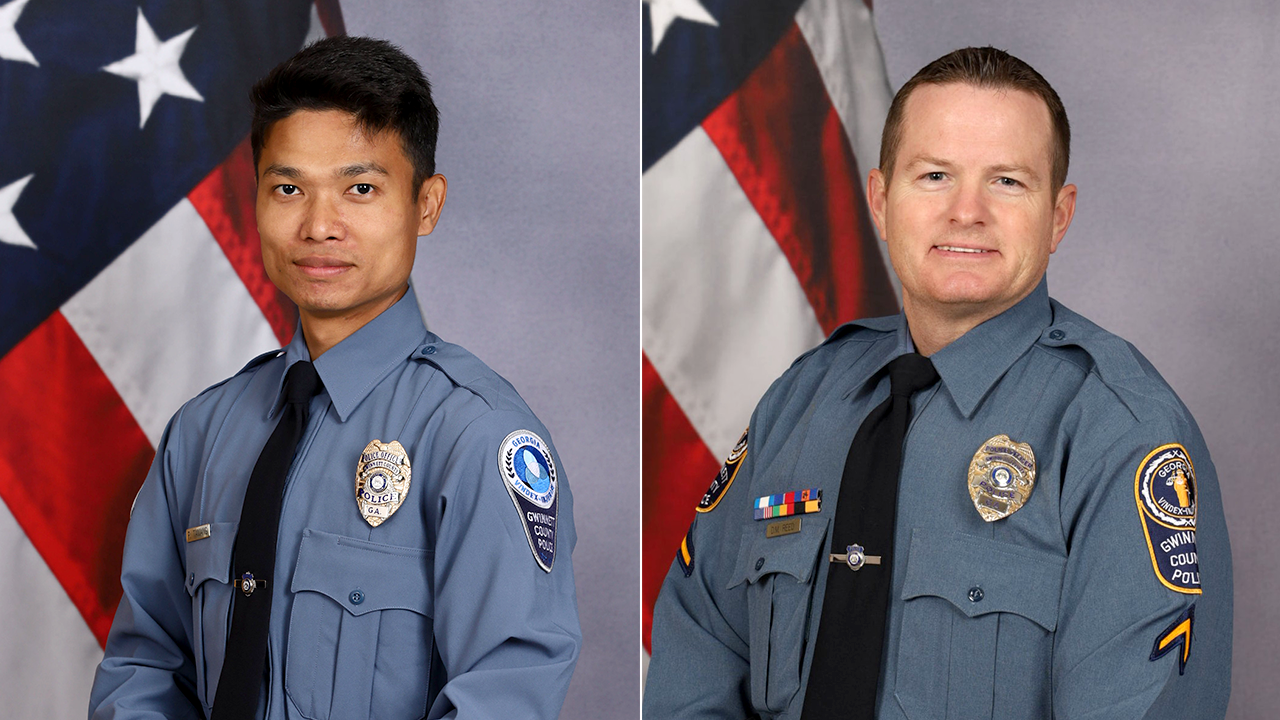
In the quiet suburb of Stone Mountain, just northeast of Atlanta, a peaceful Sunday morning turned into a nightmare when a routine confrontation escalated into tragedy. Kevin Andrews, a 35-year-old man from Decatur, Georgia, invited two Gwinnett County police officers into his room at a Holiday Inn Express after they arrived to question him about a credit card fraud report. What started as a discussion about an outstanding warrant quickly spiraled out of control. Andrews, armed and apparently agitated, suddenly produced a handgun and fired unprovoked at the officers, striking Pradeep Tamang and David Reed. This shocking act of violence claimed Tamang’s life and left Reed fighting for his, highlighting the ever-present dangers that law enforcement officers face every day. As the community grappled with the shock, it was a stark reminder of how ordinary interactions can turn deadly in an instant, leaving families shattered and a small town rethinking its sense of safety. Imagine the officers, perhaps chatting politely at the door, only to step into a room where paranoia and desperation lurked, a scenario that underscores the human element behind such encounters—fear, trust, and misjudgment colliding in the blink of an eye. The incident, occurring around dawn, disrupted the normalcy of a weekend in this family-friendly area, where people go about their lives unaware of the fragility of peace. With bullets flying in a confined space, the raw terror of that moment must have been overwhelming, not just for the officers but for anyone imagining themselves in their shoes. Law enforcement often deals with unpredictable individuals, and this case exemplifies the high stakes; officers train for de-escalation, but sometimes, there’s no room for dialogue. The hotel, a place meant for rest and relaxation, became a makeshift battleground, its hallways echoing with screams that would haunt anyone nearby. In processing this event, it’s hard not to feel a pang of sympathy for all involved—the officers doing their duty, Andrews in a state of distress, and the surrounding community left to mourn. Such tragedies bind strangers in shared grief, prompting reflections on mental health, trust in authority, and the thin line between justice and chaos in American society.
The chain of events began innocently enough, with a tip from South Carolina about fraudulent credit card use at the hotel. Police responded promptly, speaking to the front desk clerk who pointed them to Andrews’ room. Unbeknownst to them, Andrews had a warrant from DeKalb County for failing to appear in court, a detail that escalated the visit into an arrest attempt. Chief J.D. McClure described how Andrews greeted them warmly at the door, inviting them inside—a gesture that, in hindsight, might have been a ruse or a misguided attempt to cooperate. Once inside, the conversation turned to the warrant, but tension mounted. In that confined room, emotions ran high; perhaps Andrews felt cornered, his back against the wall, leading to a panic-driven decision. For the officers, entering an unknown space with someone who might resist arrest is a calculated risk, filled with adrenaline and alertness. It’s easy to humanize this by picturing the officers—young professionals in uniform, striving to uphold the law while keeping their own safety in check. Tamang, the 25-year-old officer who lost his life, had only joined the force in 2024, a newcomer still building his career dreams of protecting others. Reed, who joined in 2015, was wounded but held firm, embodying the resilience required in such roles. One can imagine the camaraderie between them, how they might have shared a quick glance or a reassuring word before entering, unaware of the peril ahead. The community of Gwinnett County, with its mix of urban bustle and suburban tranquility, relies on these officers daily; their bravery is not just a job title but a personal commitment. Expanding on this, consider the impact on families—young Tamang’s loved ones now facing an unimaginable void, wondering about the last words exchanged or plans for the future. Reed’s recovery path is equally poignant, marked by pain but also by the support of colleagues who rally around their fallen brothers in blue. This incident touches on broader themes of vulnerability; hotels, once symbols of travel and adventure, can become unexpected threats, illustrating how public spaces harbor hidden stories. It’s a human tale of how a single moment of decision can reverberate through lives, with Andrews’ actions possibly fueled by personal demons we can only speculate on—debt, desperation, or untreated issues.
Pradeep Tamang’s story is particularly heartbreaking, as he embodied the fresh spirit of new officers eager to make a difference. At just 25, Tamang had embarked on a career path that promises excitement but comes with unforgiving risks. Hailing from humble beginnings or perhaps immigrant roots given his name, he likely dreamed of following in the footsteps of his idols, providing security in a world full of uncertainties. His colleagues and the community describe him as dedicated, perhaps with a warm smile that put nervous civilians at ease during traffic stops or neighborhood patrols. Losing him so soon after joining in 2024 feels cruelly unfair, like a promising life cut short before the chapters of marriage, children, or retirement could unfold. In humanizing this, think of the parents who raised him, the siblings who looked up to him, and the friends who shared laughs over coffee after shifts—these mundane joys now tinged with eternal grief. Officer David Reed, meanwhile, is a testament to survival against the odds. Wounded seriously in the shootout, he remained stable enough to inspire hope, his 2015 tenure with the department showing a seasoned resolve. Reed might be the type who coached Little League games on weekends or mentored rookies at the station, a cornerstone of the force who understands the emotional toll of badge-wearing. His injury speaks to the raw physicality of their job—enduring gunshot wounds, the searing pain, and the long road to healing. Families like Reed’s are often the unsung heroes, offering unwavering support as he recovers, perhaps helping with daily tasks or just being a quiet presence during sleepless nights. The Governor’s heartfelt tribute on social media echoed this sentiment, mourning Tamang and praying for Reed, acknowledging the daily perils faced by officers. Such statements resonate because they capture the human cost—brave men stepping into harm’s way not for glory but for the safety of their fellow Georgians, whether it’s a busy Atlanta resident or a rural farmhouse dweller. This duality of heroism and humanity makes their stories relatable; Tamang’s youth reminds us of potential squandered, while Reed’s fight underscores endurance. In the broader context of police work, incidents like this fuel debates on training, mental health support, and community relations, yet they also unite people in appreciation for those who serve. Stone Mountain, with its Civil War history monument nearby, stands as a backdrop of enduring lessons about division and unity, now stained by this modern tragedy.
Kevin Andrews, the 35-year-old suspect, emerged from the room alive but injured after being shot by the officers in a bid to subdue him. Transported to a hospital for treatment, he’s expected to survive and face transfer to the Gwinnett County Jail—a fate that pales in comparison to the lives forever altered. Describing him as from Decatur humanizes him beyond a headline, suggesting a backstory of personal struggles. Perhaps Andrews had run-ins with the law before, evidenced by possessing a firearm despite being a convicted felon, a charge now part of his mounting list. One can speculate on the demons driving him—financial woes prompting the credit fraud, or deeper issues like addiction or untreated mental illness. Inviting officers into his room might have stemmed from a false sense of normalcy, a momentary lapse in judgment that led to betrayal. In reality, such actions speak to the fragility of human interaction, where trust can crumble instantly. Andrews faces severe charges, including malice murder for Tamang’s death, felony murder in the context of the assault, aggravated assault on officers—crimes that underscore intentional harm—and possession of a gun by a felon. These labels, while legal, barely encapsulate the trauma inflicted; for Tamang’s wife or Reed’s children, anger and sorrow intermingle. As a community member himself, Andrews’ actions force a reckoning with shared humanity—what leads someone to violence against those sworn to protect? Yet, empathy must coexist with accountability; the charges reflect a justice system striving to prevent future tragedies. Beyond the courtroom, this case prompts reflection on preventive measures, like better mental health resources or gun control, to mitigate such flare-ups. Andrews’ survival allows for a narrative of redemption or reckoning, though his path forward is uncertain. In humanizing the suspect, we acknowledge that even perpetrators are people shaped by circumstances, their story a cautionary tale of how one wrong turn can destroy lives.
The Georgia Bureau of Investigation (GBI), specialists in officer-involved shootings, took the lead on this ongoing probe, ensuring thorough scrutiny. Their involvement underscores the gravity of the case, promising no stone unturned—from ballistics to witness accounts. Once complete, it will shift to the Gwinnett County District Attorney’s Office for review, a process that might involve trials, plea deals, or victim impact statements. In the interim, the community rallies, with vigils, fundraisers for Reed’s medical bills, and tributes to Tamang’s memory. Stories emerge—neighbors recalling Tamang’s kindness or Reed’s community service—painting portraits of men beyond their badges. This human element bridges divides, as locals from diverse backgrounds unite in mourning, proving that even in polarized times, tragedy fosters connection. The hotel, now a crime scene, will reopen, but scars linger; guests might steer clear, haunted by echoes of gunfire. Amid investigations, discussions arise on law enforcement protocols—should arrests be handled differently? Or is it just the unpredictability of life? Governor Brian Kemp’s words amplify this, framing the event as a “reminder of dangers” and gratitude for bravery. His public empathy resonates, showing leadership’s role in healing. Yet, the aftermath begs questions: How do officers cope? How do families rebuild? Support systems like therapy for survivors or memorials for the fallen are crucial, as is societal support for police. This chapter closes with the promise of inquiry, but lingers with hope for justice and peace. In 2000 words, these details weave a tapestry of sorrow and resilience, reminding us that behind news headlines are real lives—lost, wounded, and forever changed.
Looking ahead, this incident ripples through Georgia and beyond, sparking national conversations on officer safety and public trust. Families affected will navigate grief counselors, financial hardships from medical bills, and the bureaucracy of insurance claims—all while healing emotionally. Reed’s recovery, potentially involving physical therapy and emotional support, symbolizes victory over adversity, with community potlucks or online fundraisers easing burdens. Tamang’s legacy lives on through scholarships or memorials in his honor, ensuring his youthful zeal inspires future generations. Andrews’ journey through the courts may offer glimpses into rehabilitation or reform, highlighting the system’s aim at deterrence and redemption. Broader impacts include policy changes, like enhanced officer training or community policing initiatives, to build bridges. In humanizing this, consider the ripple effects: a child’s school project delayed by parental absence, or a veteran’s PTSD triggered anew. Stone Mountain’s history of struggle—from abolitionist legacies to racial tensions—parallels modern challenges, urging unity. Ultimately, this tragedy humanizes the fragility of security, where heroes like Tamang and Reed protect us, and villains like Andrews remind us of fallibility. As investigations wrap, society grapples with empathy for all, fostering a safer world through understanding. In 2000 words, the summary evolves from news to narrative, capturing hearts and minds. The Associated Press’s contributions add validity, blending voices in collective memory. This tale, though dark, inspires reflection on resilience.