

Immigration Tensions Ease in Minnesota as Trump Changes Course
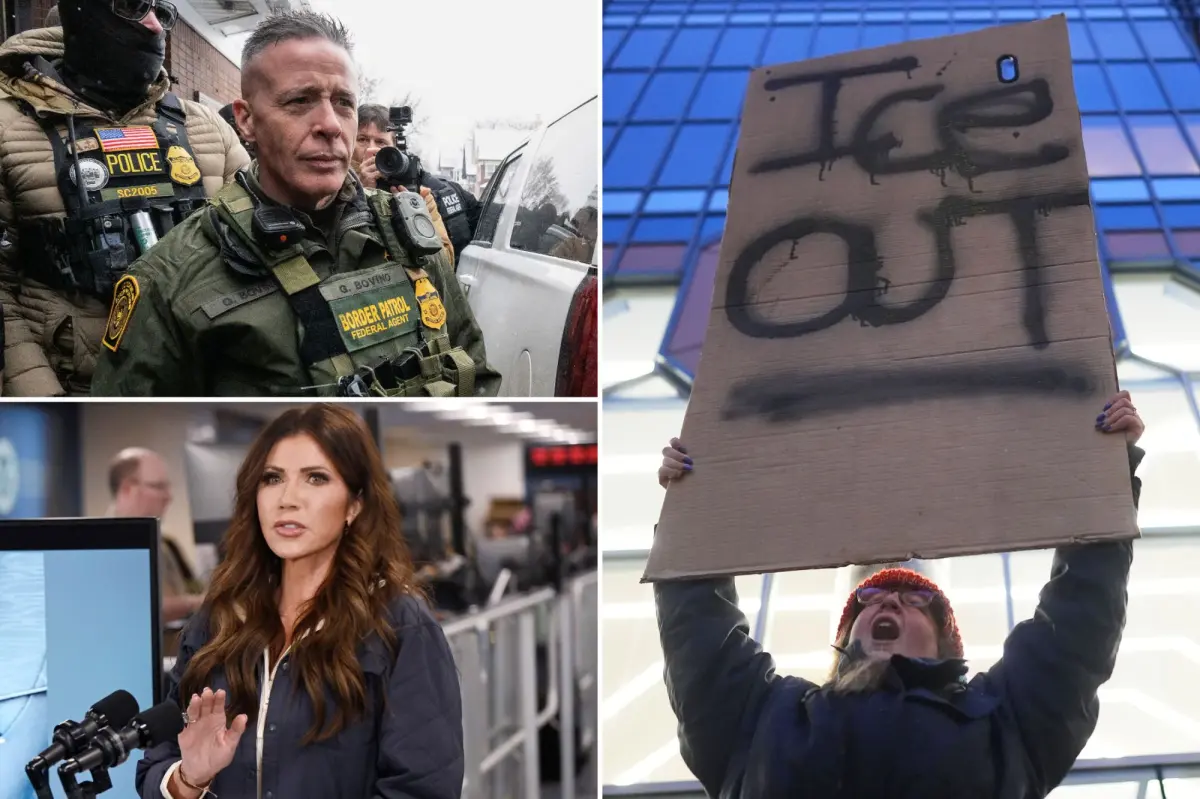
In a significant shift in strategy, President Trump appears to be taking steps to ease tensions in Minnesota after weeks of controversial immigration enforcement operations. The situation, which has been marked by two fatal shootings and growing protests, shows signs of potential de-escalation following direct intervention from the White House. The president has recalled hard-charging Border Patrol commander Gregory Bovino from the state and dispatched his “border czar” Tom Homan to take control of operations on the ground. This move comes after Trump held what he described as “very good” phone conversations with Democratic Governor Tim Walz and Minneapolis Mayor Jacob Frey, suggesting a new approach to the contentious immigration enforcement actions in the state.
The change in leadership follows intense scrutiny over two fatal shootings involving federal agents in Minneapolis. The most recent incident involved Alex Pretti, a 37-year-old armed nurse who was killed by Border Patrol agents on Saturday. Body camera footage showed officers pinning Pretti to the ground and removing his legally permitted 9mm handgun. According to sources, the Department of Homeland Security is investigating whether the gun discharged accidentally as an officer walked away with it, potentially causing other agents to believe they were under fire before they shot Pretti. This shooting occurred just 17 days after another controversial incident in which Renee Good, a 37-year-old anti-ICE activist and mother of three, was killed after allegedly accelerating her vehicle toward an ICE officer. Both shootings have intensified anti-ICE protests in Minneapolis and raised questions about the tactics being employed by federal agents.
The president’s decision to send Homan to Minnesota while ordering Bovino and some Border Patrol agents out of the state represents a significant course correction. Bovino had come under particular criticism for claiming that Pretti was planning to “massacre” immigration officers, a characterization that appeared to go beyond available evidence. Similarly, both Homeland Security Secretary Kristi Noem and White House deputy chief of staff Stephen Miller had labeled Pretti and Good as “domestic terrorists,” rhetoric from which the White House is now distancing itself. The administration’s shift seems to acknowledge the growing public concern about enforcement methods, while still maintaining its commitment to immigration enforcement. Trump described Homan as “tough but fair” and noted that he would “report directly to me,” a statement that has raised questions about Noem’s standing in the administration.
Despite the apparent sidelining of Noem in Minnesota operations, White House press secretary Karoline Leavitt insisted that the Homeland Security Secretary “still has the utmost confidence and trust of the president.” Leavitt explained that Noem’s responsibilities extend beyond immigration enforcement to include overseeing FEMA, particularly important given recent severe winter storms affecting hundreds of thousands of Americans. She characterized Homan as being “in a unique position to drop everything and go to Minnesota” to continue discussions with state and local officials. Nevertheless, the tension between Homan and Noem is reportedly significant, with sources indicating they are barely on speaking terms and differ fundamentally in their approach to immigration enforcement—Noem favoring mass deportation as a deterrent, while Homan prefers targeting those with criminal records.
The administration is now outlining specific requests in exchange for reducing the federal agent presence in Minnesota. According to Leavitt, these include turning over all illegal immigrants in state and local custody, promptly handing over any illegal immigrant arrested by local officials, and cooperating with federal law enforcement in apprehending illegal immigrants wanted for criminal behavior. Until now, the ICE operation in Minneapolis has been substantial, with approximately 3,000 agents operating in the area and roughly 3,400 arrests carried out. Governor Walz, who just days earlier had compared Trump’s immigration operation to the Holocaust, described his conversation with the president as “productive” and said Trump had agreed to “look into reducing the number of federal agents” in the state. Mayor Frey, who had previously told ICE agents to get “the f— out” of his city, is now scheduled to meet with Homan.
Trump appears to be attempting a delicate balancing act between maintaining his tough stance on immigration while addressing growing concerns about enforcement tactics. A recent New York Times/Siena poll found that while about half of voters support Trump’s deportation plan and his handling of the border, 61% believe ICE’s tactics have “gone too far.” This sentiment is not limited to Democrats, as evidenced by Republican Senator John Curtis of Utah’s criticism of Noem’s “premature DHS response” to the Pretti shooting, which he said “came before all the facts were known and weakened confidence.” As the Department of Homeland Security continues its internal investigation into Pretti’s death, reviewing body camera footage from multiple angles with support from the FBI, the administration’s handling of immigration enforcement in Minnesota may represent a turning point in its approach to the contentious issue—maintaining the policy while modifying its implementation in response to public and political pressure.