



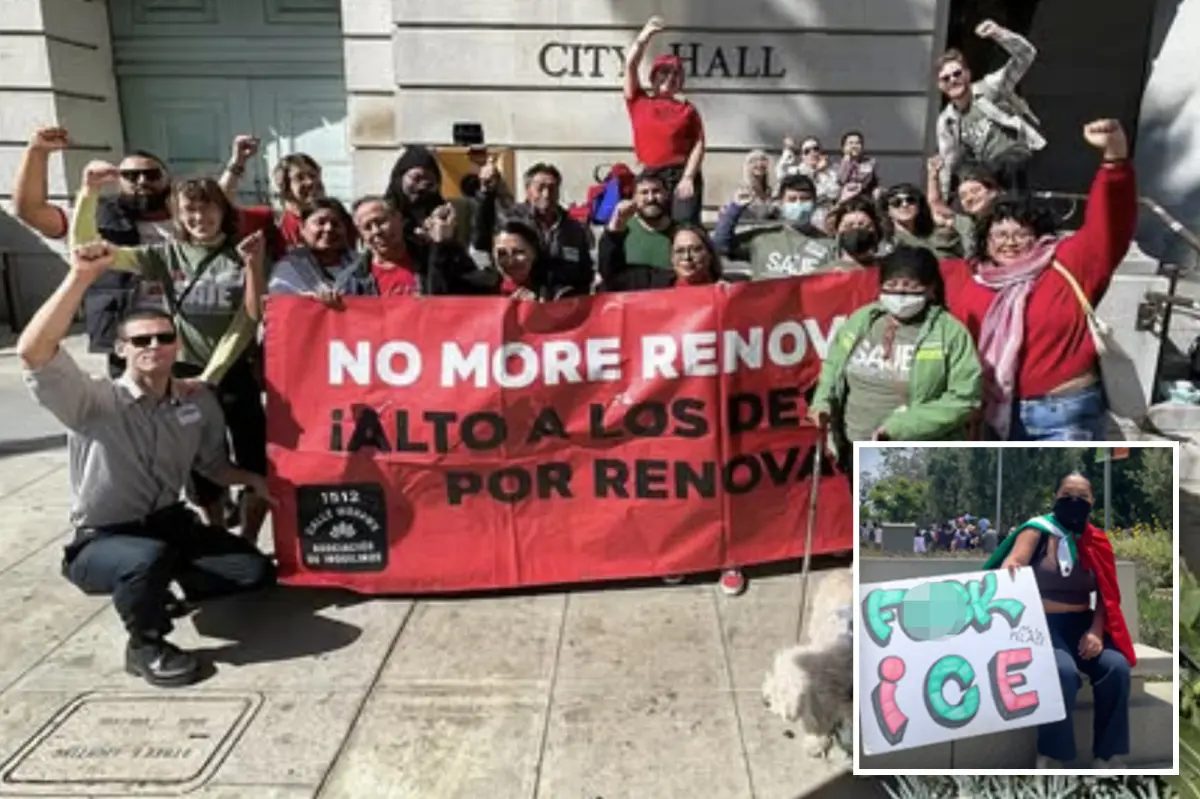
Los Angeles Quietly Funds Social Justice Group with Radical Agenda
In a surprising revelation for many Los Angeles taxpayers, the city has directed approximately $1.4 million of public funds to Strategic Actions for a Just Economy (SAJE), an activist organization with goals that include abolishing the LAPD, canceling the 2028 Olympics, and halting rent and mortgage payments. What makes this arrangement particularly noteworthy is that SAJE isn’t merely a protest group—it’s a paid contractor for the City of Los Angeles. This dual relationship has raised questions about transparency, priorities, and potential conflicts of interest in how the city allocates public resources.
City records reveal that since 2020, SAJE has received at least $1.43 million through contracts primarily with the Los Angeles Housing Department and additional grants from the Department of Water and Power. The organization’s work officially involves tenant outreach, education, and housing-related mapping services. However, SAJE’s advocacy positions have often positioned it in direct opposition to city institutions and initiatives. The group has organized rallies, coordinated with progressive City Council members, and used social media platforms to advocate for defunding or abolishing the police department, opposing the LA28 Olympics, and implementing broad rent freezes—policies that many consider radical and potentially harmful to the city’s economic future.
This funding arrangement has created frustration among small property owners who feel betrayed by the city’s financial support of an organization that often takes positions against their interests. “There were times I honestly didn’t know if I could keep the doors open,” shared Venice landlord Craig Ribeiro. “And then you realize you’re paying into groups that are fighting people like me—that’s infuriating.” Another housing provider, Megan Briceño, expressed similar sentiments: “Having a group like SAJE being paid by the city feels like another nail in the coffin. This isn’t some abstract policy debate. It’s personal. It’s destabilizing. And it feels deliberate.” Their concerns highlight the real-world impact of the city’s funding decisions on small business owners trying to navigate an already challenging housing market.
Perhaps most striking is that SAJE has actually sued the City of Los Angeles—the very entity that funds it—over approvals for a luxury hotel project on public land, leading to closed-door settlement discussions by the City Council in 2023. Despite this adversarial relationship, the city maintained and even updated its funding relationship with SAJE that same year. Most of the funding comes through the Systematic Code Enforcement Program, a fee-based system paid by tenants and landlords that operates outside the city’s general fund. This arrangement creates a layer of opacity, as there isn’t the same level of transparent accounting that typically accompanies taxpayer-funded programs. Additionally, SAJE is exempt from the city’s lobbying ordinance, meaning it doesn’t have to disclose meetings with city officials, legislation it promotes, or its spending on influencing city policy—despite being deeply involved in some of Los Angeles’s most controversial debates.
When questioned about these arrangements, SAJE defended its practices. Elizabeth Hamilton, the group’s deputy director of communications and development, stated: “SAJE has grants and contracts from both private and public sources, each of which have different reporting requirements. We track expenses so we can link funding sources to the projects and activities for which the funding was granted. We do not use funding for issue-based advocacy if that activity is prohibited by the funder.” Hamilton also acknowledged the sometimes contradictory relationship with the city, noting, “We often work with the city when our goals are aligned with city program goals, but our goals are not always perfectly congruent, and in a few cases we have engaged in litigation against the city.” This explanation highlights the complex dynamic between government funding and independent advocacy.
While these funding arrangements aren’t illegal—city rules allow nonprofits to receive public funds while engaging in advocacy—they do raise important questions about transparency and accountability in local governance. The situation creates a notable gap in public oversight: a city-funded contractor with strong ideological goals has direct access to City Hall but faces no lobbying disclosure requirements and limited public accounting of how fee-backed dollars are spent. SAJE’s connections to progressive political networks, including past relationships with LA Forward (a nonprofit aligned with Democratic Socialists of America-backed candidates who help set city housing policy), further complicate the picture. When contacted by The California Post for comment, the City of Los Angeles did not respond, leaving residents with lingering questions about how their tax dollars are being allocated and whether these arrangements truly serve the public interest.