



The Concerning Trend of Coerced Abortion Pill Consumption
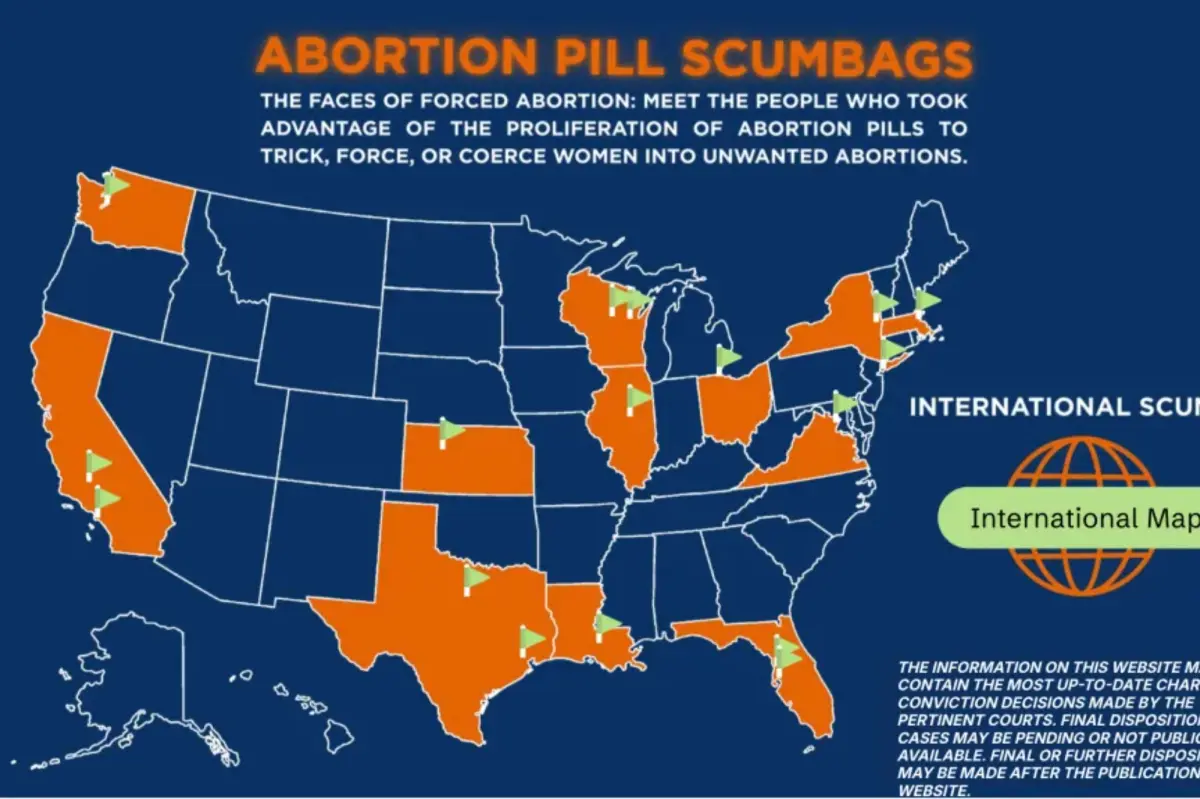
In a troubling development highlighting the unintended consequences of expanded abortion pill access, 40 Days for Life, a pro-life organization, has launched a database tracking cases where pregnant women are being tricked or coerced into consuming abortion medication. CEO Shawn Carney points to a worrying increase in incidents where men have deceptively administered abortion pills to pregnant women without their knowledge or consent. “We’ve had men sprinkling abortion pills over blueberry pancakes. We’ve seen them put them in smoothies,” Carney explains, describing what the organization refers to as a disturbing pattern emerging since regulations around abortion pills were relaxed. The database, presented as a map showing incidents across the United States and internationally, documents numerous cases where women have suffered not just emotional trauma but severe medical complications, including instances where victims have lost their ability to have children following such deception.
The controversy is situated within the broader context of changing abortion regulations in America. In 2021, the Biden administration eased restrictions on Mifepristone, one component of the two-drug regimen used for medical abortions, allowing women to obtain it through telehealth appointments and by mail. Following the Supreme Court’s overturning of Roe v. Wade, many Democratic-led states moved quickly to protect and expand abortion access, including through “shield laws” that facilitate mailing abortion pills to states with stricter regulations. Medical abortions have become the most common method of abortion in the United States, accounting for approximately two-thirds of all procedures nationwide according to the Guttmacher Institute. While Mifepristone, available in the US since 2000, also has legitimate medical applications beyond abortion—such as treating Cushing’s syndrome and managing miscarriages—concerns about its potential misuse have intensified.
The cases documented in the database reveal disturbing patterns of deception and abuse. In one particularly horrifying case, a British man administered one dose of an abortion pill in his pregnant victim’s drink and a second dose when she was blindfolded during what she believed was consensual intimate activity. An Afghani minicab driver reportedly obtained Mifepristone online, then physically restrained his pregnant mistress and forced her to take it. These incidents represent extreme violations of bodily autonomy and trust, with many victims reporting lasting psychological trauma in addition to physical harm. The methods used to obtain these medications vary, with some perpetrators exploiting telehealth options and mail delivery systems that were expanded during the pandemic, while others find alternative channels to access the drugs.
Susan B. Anthony Pro-Life America Communications Director Kelsey Pritchard places blame on policy changes made during the COVID-19 pandemic: “Under the guise of COVID-19, the Biden Administration stripped away FDA safeguards to allow mail-order abortion drugs with little to no medical oversight through the mail. Doing so, they created today’s nationwide public health crisis.” Pritchard cited polling from McLaughlin & Associates suggesting that 70% of Americans support requiring in-person doctor visits for Mifepristone access. The Senate Committee on Health, Education, Labor, and Pensions recently held hearings to evaluate complications resulting from the availability of abortion pills, reflecting growing congressional attention to this issue as reports of misuse continue to emerge.
Advocates for abortion access acknowledge the serious nature of coercion while framing the issue differently. A spokesperson for Planned Parenthood Action Fund told The Post, “No one should be coerced or denied the ability to make choices about their own bodies,” while adding that they find it “disingenuous” to express concern about coercion while supporting abortion restrictions “where people are forced to stay pregnant against their will.” This perspective highlights the deeply polarized nature of the abortion debate in America, where even agreement on preventing coercion becomes entangled in broader disagreements about reproductive rights and bodily autonomy.
The emerging pattern of abortion pill misuse illuminates a complex intersection of intimate partner violence, reproductive coercion, and changing healthcare regulations. As policymakers continue to debate the appropriate level of regulation for abortion medication, these documented cases of abuse serve as a sobering reminder that expanded access to any medication carries both benefits and risks. The challenge facing regulators and healthcare providers is substantial: how to preserve legitimate access for women seeking reproductive healthcare while preventing these medications from becoming tools of abuse. What remains clear is that regardless of one’s position on abortion access, the coerced administration of any medication represents a profound violation of personal autonomy that deserves serious attention from law enforcement, healthcare providers, and policymakers alike.