


Aaron Rodgers: A Career at the Crossroads
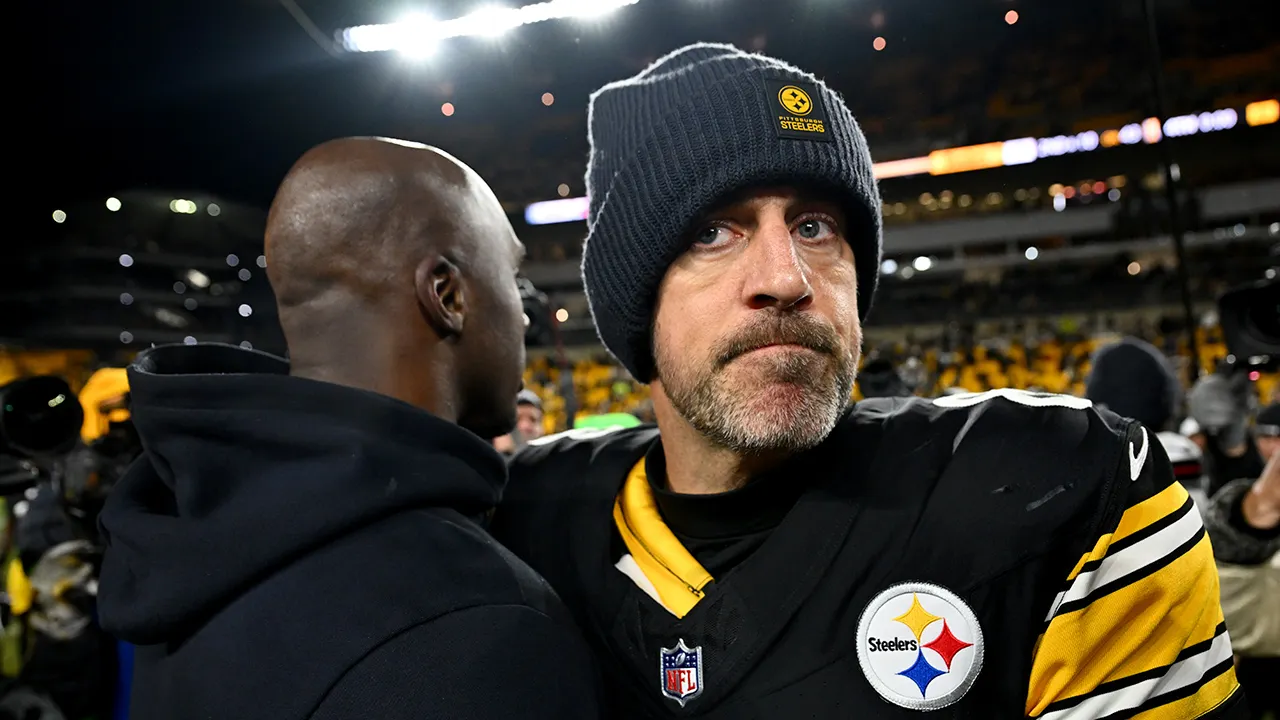
In the wake of a bruising playoff loss to the Houston Texans, the football world finds itself contemplating a sobering possibility – that we may have witnessed Aaron Rodgers’ final game in the NFL. The 40-year-old quarterback, who has been one of the league’s premier passers for over a decade, endured a difficult night in the Wild Card Round, struggling with turnovers including a costly fumble that resulted in a touchdown and a pick-six that further widened the score gap. Despite flashes of the arm talent that has defined his career, Rodgers couldn’t lift the Pittsburgh Steelers past a dominant Texans team, finishing with just 146 yards on 17 completions while being sacked four times. As he walked off the field, exchanging handshakes with opponents, there was a palpable sense that this might represent the final chapter of an illustrious career.
During the broadcast, NFL analyst and Hall of Fame quarterback Troy Aikman voiced what many viewers were thinking, suggesting that this could indeed be Rodgers’ final appearance in the league. Aikman drew parallels to Philip Rivers, speculating that while Rodgers might theoretically be available for a team in need next season, it seemed unlikely he would pursue another starting opportunity elsewhere. The comparison feels apt – both quarterbacks defined an era of NFL excellence, and both faced the difficult decision of when to step away from the game they’ve dominated. When asked directly about his future in the postgame press conference, Rodgers displayed the measured approach that has characterized his career, stating: “I’m not going to make any emotional decisions. I’m disappointed. It was such a fun year. Obviously, a lot of adversity, but a lot of fun.”
The uncertainty surrounding Rodgers’ future adds another layer of intrigue to an already compelling NFL offseason narrative. Reports suggest the Steelers would welcome him back for another season should he decide to continue playing, but the decision ultimately rests with Rodgers himself. At this stage of his career, having accomplished nearly everything possible in the game, the calculus becomes complicated by factors beyond simple performance. The physical toll of another NFL season, the mental energy required for preparation, and the question of what he still wants to prove all factor into what must be an intensely personal decision. For a player who has always been thoughtful and deliberate in his approach to the game, rushing this choice would be out of character.
Should Rodgers indeed decide that Monday night’s game was his last, he leaves behind a legacy that places him firmly among the greatest quarterbacks to ever play the game. His statistics tell part of the story: 66,274 passing yards, 527 touchdown passes, 163 regular-season wins, a 10-time Pro Bowler, and four-time MVP. But numbers alone fail to capture the artistry of Rodgers’ playing style – the impossible throws from awkward platforms, the pinpoint accuracy on deep balls, the preternatural ability to extend plays with his legs while keeping his eyes downfield. For much of his career with the Green Bay Packers, Rodgers represented the evolution of quarterback play, combining traditional pocket passing skills with the mobility and improvisational ability that define the modern NFL quarterback.
The narrative of Rodgers’ career extends beyond his on-field brilliance, encompassing both triumph and controversy. His lone Super Bowl victory came in the 2010 season, a championship that validated his skills but would ultimately remain his only title despite multiple deep playoff runs. His later years with the Packers were marked by reported tension with management, followed by a dramatic departure to the New York Jets, where an Achilles injury derailed what was supposed to be a triumphant next chapter. His brief tenure with the Steelers this season represented yet another twist in a career that has never lacked for drama. Through it all, Rodgers has remained unapologetically himself – thoughtful, sometimes contrarian, always confident in his abilities and convictions.
As the football world awaits Rodgers’ decision, there’s time to appreciate the full scope of his contribution to the game. Whether he returns for another season or walks away now, his impact on quarterback play and the NFL as a whole is undeniable. Few players have combined his level of technical mastery, physical gifts, and cerebral approach to the position. In an era blessed with exceptional quarterback talent – from Tom Brady to Patrick Mahomes – Rodgers carved out his own unique place in NFL history. The enduring image of Rodgers at his best will be of a quarterback who made the extraordinary look routine, who elevated those around him, and who played the game with a rare combination of precision and creativity. Whatever comes next, his legacy as one of football’s transcendent talents is secure.