




A Glimpse into the 2026 Midterm Battlefield: Crucial Races That Will Shape America’s Political Landscape
As America moves forward under the newly established Trump administration, political strategists are already mapping out the electoral landscape for the 2026 midterms. With razor-thin margins in both chambers of Congress, a handful of competitive races are expected to determine which party will hold legislative power during the second half of Trump’s term. These midterms, traditionally serving as a referendum on the incumbent president’s performance, will test whether Republicans can maintain their recently acquired Senate majority and their position in the House.
The Senate battlefield presents particularly high stakes, with Republicans defending their slim majority across 33 seats up for election. Georgia stands as the GOP’s prime target, where Democratic Senator Jon Ossoff faces his first reelection bid in a state that remains politically divided. The National Republican Senatorial Committee has earmarked substantial resources to flip this seat, though Republicans must first navigate a contentious primary featuring Representatives Buddy Carter and Mike Collins, former Tennessee football coach Derek Dooley, and horse trainer Reagan Box. Despite the NRSC’s hopes to recruit Governor Brian Kemp, his decision to stay out has left an unpredictable Republican field. Meanwhile, North Carolina presents another critical battleground following Senator Thom Tillis’s retirement announcement. This open seat contest features former RNC Chair Michael Whatley representing Republican hopes against former Democratic Governor Roy Cooper, transforming what might have been a safe Republican hold into a genuine toss-up that could determine Senate control.
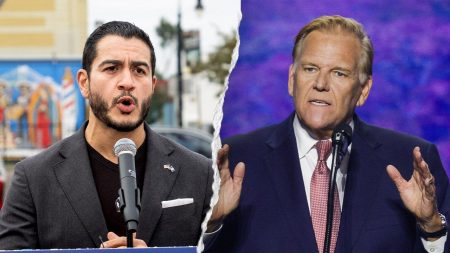
Michigan, Maine, Ohio, and New Hampshire round out the most competitive Senate battlegrounds, each with unique dynamics that could tip the balance of power. In Michigan, Democrats face a complicated primary between Representative Haley Stevens, state Senator Mallory McMorrow, and physician Abdul El-Sayed following Senator Gary Peters’s retirement, while Republicans have united behind former Representative Mike Rogers. Maine presents one of Democrats’ best pickup opportunities as five-term Republican Senator Susan Collins faces potential challenges from popular Democratic Governor Janet Mills and progressive oyster farmer Graham Platner. Ohio’s contest features appointed Republican Senator Jon Husted defending against former Democratic Senator Sherrod Brown’s comeback bid after his narrow 2024 defeat. In New Hampshire, Senator Jeanne Shaheen’s retirement has opened the door for Republicans, with former Senator John Sununu and former Ambassador Scott Brown considering runs against likely Democratic nominee Representative Chris Pappas.
The House battleground appears equally consequential, with control likely hinging on fewer than two dozen competitive districts nationwide. These races span diverse geographic and demographic landscapes, highlighting how the path to a House majority has evolved. Colorado’s 8th District exemplifies this competitive environment, having flipped parties in consecutive cycles before landing in Republican Representative Gabe Evans’s hands. This northern Denver suburban district, designed as a true swing seat during redistricting, often features razor-thin margins and serves as a bellwether for national trends, particularly among Latino and working-class voters. Similarly, Iowa’s 1st District remains highly competitive as Republican Representative Mariannette Miller-Meeks seeks reelection in a region encompassing college towns, rural counties, and small manufacturing centers. Despite Iowa’s increasingly red presidential voting pattern, this eastern Iowa district continues to exhibit independent voting behavior and frequently delivers nail-biting results.
The suburban battlegrounds of New Jersey’s 7th and New York’s 17th Districts will test whether college-educated, higher-income voters continue their recent shifts away from Republicans or stabilize in a midterm environment. Representative Tom Kean Jr. in New Jersey and Representative Mike Lawler in New York both hold seats in suburban districts that previously supported Biden but flipped to Republicans in recent cycles. These areas have historically punished the president’s party during midterms, making them essential indicators of suburban voter sentiment toward the Trump administration’s first two years. The outcomes in these districts could signal broader trends about the political realignment of America’s suburbs and whether Republicans can solidify their recent gains in these previously Democratic-leaning regions.
Pennsylvania’s 7th District and California’s 22nd District round out the most critical House battlegrounds, each representing distinct but equally important electoral dynamics. The Lehigh Valley’s Pennsylvania 7th, held by Republican Representative Chris Mackenzie, features a true purple electorate that often mirrors statewide results in this crucial swing state. Economic concerns and immigration policy are expected to heavily influence voting patterns among the district’s working-class and Latino populations. Meanwhile, California’s Central Valley 22nd District, represented by Republican David Valadao, has remained persistently competitive for over a decade due to its agricultural economy and large Latino community sensitive to turnout fluctuations. Democrats hope strong turnout efforts here could offset potential Republican gains elsewhere, making it a critical piece of their path to reclaiming House control.
As America navigates this new political era under Trump’s second administration, these Senate and House races will ultimately determine whether Republicans maintain their governing trifecta or face a divided government for the remainder of the term. The outcomes will depend not just on national political trends and presidential popularity, but on candidate quality, campaign resources, and regional issues specific to each battleground. What’s clear is that both parties recognize the high stakes of these contests and will pour unprecedented resources into a relatively small set of races that could define American governance heading into the presidential election of 2028. For voters in these pivotal districts and states, their decisions will carry outsized influence on the direction of the country during a critical period of American political history.