


Space Exploration in 2026: A Return to the Moon and Beyond
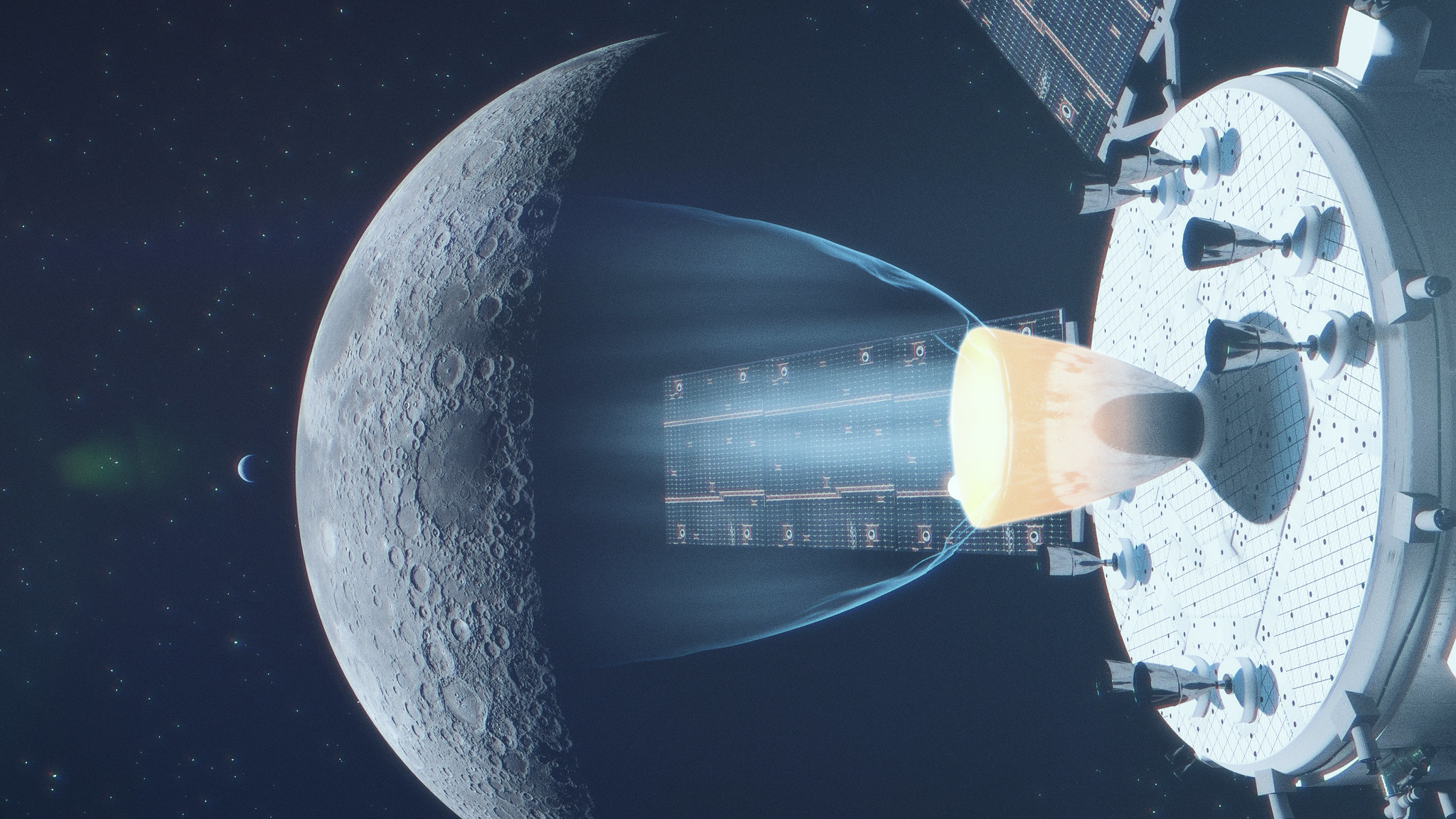
In a remarkable revival of lunar ambitions not seen since the Apollo era, 2026 is shaping up to be a watershed year for space exploration, with NASA’s Artemis 2 mission leading the charge. This historic venture will send four astronauts on a journey around the moon, setting the stage for humanity’s return to the lunar surface. NASA Administrator Jared Isaacman, who recently took the helm of the agency, can barely contain his enthusiasm: “What’s not to be excited about? We’re sending American astronauts around the moon. It’s the first time we’ve done that in a half-century… We’re weeks away, potentially a month or two away at most from sending American astronauts around the moon again.” This mission represents not just a technical achievement but a rekindling of the exploratory spirit that defined the space race decades ago, now evolving into a more collaborative international effort.
The Pacific Northwest has emerged as a significant contributor to this renewed lunar push. L3Harris Technologies’ team in Redmond, Washington has built crucial thrusters for the Artemis 2’s Orion crew vehicle, while Jeff Bezos’ Blue Origin, headquartered in Kent, is preparing to send its uncrewed Blue Moon Mark 1 lander to the lunar surface in 2026. This mission will help NASA prepare for future moon landings, with Blue Origin’s Paul Brower describing it as “our first steps to help open up the lunar frontier for all of humanity.” Additionally, Seattle-based Interlune plans to send a prospecting instrument to the moon to search for helium-3, a rare material with potential applications in fusion reactors and quantum computers. This regional hub of aerospace innovation demonstrates how space exploration has evolved from a purely governmental endeavor to a collaborative effort between public agencies and private enterprises.
Looking back at 2025, several significant space milestones have already reshaped the industry. Blue Origin finally achieved orbital flight with its New Glenn rocket after a decade of development, launching test equipment in January and successfully sending NASA’s Escapade probes toward Mars in November, while also recovering the booster at sea. The company’s suborbital New Shepard program provided rides for seven crews, including notable passengers like Lauren Sanchez (who later married Bezos), crypto entrepreneur Justin Sun, and Michaela Benthaus, who made history as the first wheelchair user in space. Meanwhile, Amazon launched its first operational satellites for its space-based broadband service in April, rebranding it from Project Kuiper to Amazon Leo in November. The service began shipping terminals to early customers for a preview program, positioning itself to compete with SpaceX’s Starlink network, which now serves over 9 million customers worldwide with more than 9,300 satellites.
Scientific advancements and commercial innovations marked other significant achievements in 2025. The Rubin Observatory in Chile, supported by $30 million from Microsoft’s Bill Gates and Charles Simonyi, finally delivered its first images after a decade and a half of development. This $800 million project, with key contributions from University of Washington researchers, represents a major leap forward in our ability to survey the cosmos. In the realm of space-based computing, Redmond-based Starcloud claimed a world first by training an artificial intelligence model in space after sending an Nvidia GPU chip into orbit in November. This achievement signals the beginning of a new frontier in orbital data centers, attracting interest from tech titans including Bezos, OpenAI’s Sam Altman, SpaceX’s Elon Musk, and Google’s Sundar Pichai. Meanwhile, SpaceX’s ambitious Starship program experienced mixed results, with three failed test flights in early 2025 followed by two successful ones later in the year, though the company faced a setback with a booster anomaly during a pressurization test in November.
Looking ahead to 2026, several groundbreaking missions are on the horizon beyond the headline-making Artemis 2. Blue Origin’s uncrewed Blue Moon Mark 1 lander will deliver NASA’s SCALPSS experiment to the moon’s south polar region, using stereo cameras to document how landing burns interact with the lunar surface—crucial data for future missions. This pathfinding mission will pave the way for Blue Origin’s Mark 2 lander, scheduled to begin transporting astronauts to the moon by 2030. The lunar surface will be busier than it has been in decades, with additional robotic landings planned by China’s Chang’e 7 rover, Firefly’s Blue Ghost 2, Intuitive Machines’ IM-3, and Astrobotic’s Griffin lander, which will carry two mini-rovers and Interlune’s helium-hunting camera. Seattle-area companies are particularly active, with Kent-based Stoke Space preparing to launch its first fully reusable Nova rocket, Bothell-based Portal Space Systems planning the orbital debut of its Starburst space vehicle, and Tukwila-based Starfish Space scheduled to demonstrate its maneuverable Otter spacecraft’s capability to boost satellites in space.
The intersection of national security and commercial space ventures is creating new opportunities and challenges for the industry. The proposed $175 billion missile defense system known as the Golden Dome is attracting interest from space ventures focused on in-space mobility and data processing. Marysville-based Gravitics is building an orbital carrier as a “pre-positioned launch pad in space” for the U.S. Space Force under a deal potentially worth $60 million. Meanwhile, NASA faces funding uncertainties under Isaacman’s leadership following a year of layoffs and science program cuts. Despite his pledge to land astronauts on the moon during the current presidential term, industry observers like NASAWatch’s Keith Cowing predict he’ll be seeking additional funding: “I almost guarantee you he’s going to be walking up the street to the White House, saying ‘I really need more money.'” For skywatchers, 2026 will offer celestial spectacles including a total lunar eclipse visible over the U.S. on March 3 and a solar eclipse bringing totality to parts of Greenland, Iceland, and Spain on August 12. As public and private ventures push the boundaries of what’s possible beyond Earth’s atmosphere, the coming year promises to rekindle the wonder and ambition that has always driven humanity’s exploration of space.