


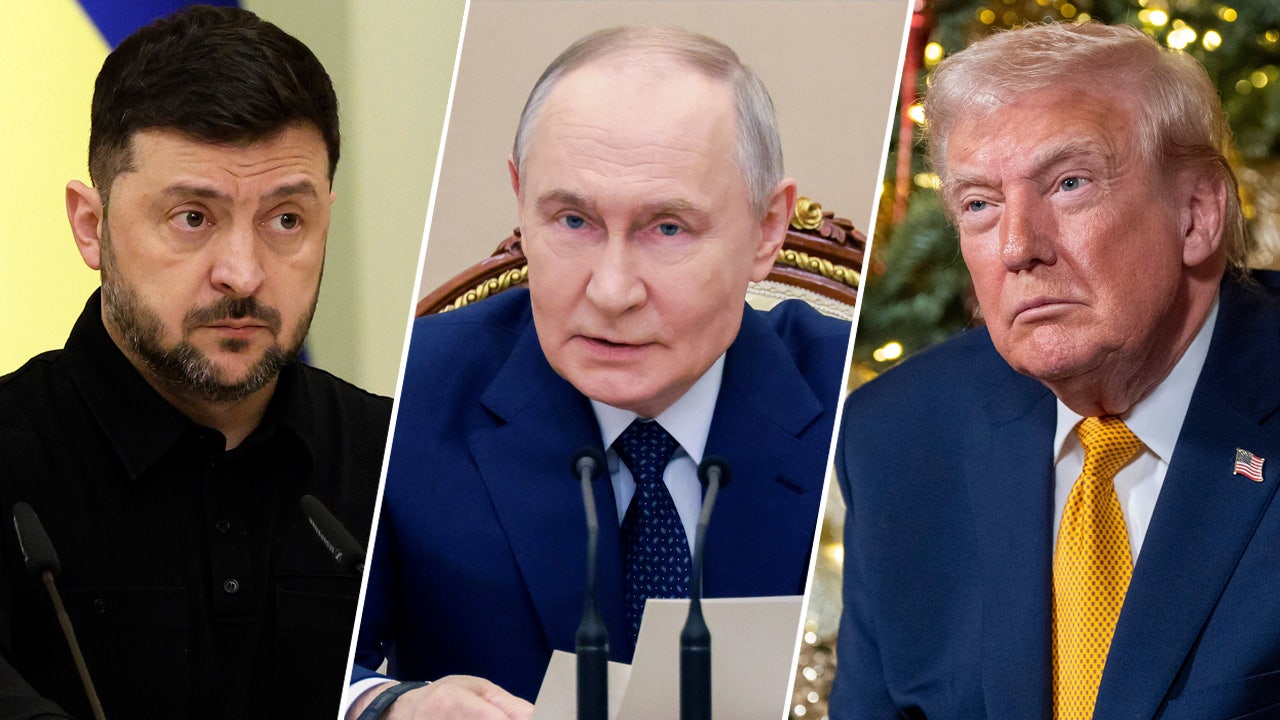
Trump’s Peace Efforts: Brokering Communication Between Putin and Zelenskyy
Sunday’s talks at Mar-a-Lago between President Donald Trump and Ukrainian President Volodymyr Zelenskyy could represent a significant breakthrough in peace negotiations between Ukraine and Russia. According to a source familiar with the discussions, these talks might pave the way for the first direct communication between Zelenskyy and Russian President Vladimir Putin in more than five years. This potential connection would mark a substantial diplomatic achievement for Trump, who appears to be positioning himself as the essential mediator between two leaders who have had no direct contact since July 2020. “If Putin had joined in a call Sunday, this would have been the greatest achievement in the preparation of the peace talks and the first real step in the peace process,” the anonymous source told Fox News Digital. “This would be a diplomatic victory for President Trump,” they added, noting that “Trump seems to be the most successful mediator because the two of them, Putin and Zelenskyy, perceive each other emotionally, and it is a challenge.”
The meeting in Florida comes at a critical juncture in the ongoing conflict, with Trump confirming he had spoken with Putin prior to Zelenskyy’s visit, describing that conversation as “good and very productive.” Standing beside Zelenskyy, Trump expressed optimism about potential progress, stating, “I do believe that we have the makings of a deal,” and suggesting negotiations could “move very rapidly.” The president framed the situation in stark terms, adding, “It’ll either end, or it’s going to go on for a long time, and millions of additional people are going to be killed.” This meeting marked the third in-person encounter between Trump and Zelenskyy since Trump returned to office, underscoring the priority the administration is placing on resolving the conflict. Days before the meeting, Zelenskyy had described having a “good conversation” with U.S. special envoy Steve Witkoff and Trump’s son-in-law, Jared Kushner, both of whom were present at the Mar-a-Lago talks.
According to the source, Zelenskyy likely approached the meeting with significant anxiety, as is typical in his interactions with Trump. “Zelenskyy is usually very nervous before such conversations with President Trump. He concentrates for a long time and studies the notes that the International Policy Department and the Foreign Ministry prepare for him,” the source revealed. At the center of the discussions was a U.S.-backed, 20-point peace plan emerging from weeks of negotiations that would require compromises from both Kyiv and Moscow. The source identified a significant hurdle: “The one difficulty they have is that Putin has refused to talk to Zelenskyy since July 2020, when they spoke over the Wagner scandal and the failed operation to detain Russian Wagner militants.” The source explained that “After that, Zelenskyy repeatedly tried to talk to Putin, but he refused,” adding that potential opportunities for dialogue in August and September 2024 disappeared when Ukraine launched its incursion into Russia’s Kursk region.
The history between the two leaders reveals a challenging dynamic even before communications fully broke down. “Before that point in 2020, calls between Zelenskyy and Putin were never friendly, and there was always tension between them. During talks, Putin was always taciturn, and Zelenskyy tried to establish a rapport,” the source explained. The interactions reflected a power imbalance, with the source describing how “Zelenskyy always acted subservient toward Putin and pretended to be in a good mood, almost as if he was playing a role on stage.” The Ukrainian president reportedly would talk extensively, reading from prepared notes and sometimes stumbling over words or losing track of punctuation. When faced with Putin’s silence, Zelenskyy would politely inquire, “What do you think, Vladimir Vladimirovich?” The source summed up the dynamic simply: “Putin was just never talkative.”
The Florida talks coincide with signals from Kyiv suggesting a potential shift in its negotiating position. Zelenskyy has indicated that the 20-point plan, which U.S. officials claim is about 90% complete, might include limited Ukrainian troop withdrawals from parts of eastern Ukraine without formally recognizing Russian control. The proposal also envisions creating demilitarized zones between the forces. In a notable development, Zelenskyy has proposed submitting the peace plan to a national referendum if Moscow agrees to a 60-day ceasefire. However, the Ukrainian leader has maintained a firm position regarding security guarantees, insisting that Ukraine requires legally binding assurances from the United States to deter future Russian aggression. “For us, it is very important that there is a signal that we want legally binding security guarantees,” Zelenskyy told Ukrainian journalists on Saturday, adding, “This primarily depends on President Trump.”
As these high-stakes negotiations continue, Zelenskyy has emphasized Ukraine’s willingness to pursue peace while recognizing the necessity of international support. “Ukraine is willing to do whatever it takes to stop this war,” he wrote on social media over the weekend. “For us, priority number one — or the only priority — is ending the war. For us, the priority is peace. We need to be strong at the negotiating table. To be strong, we need the support of the world: Europe and the United States.” This statement reflects the challenging position Ukraine finds itself in after nearly three years of conflict—seeking peace while attempting to maintain a negotiating position that preserves its sovereignty and security. With Trump actively engaging both sides and presenting himself as the essential bridge between the estranged leaders, these recent talks may represent the most significant opportunity yet to bring the devastating conflict to a resolution, though substantial obstacles clearly remain.