

When Politics and Music Collide: The Trump-Kennedy Center Controversy
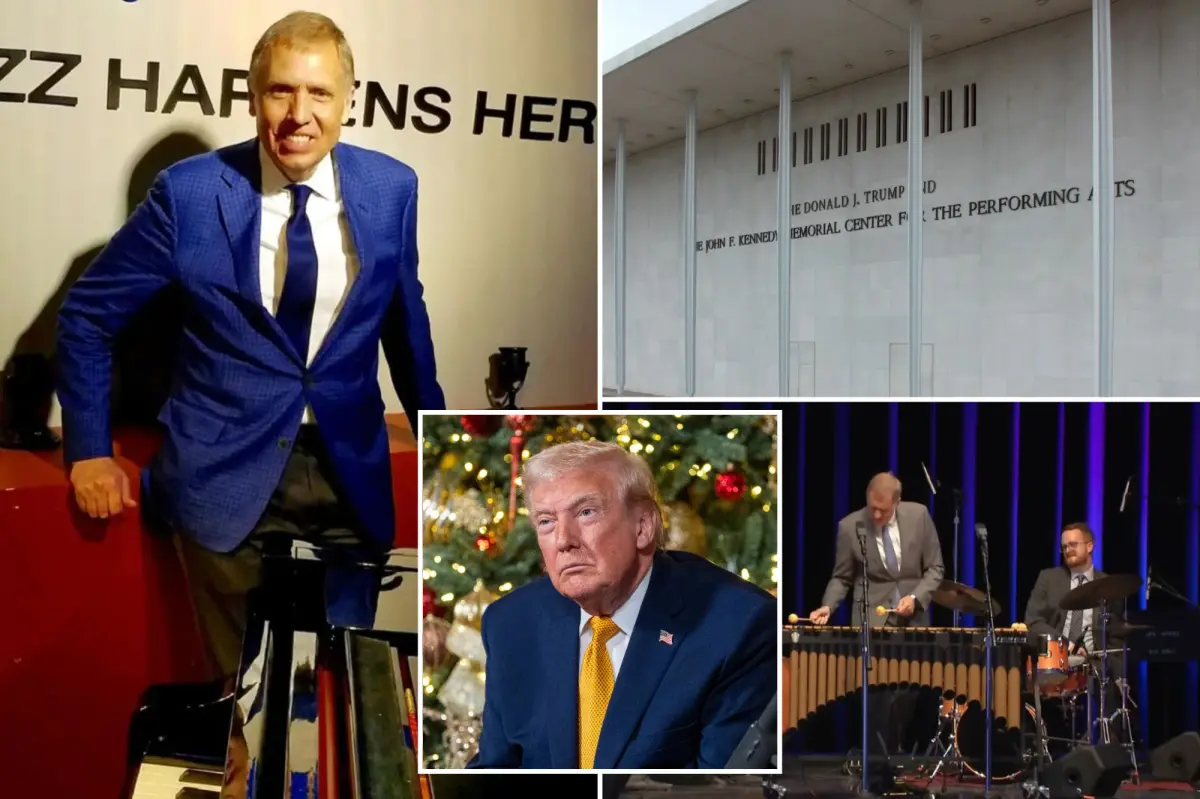
In a surprising turn of events during this holiday season, respected jazz musician Chuck Redd made headlines by canceling his traditional “Christmas Eve Jazz Jam” concert at the Kennedy Center in Washington, D.C. His reason? A protest against the venue’s recent rebranding as the “Trump-Kennedy Center.” Redd’s decision came abruptly, just hours before audiences were set to arrive, leaving many ticket holders disappointed on Christmas Eve. In his public statement, Redd explained his motivation plainly: “When I saw the name change on the Kennedy Center website and then hours later on the building, I chose to cancel our concert.” This last-minute cancellation has ignited a firestorm of reactions across social media platforms, revealing deep divisions that mirror our broader political landscape.
The response to Redd’s decision has been swift and polarized, particularly from supporters of President Trump who took to social media to express their disapproval. On platforms like X (formerly Twitter) and Instagram, critics accused the musician of suffering from “Trump Derangement Syndrome” and prioritizing politics over his artistic responsibilities and audience commitments. “You can cancel your show, but all you’ve accomplished is cancelling yourself,” wrote one detractor, while others suggested that Redd was easily replaceable and deserved to be boycotted for his actions. Perhaps most pointed was criticism from a self-described military veteran who accused Redd of taking “the easy path” for attention, writing that “It’s men like you that make this country weak… A pathetic man acting like a child.” These reactions reflect the intense emotions that continue to surround political discussions in America, where even cultural events can become battlegrounds for partisan sentiment.
Not all reactions were negative, however. On Instagram particularly, Redd found considerable support for what many viewed as a principled stand against a controversial rebranding. Supporters praised his moral courage with messages like “Thank you, Mr. Redd. We need more people of principle, not the sycophants orbiting this administration,” and “You are a real one for sticking to your morals and saying no to fascism!” These contrasting responses highlight how deeply cultural institutions like the Kennedy Center have become entangled in America’s political divide. For some, Redd’s cancellation represented an admirable act of protest; for others, it was an unprofessional disservice to his audience and art. The intensity of these reactions speaks to how even seemingly apolitical spaces like concert halls have become arenas where Americans express their values and allegiances.
At the heart of this controversy lies the December 18th decision by the Kennedy Center’s board to rebrand the institution. The board, which is chaired by President Trump, claimed the vote for the name change was unanimous—though this assertion has been disputed by ex-officio Democratic appointees to the board. White House Office of Management and Budget general counsel Mark Paoletta later clarified that a technical amendment to the bylaws earlier in the year had formalized that “ex officio members are non-voting members of the Board,” potentially explaining the discrepancy in accounts of the vote. In its official statement, the Kennedy Center explained that “The unanimous vote recognizes that the current Chairman saved the institution from financial ruin and physical destruction. The new Trump Kennedy Center reflects the unequivocal bipartisan support for America’s cultural center for generations to come.” This rationale points to President Trump’s successful advocacy for $250 million in congressional funding to renovate the complex—a significant investment in an institution that has long been considered America’s national cultural center.
The rebranding of the Kennedy Center raises profound questions about the relationship between politics, patronage, and cultural institutions in America. Named originally for President John F. Kennedy, the center has stood since 1971 as a living memorial to a president who strongly championed the arts. The addition of Trump’s name to this storied institution has been viewed by some as an appropriate recognition of significant financial support and personal involvement in the center’s renovation and programming. For others, however, it represents an uncomfortable politicization of a national cultural landmark that has traditionally transcended partisan divisions. This tension reflects broader debates about how we honor contributions to public institutions and the extent to which naming rights should be granted to sitting politicians who direct public funds rather than making personal donations.
As this story continues to unfold, it serves as a microcosm of America’s larger cultural and political divisions. Chuck Redd’s Christmas Eve cancellation—whether viewed as an act of principled protest or unprofessional petulance—highlights how even seemingly apolitical spaces like concert halls have become forums for expressing deeply held political convictions. The rebranding of the Kennedy Center similarly reveals tensions between recognizing financial support and maintaining institutional independence. As Americans increasingly express their political identities through cultural choices, from the media they consume to the performances they attend or boycott, the line between politics and culture continues to blur. What remains clear is that in today’s America, even a Christmas Eve jazz concert can become an unexpected battlefield in our ongoing cultural conversations about values, leadership, and the proper role of politics in our shared public spaces.