

Joe Rogan Takes on Bill Clinton’s Epstein Files Statement: A Story of Photographs and Skepticism
In a candid moment on “The Joe Rogan Experience,” podcast host Joe Rogan and comedian Tom Segura delved into the complex saga surrounding the release of the Jeffrey Epstein files, specifically addressing former President Bill Clinton’s public statement on the matter. The conversation highlighted the uncomfortable juxtaposition between Clinton’s call for transparency and the numerous photographs showing his association with the convicted sex offender. Clinton had released a statement through his representative saying, “What the Department of Justice has released so far, and the manner in which it did so, makes one thing clear: someone or something is being protected,” adding, “We do not know whom, what or why. But we do know this: We need no such protection.” This declaration, coming from someone repeatedly pictured with Epstein, struck Rogan as particularly incongruous, leading him to compare it to “the killer pretending to be the detective” or, as Segura added, “the killer joining the search party.” The discussion represented the broader public skepticism about powerful figures attempting to distance themselves from Epstein despite photographic evidence suggesting close relationships.
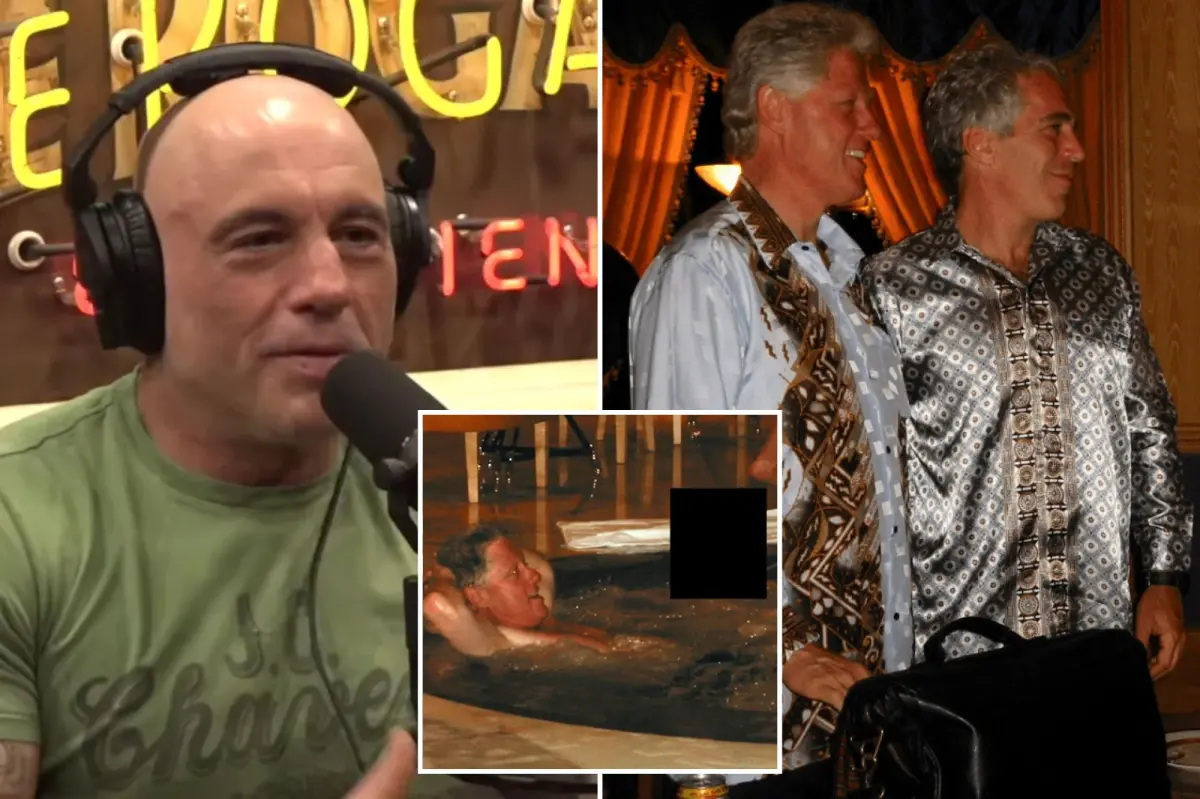
The conversation took a pointed turn when Rogan referenced newly released photographs showing Clinton in compromising situations, including one of the former president in a hot tub with an unidentified woman. These images were part of a larger collection released under the Epstein Files Transparency Act, which President Trump signed into law in November. The visual evidence presents a stark contrast to Clinton’s public stance of detachment from Epstein’s illicit activities. Rogan speculated that Clinton’s statement indicated that “a deal was made” with the government to shield him from full exposure in the files, saying, “If you release a press release like that, it means the call went well. You got a deal in.” This cynical interpretation reflects a common public sentiment that powerful figures may receive special treatment in high-profile investigations, especially when the revelations could significantly damage their legacy or reputation. The podcaster’s commentary captures the frustration many feel about perceived inequities in how justice is administered when it involves the political elite.
Beyond discussing Clinton specifically, Rogan expressed broader concerns about the handling of the Epstein files, questioning why their release had been delayed despite being “promised multiple times.” He speculated whether the files might have been altered or manipulated using artificial intelligence before their release, pointing to the apparent complexity of the redaction process as potentially suspicious. “Doesn’t it seem like you could throw all of that into AI at this stage in the game and just redact the names of the victims and let’s go?” he questioned, suggesting that the process should have been relatively straightforward and quick. This skepticism reflects a wider public distrust in the institutional handling of the Epstein case, which has been plagued by questions of interference and special treatment for the wealthy and powerful individuals in Epstein’s orbit. The lengthy delays and perceived obfuscation have only fueled conspiracy theories about who might be protected and why certain information remains concealed.
The photographs released in the files tell a compelling visual story of Clinton’s connections to Epstein’s world. They show the former president in various intimate settings with Epstein and his associates: half-naked in a hot tub with an unidentified woman, swimming alongside another woman and Ghislaine Maxwell (Epstein’s convicted associate), wrapping his arm around an unidentified woman on a plane, and attending gatherings in the UK, Brunei, and Thailand with Epstein. Perhaps most notably, one photograph captures Clinton and Epstein at a dinner also attended by Rolling Stones frontman Mick Jagger, illustrating how Epstein moved in elite social circles and used these connections to enhance his own status and access. These images provide concrete evidence of social relationships that Clinton has consistently attempted to minimize, creating an uncomfortable reality that contradicts his public narrative. Though the former president has repeatedly denied any wrongdoing linked to Epstein, the photographs make it increasingly difficult to maintain complete separation from Epstein’s sphere of influence.
The release of these files and photographs has had immediate political consequences. House Oversight Committee Chairman James Comer (R-Ky.) has issued subpoenas to both Bill and Hillary Clinton for depositions in January, requiring them to testify about their relationships with Epstein. This official congressional inquiry represents an escalation in the scrutiny of the Clintons’ connections to Epstein and may force more detailed explanations than have been provided thus far. The subpoenas also highlight how the Epstein case continues to have political ramifications years after his death, with partisan divisions often determining how the evidence is interpreted and which figures face the most intense scrutiny. The fact that both Clintons have been subpoenaed suggests that investigators are interested not just in direct connections to Epstein but in understanding the broader network of relationships and potential knowledge about his activities among those in his social circle.
Rogan and Segura’s discussion represents a particular cultural moment in which public figures like podcasters and comedians often serve as stand-ins for broader public sentiment, asking questions and expressing doubts that many citizens share but that mainstream media might approach more cautiously. Their conversation encapsulates the skepticism, frustration, and occasional dark humor with which many Americans view the Epstein saga—a case that touches on uncomfortable truths about power, privilege, and accountability in American society. The discussion of Clinton’s statement and the newly released photographs highlights the gap between official narratives and visual evidence, raising questions about truth and transparency in high-profile investigations. As the Epstein files continue to be examined and more information potentially comes to light, these questions will likely persist, keeping the spotlight on how the wealthy and powerful navigate accountability when their associations become problematic. Meanwhile, the victims of Epstein’s crimes continue to seek justice in a system that has often prioritized protecting powerful individuals over exposing the full truth.