


Southern California New Year’s Eve Terror Plot Foiled: Four Indicted on Federal Charges
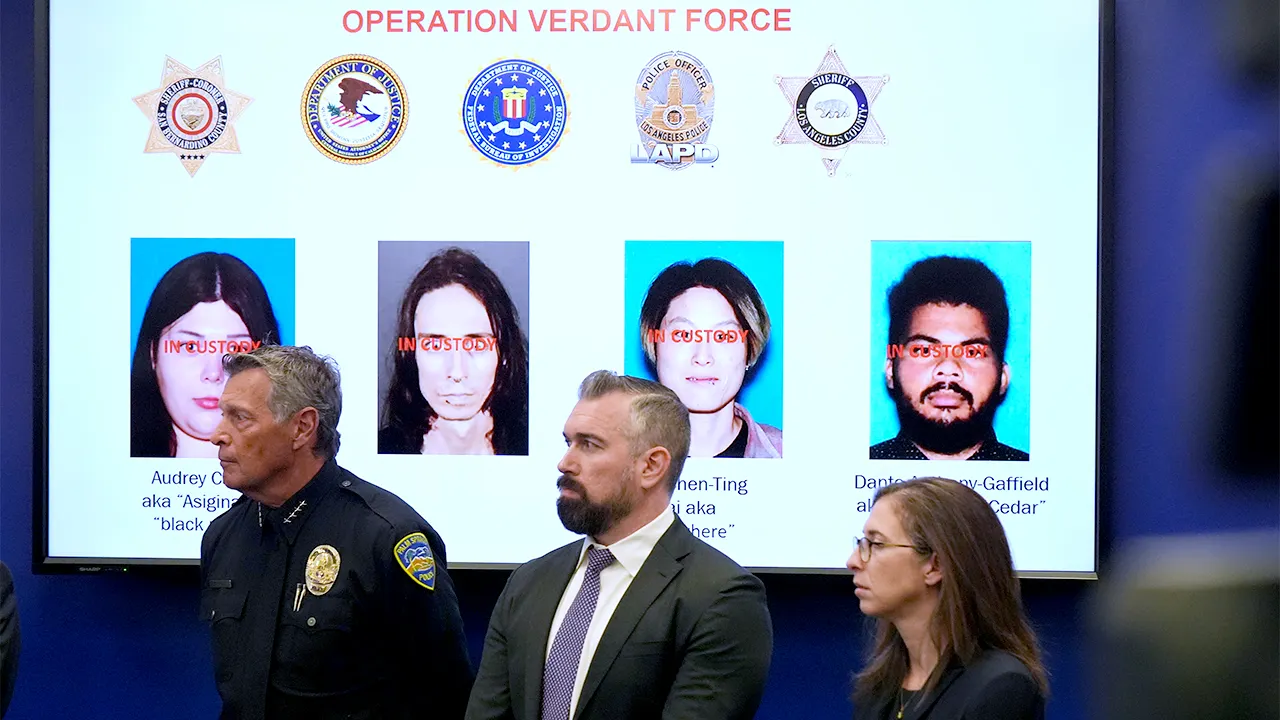
In a significant counterterrorism operation, federal authorities have uncovered and dismantled what they describe as a sophisticated bombing plot targeting Southern California businesses on New Year’s Eve. The United States District Court for the Central District of California has indicted four individuals allegedly associated with the anti-government extremist group Turtle Island Liberation Front (TILF). The defendants—Audrey Illeene Carroll, Zachary Aaron Page, Dante James Anthony-Gaffield, and Tina Lai—now face serious federal charges including conspiracy to use weapons of mass destruction and providing material support to terrorists. Their alleged plan, ominously code-named “Operation Midnight Sun,” would have brought devastation to multiple locations across Southern California had it not been intercepted by vigilant FBI agents.
Court documents reveal disturbing details about the group’s ideology and intentions. The defendants reportedly sought to cause “as much damage as possible” through coordinated pipe bomb attacks targeting at least five locations, primarily focusing on technology and logistics businesses. Throughout early December 2025, the group allegedly took concrete steps toward this goal, procuring bomb-making materials and using encrypted messaging platforms to coordinate the construction and testing of explosive devices. Their communications, later obtained by law enforcement, included handwritten bombing plans, lists of required materials, and disturbing ideological content. Perhaps most chilling were statements attributed to Carroll, who allegedly proclaimed “I identify as a terrorist” and “I am a Hamas fangirl” while expressing fantasies of “completely pulverizing” buildings and ambushing law enforcement officers.
The plot unraveled on December 12 when the suspects traveled to the Mojave Desert to conduct live weapons testing. There, they were intercepted by the FBI’s elite Hostage Rescue Team in a carefully planned operation. Despite the group’s sophisticated efforts to avoid detection—including wrapping phones in tinfoil to create improvised signal-blocking “Faraday bags” and using apps with self-destructing encrypted messages—they had unknowingly been sharing their plans with law enforcement assets. This critical intelligence gathering allowed federal authorities to monitor the evolving threat and ultimately intervene before any attacks could be executed. The case highlights the ongoing challenges faced by counterterrorism officials in the digital age, where extremist ideologies can flourish in encrypted spaces yet still be vulnerable to traditional human intelligence operations.
What makes this case particularly alarming is the apparent long-term vision of the conspirators. According to prosecutors, defendants Carroll and Page had discussed plans extending beyond the initial New Year’s Eve bombings, including targeting Immigration and Customs Enforcement (ICE) agents and vehicles. These secondary attacks were allegedly intended to intimidate and harm law enforcement personnel, creating an ongoing campaign of terror. The group’s apparent glorification of terrorism and anti-government extremism reflects concerning trends identified by national security experts, who have warned about the rising threat of domestic terrorism fueled by various ideological strains. The Turtle Island Liberation Front appears to blend anti-government sentiment with support for international terrorist organizations, creating a dangerous and unpredictable threat profile.
The meticulous investigation that led to these arrests demonstrates the crucial role of proactive intelligence gathering in preventing terrorist attacks. Law enforcement’s ability to penetrate the group’s communications and planning activities provided invaluable insights into not only their tactical preparations but also their strategic thinking. The FBI’s deployment of informants and undercover agents appears to have been decisive in identifying the plot’s specifics and timing. Carroll had apparently shared detailed information about the group’s bombing plans with individuals she believed to be fellow extremists but who were actually working with authorities. This human intelligence, combined with technical surveillance, created a comprehensive picture of the threat that allowed for decisive intervention before the suspects could move to the execution phase of their alleged plot.
As the four defendants prepare for their initial court appearances in the Central District of California, this case serves as a sobering reminder of the persistent threat of terrorism on American soil. The successful disruption of “Operation Midnight Sun” highlights both the evolving nature of domestic terror threats and the sophisticated capabilities of federal law enforcement to counter them. While the immediate danger has been neutralized, the investigation underscores the ongoing challenges faced by security agencies in identifying and preventing attacks from small, ideologically motivated groups operating largely outside traditional organizational structures. The case also raises important questions about radicalization pathways, the role of encrypted communications in terror planning, and the balance between security and privacy in a democratic society. For now, residents of Southern California can be thankful that a potentially devastating New Year’s Eve has been averted through the diligence of federal law enforcement.