


Trump’s Comments on Stefanik Not a Primary Endorsement, White House Clarifies
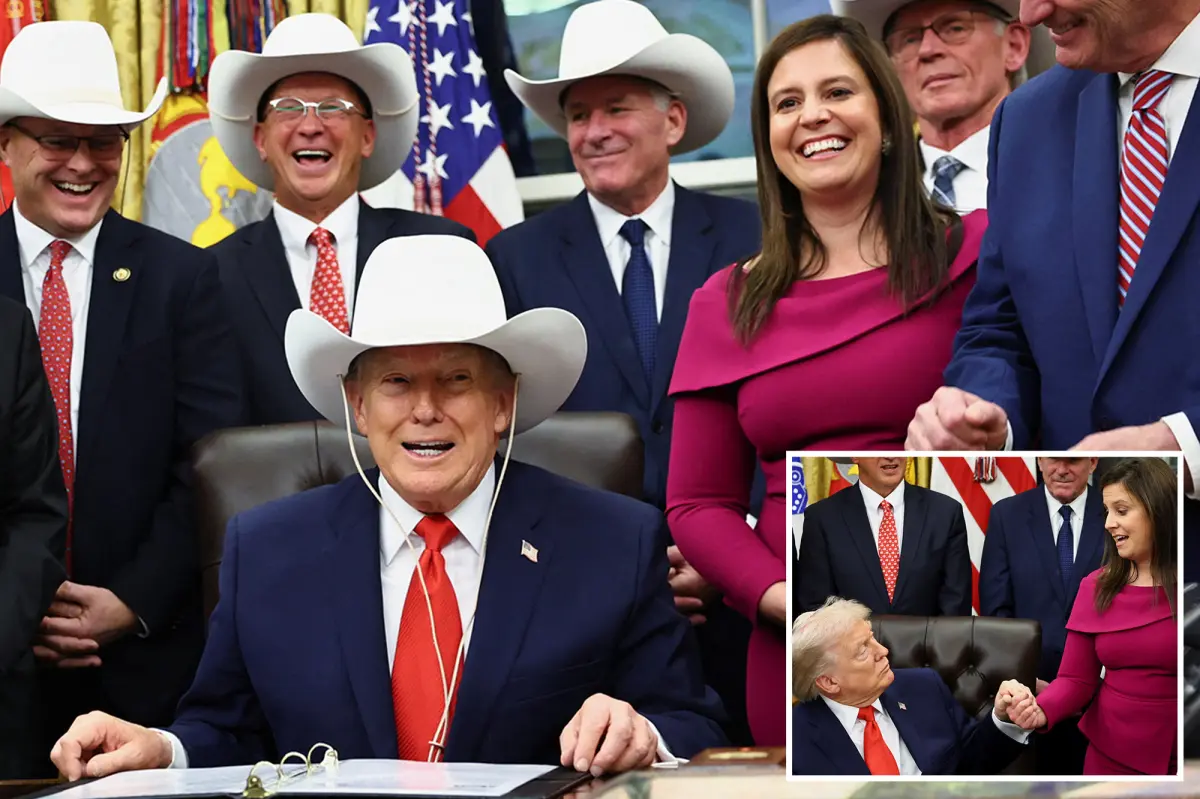
In a recent Oval Office event celebrating the 1980 “Miracle On Ice” US Olympic hockey team, President Trump’s enthusiastic comments about Representative Elise Stefanik sparked speculation about a potential gubernatorial primary endorsement. The White House, however, has been quick to clarify that these remarks don’t signal an official position in the New York Republican primary race. The event, which honored the historic Lake Placid victory that occurred in Stefanik’s congressional district, placed the congresswoman prominently behind the president, standing out among the former college athletes who defeated the Soviet team in one of sports’ greatest upsets.
During the event, Trump openly praised Stefanik’s gubernatorial ambitions, saying, “Everybody knows Elise, she’s doing phenomenally well and she’s running for a little position called governor of New York. She’s got a hell of a shot at it, it’s all I can see.” While acknowledging the presence of “a very good Republican” competitor, Trump’s comments appeared to give Stefanik a momentary spotlight just days after Nassau County Executive Bruce Blakeman launched his own campaign for the Republican nomination. This timing raised eyebrows about Trump potentially influencing the primary contest to challenge Democratic Governor Kathy Hochul.
A senior White House official later downplayed the significance of Trump’s remarks, telling The Post, “He thinks highly of her. If he didn’t think highly of her, he wouldn’t have nominated her to be ambassador to the UN. She was very helpful during the campaign.” This statement came as part of efforts to maintain neutrality in what’s becoming a delicate political situation. Just two days before the Oval Office event, Trump had expressed reluctance about the two Republicans running against each other, saying, “He’s a friend. She’s a friend. These are two great people running. In a way, I hate to see them running against each other. I hope they’re not going to be damaging each other.” When pressed about a potential endorsement, Trump remained characteristically vague, stating, “I’ll probably have to do what I want to do.”
The developing primary contest has created a sensitive dynamic around Trump’s influence and preferences. The New York Times even issued a correction to a December 10 story regarding Trump’s communication with Blakeman, clarifying that the president had tried to “dissuade” Blakeman from running but “stopped short of explicitly” telling him not to enter the race. Blakeman himself attempted to frame Trump’s position in an interview before announcing his candidacy, suggesting that the president “appreciates competition” and believes “nobody should be coronated.” Blakeman added his view that Trump was “probably figuring out which is the better candidate, which is the smart thing to do.”
This interpretation of Trump’s thinking prompted a swift rebuke from White House Press Secretary Karoline Leavitt, who told The Post, “Nobody should speak for President Trump, unless authorized by President Trump.” Blakeman’s team responded through Communications Director Chris Boyle, who attempted to smooth over the situation by clarifying that Blakeman “was not speaking for the president” but merely referencing Trump’s well-known competitive nature as “the ultimate competitor” who “enjoys competition.” This exchange underscores the high-stakes political maneuvering happening within the Republican primary as candidates seek advantage while avoiding direct confrontation with the president.
Despite the tension, Blakeman’s team has continued to position their candidate as aligned with Trump’s priorities, particularly on immigration. They’ve highlighted “new data shared by the President” showing that while undocumented immigrants represent approximately 4% of New York’s population, they account for roughly 14% of the state’s prison and jail population. This messaging strategy attempts to connect Blakeman’s campaign with Trump’s policy positions while maintaining a positive relationship. Blakeman’s statement expressed gratitude that Trump has referred to him as “great” and “fantastic,” seeking to emphasize his good standing with the president despite the apparent advantage given to Stefanik during the Oval Office event.
The developing primary race for New York’s Republican gubernatorial nomination illustrates the complex dynamics within party politics when influential figures like Trump are involved. While the White House officially denies any endorsement in the primary, Trump’s public comments and the positioning of candidates at high-profile events send signals that political insiders carefully analyze. Both Stefanik and Blakeman continue to navigate this delicate terrain, each claiming friendship with the president while competing for an advantage in a race that ultimately aims to challenge Democratic control of New York’s governorship. As the primary campaign progresses, Trump’s actual preferences and potential formal endorsement remain significant factors that could dramatically shape the contest’s outcome.