

The Renaissance of Benin City: From Colonial Loss to Urban Rebirth
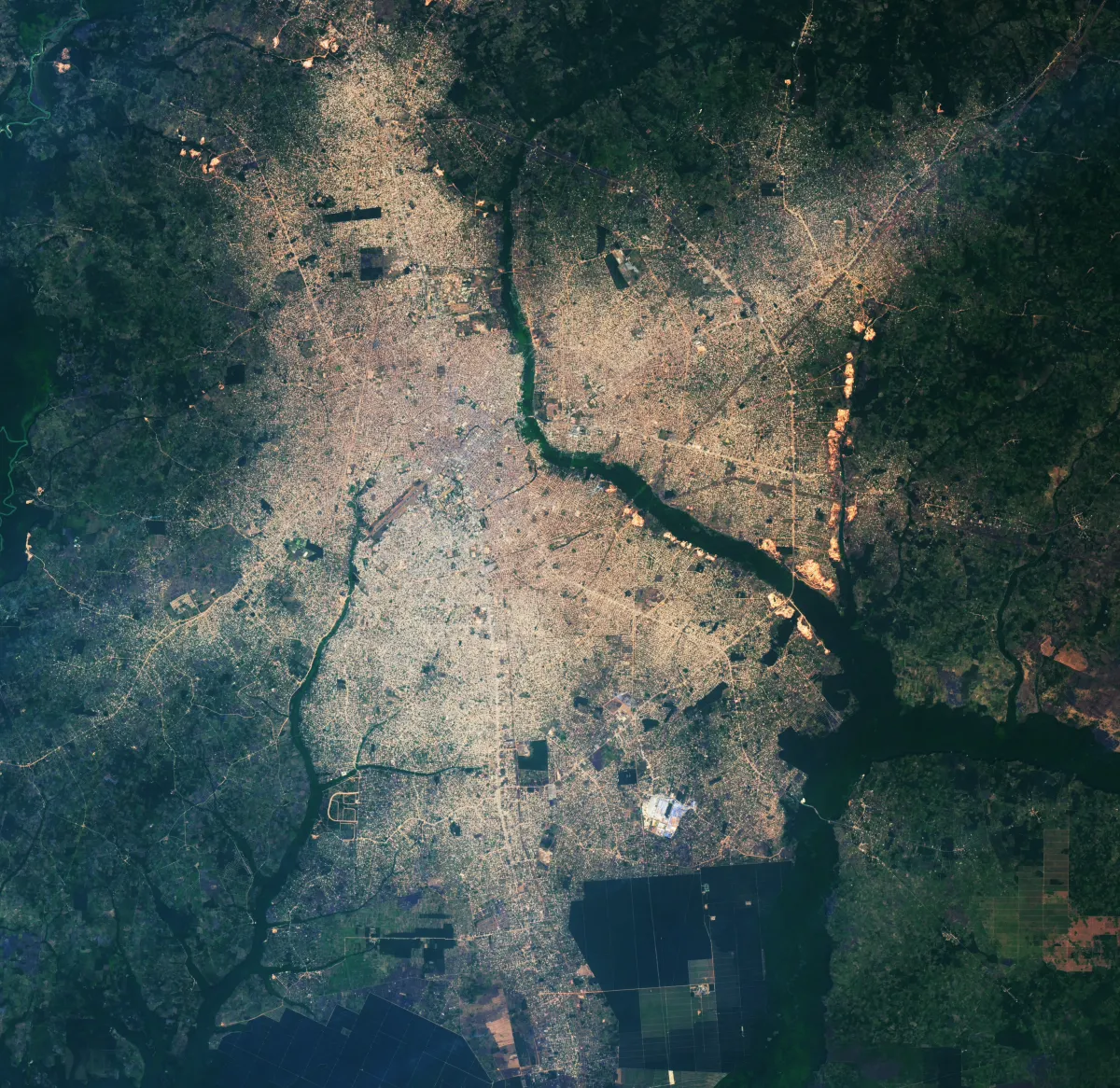
Benin City stands today as a testament to resilience and revival in southern Nigeria. Once the magnificent heart of the Kingdom of Benin, renowned for its sophisticated bronze artistry and monumental earthworks, the city suffered a devastating blow in 1897 when British colonial forces ransacked its treasures and razed the royal palace to the ground. From those ashes, a remarkable transformation has occurred. Today’s Benin City has blossomed into a vibrant urban center of more than 2 million residents, where ancient cultural heritage intertwines with modern development. NASA satellite imagery reveals a striking narrative of expansion, with forests and farmland gradually yielding to neighborhoods, industrial zones, and sprawling infrastructure. This visual evidence documents not just physical growth, but the revival of a cultural identity that refused to be erased by colonial violence, making Benin City an exemplary case of how African cities are reclaiming their narratives while building toward the future.
Nigeria’s urban revolution extends far beyond its megacity Lagos, with secondary cities like Benin quietly transforming into vital centers of economic opportunity, migration, and cultural preservation. In Africa’s most populous nation of nearly 240 million people, these growing urban hubs face unprecedented challenges in balancing development with sustainability and heritage conservation. For Benin City particularly, this growth carries the additional responsibility of honoring a cultural legacy that survived systematic plunder. The city exemplifies the broader challenges facing Nigeria, which expects an urban population increase of over 130 million by 2050. Effective management of rapid urbanization pressures—including housing demands, transportation networks, and the integration of informal settlements—is not merely about physical infrastructure; it represents a commitment to sustainable development that honors centuries-old traditions while creating new opportunities. The way Benin City navigates these challenges offers valuable insights for urban planners, policymakers, and preservationists across the African continent and beyond.
The extraordinary renaissance of Benin City cannot be separated from the artistic and cultural sophistication of its past. The Kingdom of Benin produced some of Africa’s most significant artistic achievements—intricate bronze plaques, sculptures, and ceremonial objects created using advanced lost-wax casting techniques. These Benin Bronzes weren’t merely decorative; they served as historical records, chronicling royal lineages, court ceremonies, and spiritual traditions with remarkable detail and craftsmanship. When British colonial forces looted these treasures in 1897, they scattered approximately 3,000 artworks across museums and private collections worldwide, creating a cultural wound that has only recently begun to heal. The ongoing restitution movement has gained significant momentum, with institutions including London’s Horniman Museum, the Smithsonian, and museums across Germany and the Netherlands returning these priceless artifacts to Nigeria. This cultural restoration runs parallel to the city’s physical redevelopment, creating a powerful symbiosis between reclaiming historical identity and building a modern urban future.
Tracking Benin City’s physical transformation through satellite imagery reveals the dramatic scale of its urban evolution. NASA’s Landsat observations provide a time-lapse view of this growth, showing how a city of approximately one million residents in 2002 has expanded to consume nearly twice the land area by 2025. The distinctive red laterite roads that crisscross the cityscape form a visual network connecting old and new neighborhoods, while remaining patches of lowland forest stand as green islands amid the urban sprawl. This expansion has been driven by multiple factors: rural-to-urban migration seeking economic opportunities, educational institutions like the University of Benin that attract tens of thousands of students, and industrial development in sectors ranging from rubber processing to aluminum production. The city’s role as a state administrative center further cements its importance in the regional landscape. The resulting urban fabric is a complex interweaving of planned developments and informal settlements, creating a distinctly Nigerian pattern of urbanization that balances governmental planning with organic community growth.
The cultural dimensions of Benin City’s revival reached a significant milestone with the recent opening of the Museum of West African Art (MOWAA). Designed by acclaimed British-Ghanaian architect Sir David Adjaye, this ambitious project represents far more than a building—it embodies the city’s determination to reclaim its narrative as a center of artistic excellence. The six-hectare campus features exhibition spaces, conservation laboratories, and an active archaeological excavation, creating a bridge between the Benin Bronzes’ legacy and contemporary African creativity. Founded by visionary Phillip Ihenacho, MOWAA aims to transform the regional economy while reestablishing Benin City’s global cultural significance. With projections suggesting the museum will create more than 30,000 jobs and contribute over $80 million annually to the local economy, this cultural investment demonstrates how heritage preservation can drive sustainable development. The museum serves as both a physical manifestation of cultural pride and an economic catalyst, exemplifying how Benin City is leveraging its artistic legacy to shape its future prosperity.
As Benin City continues its remarkable journey of growth and cultural reclamation, the integration of modern technological tools with traditional knowledge will be essential for sustainable development. Satellite monitoring provides urban planners with crucial data for managing expansion, protecting remaining green spaces, and developing infrastructure that serves all residents. The city’s trajectory offers valuable lessons in resilience—showing how communities can recover from historical trauma while building toward a more equitable future. By embracing both its ancient artistic heritage and its role as a 21st-century urban center, Benin City represents a distinctly African model of development that doesn’t sacrifice cultural identity for economic progress. This balanced approach to urban growth, which honors the past while creating new opportunities, positions Benin City not just as a growing Nigerian metropolis, but as an example of how cities worldwide might approach the complex interplay between heritage, development, and community well-being. In this ongoing evolution, Benin City reminds us that the most sustainable urban futures are often those that draw strength and wisdom from their most profound cultural roots.