


Zelenskyy Visits Contested Frontlines as Peace Talks Loom
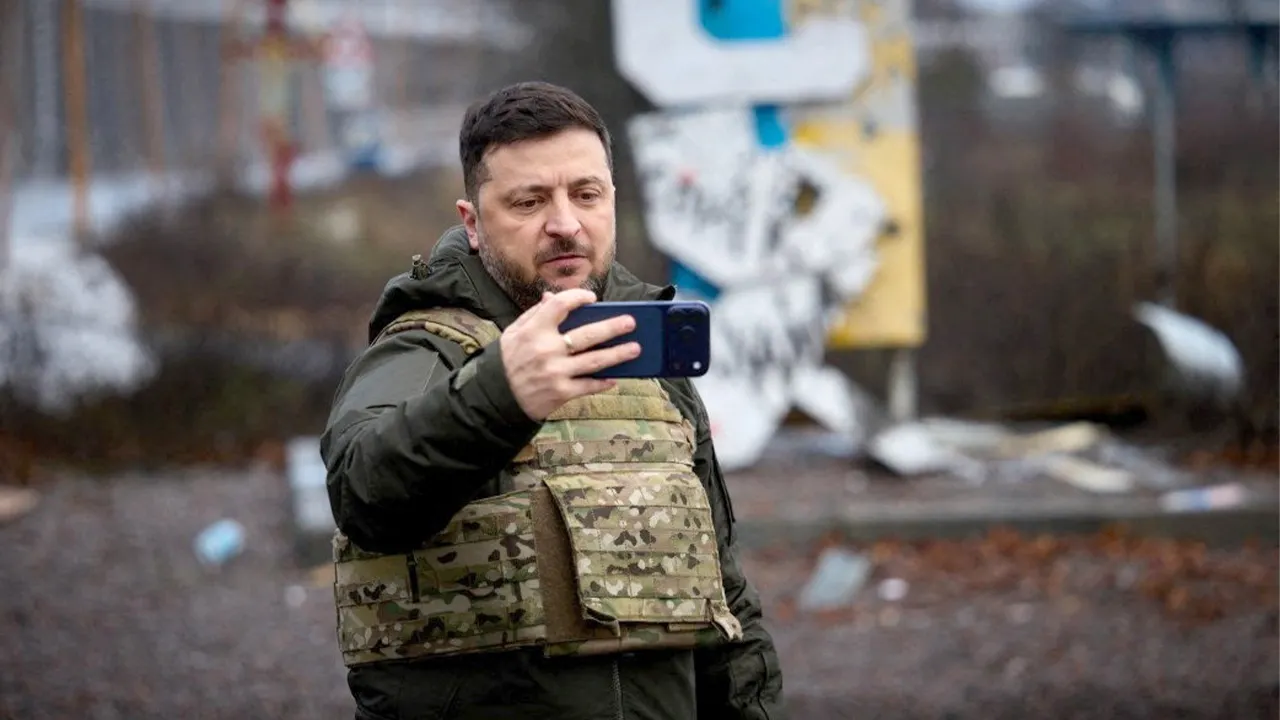
In a bold display of defiance against Russian claims, Ukrainian President Volodymyr Zelenskyy visited the embattled city of Kupiansk on Friday, walking through its war-torn streets wearing a flak jacket. “Today, I am in the Kupiansk sector, with our warriors who are getting the job done for Ukraine here,” Zelenskyy declared in a video shared on social media, standing before a damaged city sign. “The Russians kept going on about Kupiansk – the reality speaks for itself. I visited our troops and congratulated them.” This visit carries particular significance as it directly challenges Russian state media reports from November that claimed their forces had “liberated” the city in Ukraine’s Kharkiv region. By physically appearing in Kupiansk, Zelenskyy delivered a powerful message about Ukrainian resilience and contradicted Russian narratives about territorial control in this strategic eastern area that has witnessed intense fighting throughout the conflict.
This frontline visit comes at a critical diplomatic juncture as Zelenskyy and his team prepare for crucial talks in Berlin on Sunday with representatives from the incoming Trump administration, including Special Envoy Steve Witkoff and Jared Kushner. These discussions represent a pivotal opportunity for Ukraine to establish communication channels with the new U.S. leadership and secure continued American support. The meeting will focus on developing security guarantees for Ukraine that prevent history from repeating itself. “We are focusing on how to reliably guarantee Ukraine’s security so that the experience of the Budapest Memorandum and Russia’s invasion are never repeated. We are counting on constructive talks,” Zelenskyy expressed, referring to the 1994 agreement in which Ukraine gave up nuclear weapons in exchange for security assurances that ultimately failed to prevent the current conflict. These discussions form part of a broader diplomatic effort to establish a framework that might eventually lead to a just peace.
The pursuit of meaningful security guarantees reflects a hard-learned lesson from recent Ukrainian history. The Budapest Memorandum, signed three decades ago, promised Ukraine territorial integrity and security in exchange for relinquishing the world’s third-largest nuclear arsenal inherited from the Soviet Union. When Russia annexed Crimea in 2014 and launched its full-scale invasion in 2022, those promises proved hollow. Now, as new peace frameworks are discussed, Ukrainian leadership insists that any agreement must include robust, actionable mechanisms that prevent future aggression. This stance is supported by German Chancellor Friedrich Merz, who emphasized that “any sustainable ceasefire in Ukraine must include firm guarantees and protect European security interests,” while warning that peace cannot come at the expense of the European Union or NATO. The Chancellor’s statement reflects growing European concern that any agreement must be comprehensive and involve key Western security institutions rather than arrangements made without their participation.
The diplomatic negotiations unfold against a backdrop of increasing anxiety within NATO about broader European security. NATO Secretary-General Mark Rutte recently issued a stark warning that alliance members could become Russia’s next targets if they fail to adequately prepare their defenses. Speaking at a Munich Security Conference event in Germany, Rutte cautioned against complacency: “I fear that too many are quietly complacent. Too many don’t feel the urgency. And too many believe that time is on our side. It is not. The time for action is now.” His warning carries particular weight as European nations reconsider their security postures after decades of reduced defense spending. Rutte’s assessment that Moscow could potentially be ready to use military force against NATO within five years has sent shockwaves through European capitals, reinforcing the idea that Ukraine’s struggle has implications far beyond its borders.
The timing of Zelenskyy’s frontline visit serves multiple strategic purposes in this complex environment. By physically demonstrating Ukrainian control over contested territory, he strengthens his negotiating position ahead of peace talks. The visual message of a Ukrainian president standing in a city that Russia claimed to control undermines Moscow’s narrative of military success while boosting Ukrainian morale. Furthermore, it signals to Western partners that Ukraine continues to fight effectively despite immense challenges, reinforcing arguments for continued military and financial support. For domestic audiences, the visit portrays Zelenskyy as a wartime leader willing to share the risks faced by his troops, an image that helps maintain national unity during a conflict that has stretched into its third year with mounting casualties and infrastructure damage.
As winter deepens across Ukraine, bringing heightened vulnerability amid Russian strikes on energy infrastructure, the diplomatic and military dimensions of the conflict are increasingly intertwined. Zelenskyy’s approach combines determined military resistance with diplomatic outreach, reflecting Ukraine’s need to navigate between fighting for every meter of territory and seeking a path toward eventual peace that preserves Ukrainian sovereignty. The upcoming talks in Berlin represent one strand in a complex web of negotiations that include discussions with European partners about postwar recovery and development. While immediate breakthrough seems unlikely, these discussions may establish principles and frameworks that could eventually lead to a resolution. Meanwhile, on frontlines like Kupiansk, Ukrainian forces continue their daily struggle against Russian advances, embodying their president’s message that Ukraine’s determination remains unbroken despite nearly three years of full-scale war. As Zelenskyy moves between frontline visits and diplomatic missions, he personifies his nation’s dual strategy of resistance and pursuit of a just peace.