




Woman’s Surprising Midnight Encounter with 8-Foot Python in Her Bed
In an extraordinary encounter that might seem like something out of a movie, an Australian woman named Rachel Bloor experienced a truly heart-stopping moment when she awoke in the middle of the night to find an unexpected bedfellow. What initially felt like the familiar weight of her dog on her chest turned out to be something far more startling – a massive 8-foot carpet python that had somehow made its way into her second-story bedroom in Brisbane, Queensland. The realization came when she reached out under the covers, feeling something smooth move beneath her hand. In that moment of dawning horror, Bloor understood this was definitely not her pet dog. “To my horror, I realized it wasn’t my dog,” she told the BBC, recounting the surreal experience that occurred on a Monday night when most people would expect to be sleeping peacefully in the safety of their homes.
Upon this shocking discovery, Bloor immediately alerted her husband, asking him to turn on the lights to confirm what she had felt. His response was remarkably measured but confirmed her fears: “Oh baby. Don’t move. There is like a 2.5-meter python on you.” Despite what must have been intense fear, Bloor’s first concern wasn’t for herself but for the family’s dogs, particularly her Dalmatian. She worried that if the dog noticed the snake, chaos would ensue – “it is gonna be carnage,” as she put it. This protective instinct kicked in even while she was still partially trapped beneath the large reptile. After her husband removed the dogs from the room, Bloor carefully extracted herself from beneath the covers with what she described as a “side shuffle,” demonstrating remarkable composure in a situation that would leave many frozen with fear or panicking.
What happened next reveals much about Bloor’s character and unexpected comfort with wildlife. Rather than calling professional help – as many might do when facing an 8-foot snake in their bedroom – Bloor decided to handle the situation herself. With surprising calm, she personally ushered the large python out through a window. “I grabbed him,” she explained matter-of-factly, adding that the python “didn’t seem overly freaked out” by the handling. “He sort of just wobbled in my hand,” she continued, painting a picture of a surprisingly docile encounter with what most would consider a terrifying intruder. The snake’s size was impressive enough that even while it had been curled up on her, “part of its tail was still out the shutter,” suggesting how the creature might have entered her room in the first place.
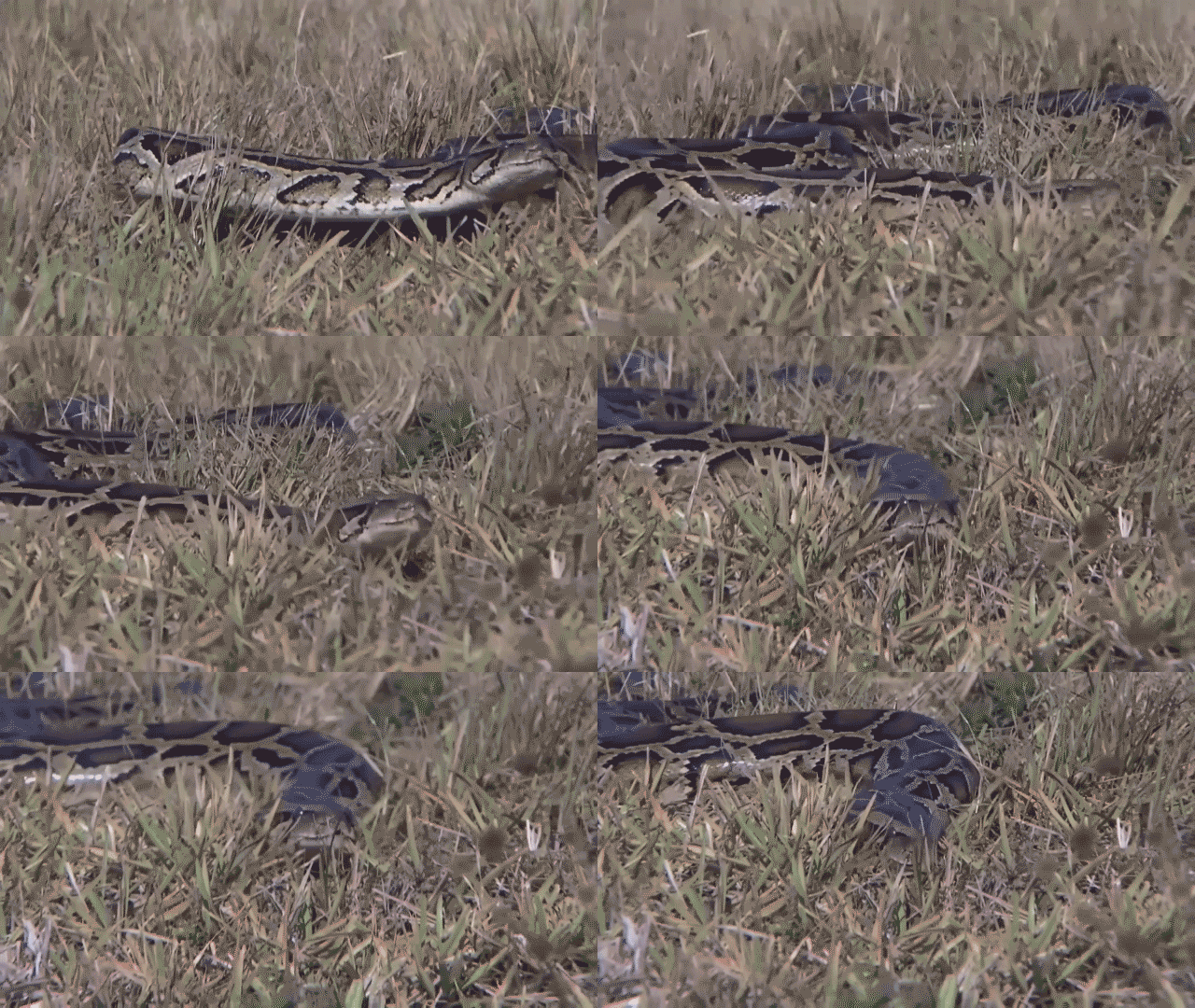
The snake was identified as a carpet python, a non-venomous constrictor that is commonly found throughout Australia’s coastal regions. These snakes, while potentially intimidating due to their size, typically don’t pose a serious threat to humans. In fact, Bloor’s reaction revealed an interesting personal quirk – despite the alarming nature of finding a large snake in her bed, she expressed relief that it wasn’t something else entirely: “Toads freak me out,” she admitted, suggesting a hierarchy of animal fears that somehow placed giant pythons below toads. This unexpected perspective adds a touch of humor to what could otherwise be remembered solely as a frightening ordeal, and speaks to the unique relationship many Australians have with the wildlife that shares their environment.
Snake catcher Kurt Whyte provided context for this unusual encounter, explaining to ABC News that such incidents are becoming more common due to a combination of factors. The timing coincides with the end of breeding season when eggs are beginning to hatch, and the hot weather has snakes more active as they bask in the sun. However, Whyte emphasized that while snake sightings are increasing, this doesn’t necessarily mean snake populations have grown. Rather, it reflects changing human settlement patterns: “They have got to find places to live, and our backyards are offering the perfect habitat,” he explained. As housing developments continue to expand into Australian bushland, these kinds of interactions between humans and native wildlife are becoming more frequent, creating new challenges for coexistence.
For homeowners concerned about similar unexpected visitors, Whyte offered practical advice, warning that common household features could provide easy access for snakes seeking shelter or a comfortable resting place. “Unfortunately, the gaps in our garage doors… provide the perfect entry points for a snake,” he cautioned. This insight suggests that Bloor’s experience, while unusual, is not entirely unpredictable in the Australian context where human habitats increasingly overlap with wildlife territories. Her story serves as both a reminder of nature’s persistent presence even in urban settings and an example of how keeping calm in startling situations can lead to peaceful resolutions. While most people might not handle a python encounter with such composure, Bloor’s experience offers a fascinating glimpse into the unique challenges and unexpected moments that can arise when human lives intersect with the natural world – even in the most intimate spaces of our homes.