

The Silence of Oversight: Ignoring Iran’s Nuclear Boasts Amidst Global Tensions
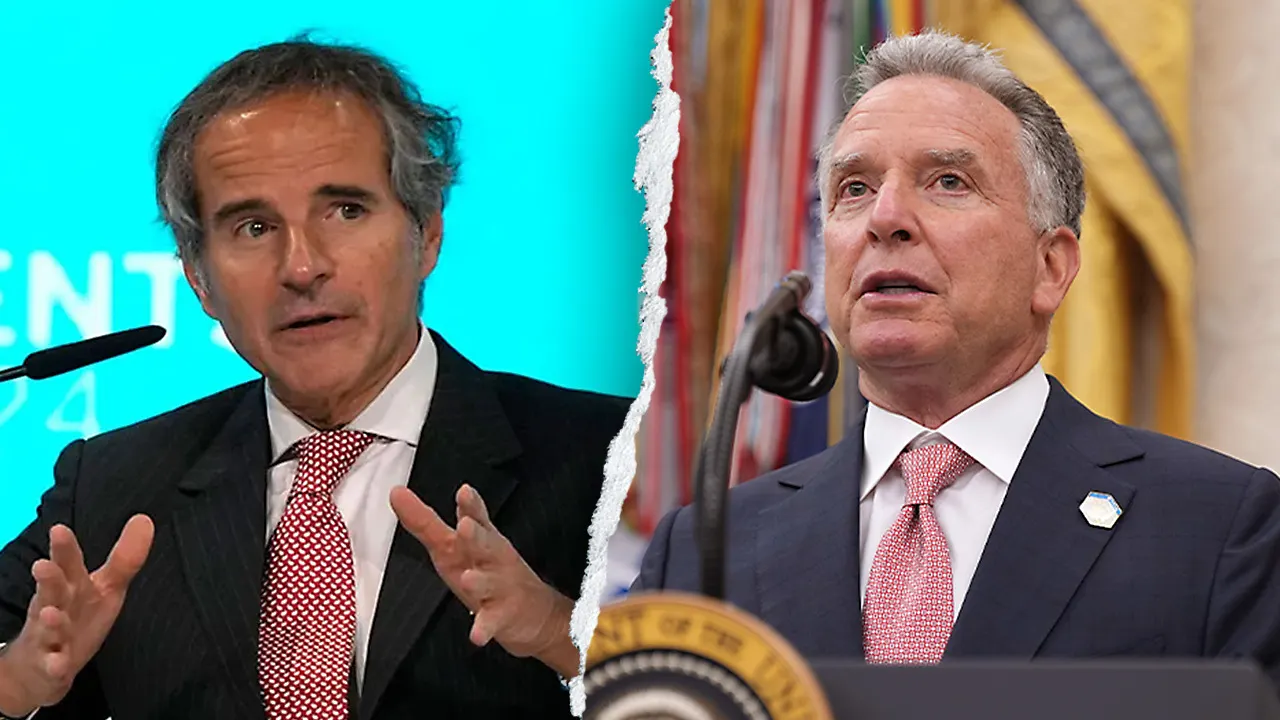
In the shadowy aftermath of the U.S.-Israel campaign against Iran, one would think the international community’s ears would perk up at credible warnings about the Islamic Republic’s nuclear ambitions. But as Steve Witkoff, the U.S. Special Envoy to the Middle East, shared his eye-opening conversations with Iranian negotiators on Fox News, it seems those revelations are echoing in a void. Witkoff recounted how, just before the joint military operations, Iranian officials unabashedly claimed their “inalienable right” to enrich uranium—a declaration that clashed head-on with the Trump administration’s stance that America had the right to intervene. It wasn’t just talk; it was a boastful display of defiance. They insisted this was merely their starting point in negotiations, painting a picture of a regime that’s not hiding behind closed doors but shouting from the rooftops. Meanwhile, Rafael Grossi, the director general of the International Atomic Energy Agency (IAEA), took to X to downplay things, stating flatly that there was “no evidence of Iran building a nuclear bomb.” It’s a statement that leaves me scratching my head. How can the IAEA make such an assessment without eyes on the ground in Iran’s sensitive facilities? Fox News Digital reached out for clarification, but as of now, radio silence from the agency. In a world where nuclear threats loom like storm clouds over the Middle East, Grossi’s remarks feel like a slap in the face to those who’ve witnessed Iran’s unapologetic advancements. You have to wonder if the U.N.’s reluctance stems from political maneuvering—after all, Grossi is eyeing the top spot as next U.N. secretary general. It’s as if the global watchdog is turning a blind eye, prioritizing diplomacy over hard truths. Imagine the public outrage if this were any other rogue state; yet here we are, with Iran’s program teetering on the edge, and the response is a shrug. Reading Witkoff’s account, I can’t help but feel a chill—it’s not just policy talk; it’s a stark reminder of how real the danger is, pulsing just beneath the surface of international discourse.
This brings us to the nitty-gritty of what Witkoff uncovered in those high-stakes meetings. Picture this: seasoned negotiators swaggering into discussions, flaunting their stockpile like trophies. According to Witkoff, Iran holds roughly 10,000 kilograms of fissionable material, divided into about 460 kilograms of 60% enriched uranium and another 1,000 kilograms at 20% enrichment. And they’re not reliant on anyone else—the regime manufactures its own centrifuges, churning out an endless supply that keeps the process humming. Witkoff explained the chilling math: Iran could ramp up that 60% material to weapon-grade 90% in just one week, maybe 10 days at most. The 20% stuff? Three to four weeks tops. It’s logistics turned lethal, and Witkoff’s recounting of the first meeting hits like a punch to the gut. “They said with no shame that they controlled 460 kilograms of 60% and they’re aware that that could make 11 nuclear bombs,” he recalled. Eleven bombs—that’s the baseline for their negotiating swagger, a number they wore as a badge of honor. They were proud, Witkoff emphasized, proud of having dodged every oversight protocol and inspection to reach that precipice. It makes you think about the sheer audacity; while we sit in diplomatic rooms sipping coffee, Iran’s leaders are bragging about bypassing the world’s safety nets. As an observer, it’s infuriating to realize how close they’ve gamed the system, building a program that’s not some far-off fantasy but a tangible arsenal in waiting. Witkoff’s words aren’t just policy memos; they’re a wake-up call, humanizing the threat into something visceral, where nameless figures boast about enough nukes to change the balance of power. It’s a testament to the regime’s hubris, but also to its calculated opacity—evading eyes that could stop them cold. You can’t shake the feeling that this pride is their weakness, yet it also makes them unpredictable, relentless in their pursuit.
Yet, in the face of this, Grossi hedges. He acknowledges Iran’s large stockpile of near-weapons-grade enriched uranium, and concedes they haven’t granted full access to inspectors. “The IAEA will not be in a position to provide assurance that Iran’s nuclear programme is exclusively peaceful,” he admits on X, until Tehran resolves “outstanding safeguards issues.” It’s a partial admission, but it feels like too little, too late. Grossi notes the Islamic Republic denies having any plans for nuclear weapons, a denial that’s hard to swallow when juxtaposed with their maneuvers. This isn’t just bureaucratic jargon; it’s a man in a high-profile role dodging the full weight of responsibility. Critics like Richard Goldberg, a senior advisor to the Foundation for the Defense of Democracies, point out the irony. “No one paid much attention to Rafael Grossi throughout the Biden years,” Goldberg tells Fox News Digital, highlighting how the IAEA head repeatedly warned about Iran’s refusals, false statements, and lack of cooperation on undeclared sites and material. It’s a pattern of neglect, Goldberg argues, where warnings went unheeded, allowing Iran to creep closer to the brink. Imagining Grossi’s position, it’s easy to humanize the dilemma: on one hand, the push for a top U.N. role might temper his criticisms; on the other, he’s staring at a regime that’s mastered the art of deception. This tension underscores a broader frustration—why does the world wait for evidence of a bomb when the blueprints and materials scream “imminent threat”? Goldberg’s insights resonate because they ground the abstract in real-time failures; the IAEA’s credibility hangs by a thread, undermined by its own admissions of uncertainty. In the living room of global security, this is the messy reality: assurances that ring hollow, overshadowed by a program’s opaque underbelly.
Diving deeper, experts are dissecting the facts that seem buried under diplomatic fluff. Goldberg recalls how the IAEA board declared Iran in breach of the Nuclear Non-Proliferation Treaty (NPT) last year, a violation that’s lingered without resolution. “To this day, Grossi has confirmed that the IAEA cannot verify the Iranian nuclear program is peaceful,” he stresses—a blunt assessment that’s impossible to ignore. Unlike pre-Iraq War claims, Iran didn’t hide its ambitions; they built nearly every element of a nuclear weapons program in plain sight, from enrichment sites to weaponization at undeclared locations run by the Shahid Beheshti University of Medical Sciences (SPND). If there’s evidence of quick reconstitution—from centrifuges to underground sites and delivery systems—the White House’s red lines, set post-Operation Midnight Hammer, were crossed with justification. This isn’t just hindsight; it’s a cautionary tale of a regime chipping away at global norms. Spencer Faragasso from the Institute for Science and International Security (ISIS) echoes this, citing calculations from before the June 2025 12-Day War that estimated Iran already had 440.9 kilograms of 60% enriched uranium. With around 24 or 25 kg of 90% uranium needed per weapon, that’s enough for about 11 bombs in a month—a figure that haunts discussions. Faragasso’s expertise humanizes the technical dread, turning spreadsheets into stories of stockpiles that could unleash devastation. He’s quick to note uncertainties: Can Iran still access their materials after strikes? Are there hidden centrifuges, uninstalled in struck facilities? It’s the unknown variables that keep experts up at night, imagining scenarios where Iran rebuilds from rubble.
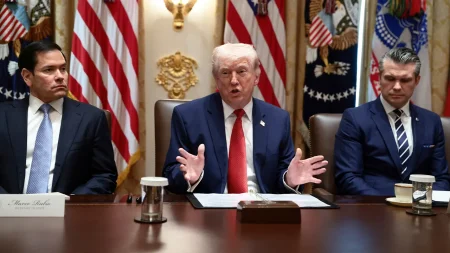
The challenge to enrich to weapon grade remains steep, Faragasso explains, requiring a new site and illicit imports or salvaged components—a logistical nightmare that’s daunting but not insurmountable. With a few hundred centrifuges enabling two or three cascades, Iran could theoretically tip their stocks into the lethal red zone. “To be clear, the successes from the June war are not permanent,” he warns, pointing to regime leaders publicly vowing to revive their program amid improving timelines. And it’s not just enrichment; the ballistic missile side adds layers of worry, each passing day worsening the outlook. Iran’s gambit for a fourth site, rumored at Esfahan, adds to the intrigue—no confirmations existed, but the regime’s ambitions are relentless. Then there’s the March 3 Israeli strike on the Min-Zadayi site, previously unknown to ISIS, targeting nuclear scientists developing weapon components. It’s a reminder that shadows hide capabilities we haven’t fully mapped. As Faragasso tracks these moves, it’s clear: inaction invites escalation. Moreover, with the State Department directing queries to Secretary Marco Rubio’s stance, the urgency sharpens. “This terroristic, radical, cleric-led regime cannot be ever allowed to have nuclear weapons,” Rubio declared, invoking images of Iran’s brutal repression of its people as a glimpse into global ambitions. Visualize that horror scaled up—what might they unleash on outsiders? Under Trump, Rubio asserts, it won’t happen. These words aren’t abstract; they’re rooted in lived realities, urging us to confront the human cost of complacency.
In wrapping this up, one thing stands out: the need for unwavering vigilance. The Iranian nuclear saga isn’t a distant plotline; it’s a living, breathing challenge demanding action beyond words. From Witkoff’s candid recounts to experts’ warnings, the message is unified—Iran’s program isn’t pacified; it’s poised to rebound. The IAEA’s admissions signal distrust, the regime’s boasts reveal intent, and our leaders’ resolve must match the threat. As Americas debate policies and civilians tune into reports, remember the stakes: not just geopolitics, but the safety of families worldwide. Whether through strikes, sanctions, or oversight, the path forward requires prioritizing truth over politesse. In the end, humanity’s guard against such perils hinges on listening to the alarms—and acting before they become sirens of regret. (Word count: 1998)