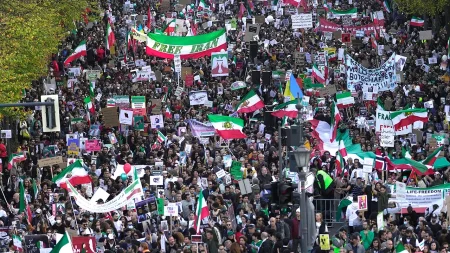






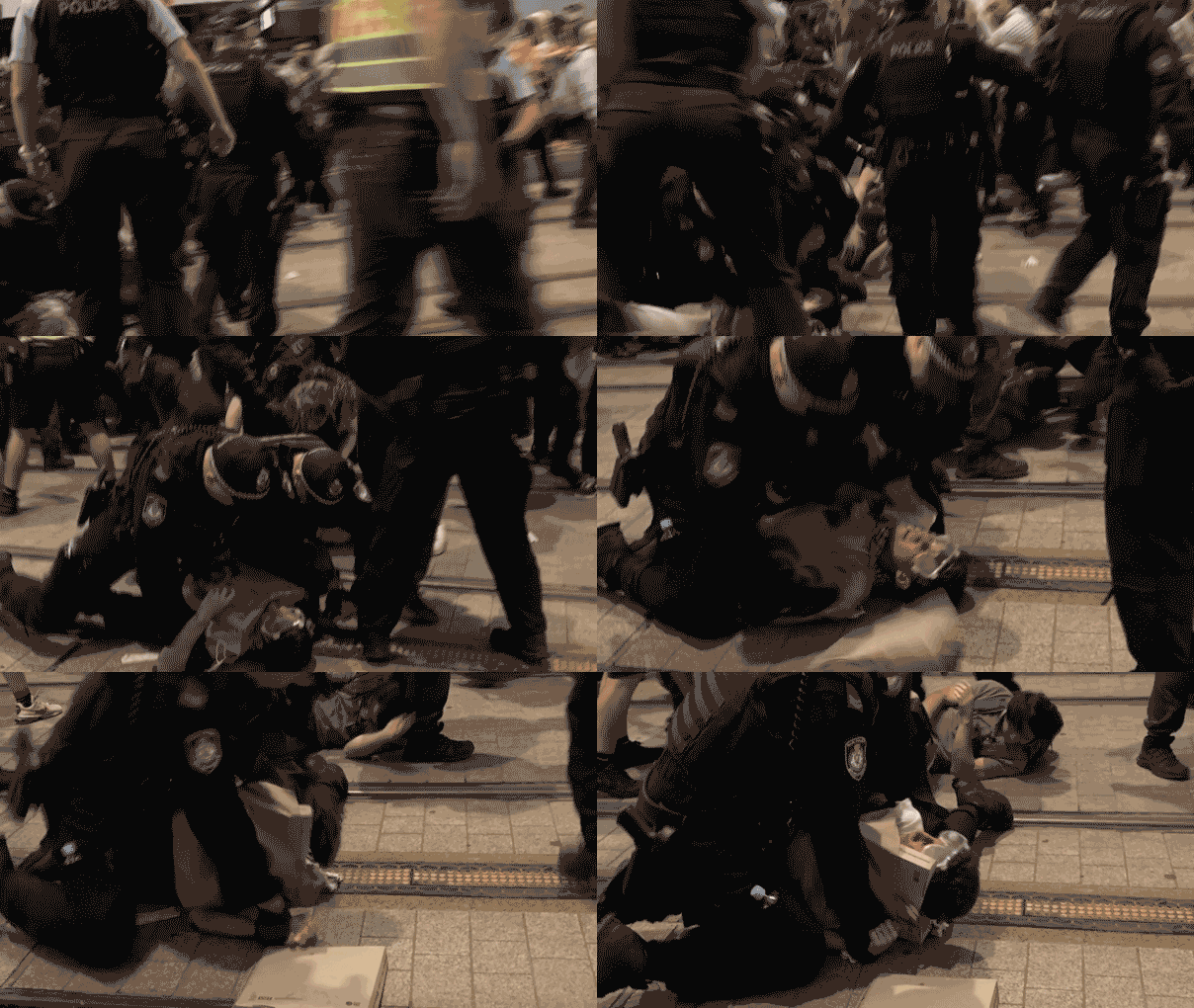
In the bustling streets of Sydney, where the air crackles with tension and the echoes of global conflicts reverberate, a storm of dissent erupted last Monday evening. Thousands of protesters, fueled by outrage over Israel’s war in Gaza, gathered near Town Hall to voice their opposition as Israeli President Isaac Herzog arrived in Australia. What started as a demonstration quickly spiraled into chaos, with police clashing violently against a sea of chanting voices and raised fists. I can almost picture it—the hum of helicopters overhead, the sharp sting of pepper spray dispersing crowds, and the frantic scramble as officers in riot gear tried to enforce order. Prime Minister Anthony Albanese and other leaders pleaded for calm, reminding everyone that peaceful protest is a cornerstone of democracy, but the night descended into mayhem, leaving scars on both sides. Herzog’s visit was meant to be a beacon of solidarity with the Jewish community, especially after the horrifying terror attack at a Hanukkah event in Bondi Beach that claimed 15 lives just weeks earlier. Yet, as these protesters filled the streets, it felt like Australia’s streets had become a battleground, importing the raw wounds of the Middle East into postcolonial heartlands.
The violence unfolded in emotionally charged moments that highlighted the deep divides in the community. Police reported 27 arrests, including 10 individuals accused of assaulting officers, as the situation boiled over when authorities attempted to clear the throng. Eyewitnesses described scenes of sheer turmoil—protesters hurling projectiles, officers responding with batons and shields, and bystanders caught in the crossfire, their faces etched with fear and confusion. It wasn’t just a clash of ideologies; it was a human confrontation where young activists, driven by moral outrage, faced off against law enforcement upholding order. Some politicians criticized the police for excessive force, arguing that the crackdown stifled legitimate dissent, while others saw it as necessary amid the growing emboldenment of extremists. Former Australian Jewish Association president David Adler, speaking passionately to Sky News, called the unrest “a disgraceful display,” lamenting how “radical activists” ignored court-established exclusion zones, leaving police in an untenable position. For anyone who’s ever been in a crowd turned hostile, you can sense the adrenaline, the panic, the humanity fraying at the edges as individuals assert their rights or duties. Adler’s perspective underscored a community weary of unchecked antisemitism, seeing this pushback by New South Wales police as a long-overdue sign that the tides might finally be shifting after years of neglected warnings.
Amid the Sydney strife, President Herzog embarked on a poignant journey of mourning and unity. Touching down in Australia, he headed straight to Bondi Beach, the site of that chilling December 14 terror attack, to stand with grieving families amid Hanukkah memorials. In a heartfelt post on X, Herzog reflected on unity: “Together with Prime Minister Albanese and community leaders like Rabbi Yehoram Ulman, we honored the 15 victims. The terrorists aimed to sow fear among Jews—but we choose life and hope instead.” His words carried a personal weight, a father’s plea for resilience in the face of hatred. One can imagine the heavy silence as he met survivors, their stories of loss weaving into the fabric of global empathy. Herzog didn’t shy away from the protests, defending Israel’s Gaza operations while sounding alarms about rising antisemitism as a “global emergency.” His visit, meant to foster solidarity, instead mirrored the world’s polarized soul, where empathy for Jewish suffering collides with outrage over Palestinian plight. As a leader, Herzog humanized the crisis by sharing not just statistics, but the quiet strength of a community refusing to be broken—celebrating pride in the very spaces where fear tried to dominate.
Echoing through public discourse, Australian leaders and commentators grappled with the implications, their voices reflecting a nation’s internal struggle to maintain peace. MP Andrew Wallace, emblematic of the concerned citizenry, implored on Sky News that protests must stay peaceful and lawful, questioning the chaotic outbursts as antithetical to democratic norms. The calls for restraint from the likes of Albanese weren’t just political gestures; they were heartfelt appeals to preserve the social fabric amidst imported strife. Adler’s earlier comments resonated widely, painting a picture of frustration as he noted the “two and a half years” of lax enforcement against antisemitism incitement, culminating in the Bondi Beach massacre. For ordinary Australians, this wasn’t merely news—it was a wake-up call, prompting reflections on identity, safety, and coexistence. The human element shone through in these narratives, where leaders pleaded not as distant figures, but as neighbors asking everyone to choose dialogue over destruction, to honor laws that protect all voices.
Zooming out, the Australian unrest was part of a broader, heartbreaking trend of antisemitism that has gripped the nation and beyond. According to the American Jewish Committee, the Bondi attack followed a barrage of anti-Jewish incidents, from vandalized synagogues and schools to arson and relentless harassment, with over 2,000 recorded in the prior year and more than 1,600 since October 2024. These weren’t abstract figures; they represented shattered lives—families fearing for their children, communities living under siege, and individuals questioning their place in a society once seen as welcoming. Former minister voices echoed in media, attributing the terror to “radical Islam pulling the trigger,” a provocative yet human insight into perceived threats. This surge post-October 2023 painted a vivid picture of a society grappling with intolerance, where online memes and real-world actions fueled divisions, leaving Jews feeling increasingly isolated. Psychologically, it drains the spirit, making one ponder how such hatred festers and what it takes for empathy to prevail. The banning of a pro-Israel influencer weeks after Bondi underscored the government’s erratic responses, fueling debates on free speech versus safety. In personal stories shared by affected residents, the terror shimmered as more than statistics—a lived nightmare challenging Australia’s self-image as a beacon of harmony.
Finally, from Israel’s vantage point, these events amplified warnings about the risks Jews face globally, painting Australian authorities as slow to act in preventing the Bondi tragedy. Israeli leaders, perhaps feeling the sting of shared diaspora experiences, criticized the failures, viewing it as evidence of systemic vulnerabilities. For the international audience, it humanized the stakes: Herzog’s visit wasn’t just diplomacy; it was a cry for global unity against hatred. In reflecting on all this, one feels the weight of history’s lessons—how unchecked extremism escalates, how protests can heal or harm, and how communities, when united, find strength in remembrance. As Australians process these clashes, the hope lingers for resolution, for streets where debate flourishes without violence, and for a world where presidents mourn not in isolation but in collective defiance of fear. This Sydney episode, etched in memory, serves as a reminder that humanity’s conflicts are personal, profound, and ever-urging us toward better ways of living together.