






Venezuela’s Fragile Balance: Armed Groups Threaten Stability After Maduro’s Arrest
In the wake of former President Nicolás Maduro’s dramatic capture and arrest by U.S. authorities, Venezuela finds itself precariously balanced on a knife’s edge. The country now faces a critical juncture as interim President Delcy Rodríguez assumes control with backing from President Trump’s administration. However, beneath the surface of this political transition lies a complex web of armed militias, guerrilla fighters, and criminal networks that threaten to derail any movement toward stability. Military analysts warn that Venezuela is thoroughly saturated with heavily armed groups who possess the capability and motivation to sabotage the transition process through creating conditions of instability. These “parastate armed groups” extend their influence across virtually every corner of Venezuelan territory, presenting a formidable challenge to Rodríguez’s interim government as it attempts to chart a course forward in uncertain waters.
Rodríguez’s immediate challenge involves a precarious balancing act between various power centers within the regime, particularly two influential hardliners: Interior Minister Diosdado Cabello and Defense Minister Vladimir Padrino. Venezuelan military strategist José García points to Cabello as “the most ideological, violent, and unpredictable element of the Venezuelan regime,” making his support crucial for any sustainable transition. Phil Gunson, a Crisis Group analyst based in Caracas, describes Rodríguez’s position as walking “a tightrope,” noting that any potential deal with the Trump administration requires approval from “the people with the guns,” namely Padrino and Cabello. This internal power dynamic illustrates how military and security forces remain the ultimate arbiters of Venezuela’s political future, regardless of diplomatic maneuvering on the international stage. The interim president must navigate these treacherous waters while maintaining legitimacy both internally and externally.
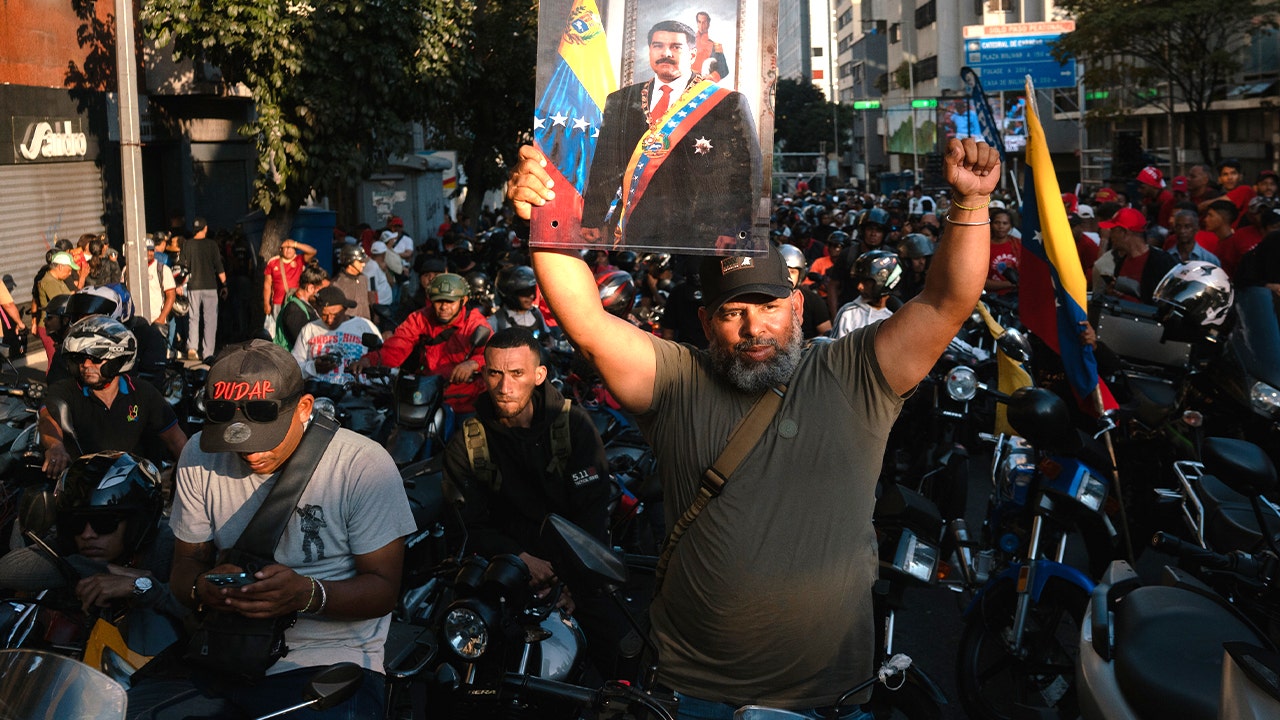
Since Maduro’s removal, pro-government militias known as “colectivos” have emerged as a visible enforcement mechanism across Caracas and other major cities. These armed motorcyclists and masked enforcers have established checkpoints throughout the capital, searching civilians’ phones and vehicles for signs of opposition to the U.S. operation that removed Maduro. “The colectivos have weapons,” notes Oswaldo, a 69-year-old shop owner, expressing the uncertainty felt by many ordinary Venezuelans. These groups function as armed enforcers of political loyalty, with Luis Cortéz, commander of the Colectivo Catedral Combativa, declaring: “We are the ones being called on to defend this revolutionary process radically, without hesitation — us colectivos are the fundamental tool to continue this fight.” Their presence on the streets represents a clear signal that even without Maduro at the helm, the enforcement apparatus of the regime remains intact and prepared to suppress dissent that might threaten the established order.
Beyond the urban centers, Venezuela’s borders and resource-rich interior have become operational zones for guerrilla groups and organized crime syndicates who are capitalizing on the current power vacuum. The 2,219-kilometer border with Colombia serves as a base of operations for groups like the National Liberation Army (ELN), a Colombian Marxist guerrilla organization with thousands of fighters that has been designated a terrorist organization by the United States. Elizabeth Dickson of Crisis Group notes that the ELN “has essentially operated as a paramilitary force, aligned with the interests of the Maduro government up until now.” Carlos Arturo Velandia, a former ELN commander, suggests that if Venezuela’s power structure fractures, the group would likely align with the most radical elements of Chavismo. Similarly, the Segunda Marquetalia, a splinter group of Colombia’s former FARC rebels, operates alongside local crime syndicates known as “sistemas,” creating a complex ecosystem of armed actors with varying political alignments and economic interests in Venezuela’s natural resources.
The transnational reach of these armed groups further complicates Venezuela’s path to stability. The Tren de Aragua cartel, recently designated a foreign terrorist organization by the U.S., has expanded its operations not only throughout Venezuela but also into neighboring Colombia, Chile, and even the United States. According to an unsealed indictment, Maduro himself “participates in, perpetuates, and protects a culture of corruption” involving drug trafficking with multiple organizations, including Mexico’s Sinaloa Cartel, the ELN, FARC factions, and Tren de Aragua. This internationalization of Venezuela’s security crisis means that even as the political leadership changes, the criminal networks that have flourished under years of corruption and mismanagement continue to operate across borders, making any solution necessarily regional rather than purely national in scope.
As Venezuela moves forward in this uncertain post-Maduro landscape, the proliferation of armed groups represents perhaps the most significant obstacle to establishing genuine stability. Military analyst Andrei Serbin Pont observes that “the environment of instability plays into the hands of armed actors,” creating a self-reinforcing cycle where insecurity breeds more insecurity. For ordinary Venezuelans caught in this power struggle, the future remains deeply uncertain. The presence of well-armed groups with varying loyalties – from ideological militias to profit-motivated criminal syndicates – means that even as diplomatic and political solutions are pursued, the threat of violence looms large. The interim government’s ability to manage these armed factions, maintain military loyalty, and gradually restore state authority will determine whether Venezuela can break free from its cycle of crisis or whether it will remain trapped in a dangerous equilibrium where guns, not votes, ultimately decide the nation’s trajectory. The coming months will test not only Rodríguez’s political acumen but also the international community’s commitment to supporting a genuine transition toward stability and democracy in this resource-rich but deeply troubled nation.