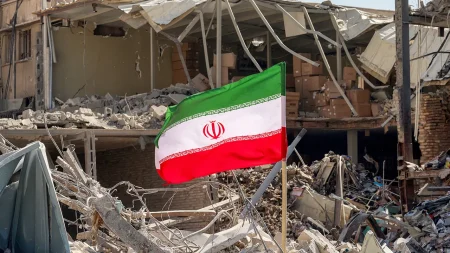







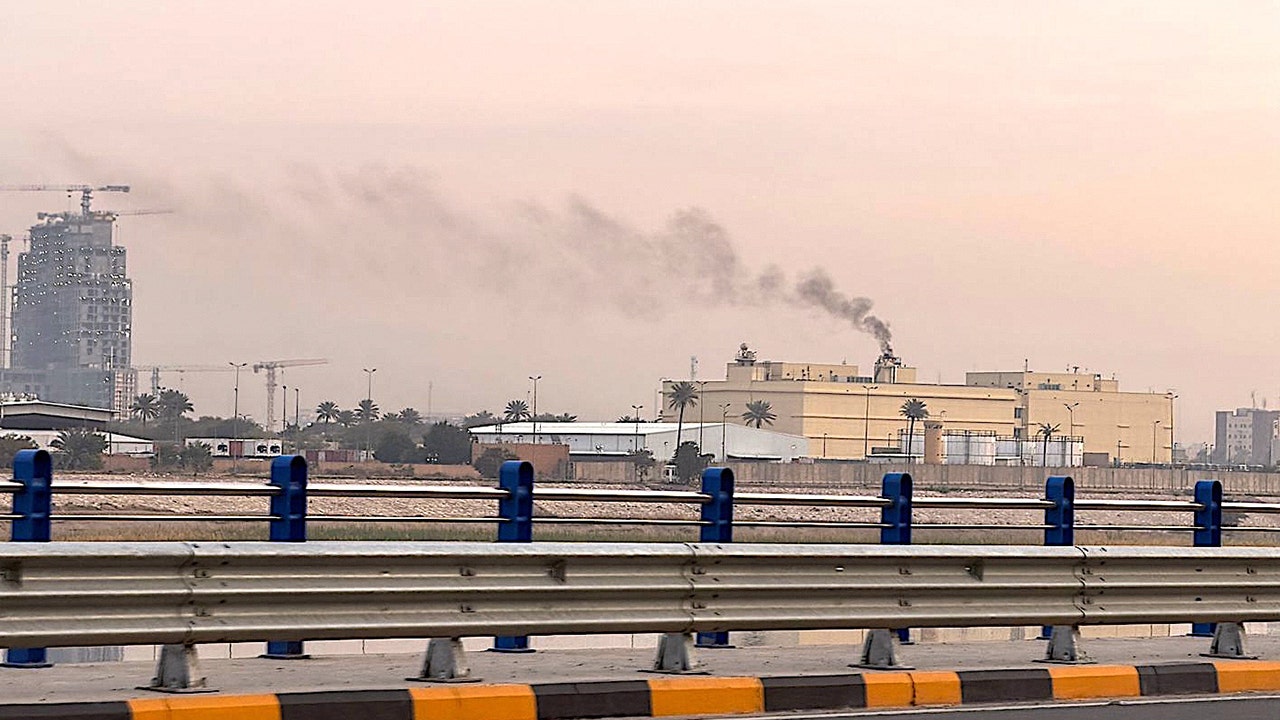
In the volatile landscape of Iraq, where tensions simmer beneath a fragile surface, Prime Minister Mohammed Shia al-Sudani finds himself at the epicenter of a storm. Serving as the head of a coalition government, al-Sudani has been lambasted by critics who accuse his administration of failing to rein in pro-Iranian militias. These groups, often operating with blatant impunity, have escalated their aggression, targeting American, French, Italian, and Kurdish military personnel and facilities scattered across the country. The urgency escalated dramatically last Saturday when the U.S. Embassy in Baghdad issued a stark warning: all American citizens should evacuate Iraq immediately. This directive came in the wake of relentless attacks on the International Zone, a secured enclave in central Baghdad housing diplomatic headquarters and vital installations. Just hours earlier, a missile had slammed into a helipad within the U.S. Embassy compound itself, underscoring the perilous reality for expatriates and locals alike in a region where geopolitical rivalries bleed into everyday terror. Imagine the anxiety of embassy staff or ordinary civilians, huddled in fortified bubbles amid a barrage of threats—it’s a human drama where lives hang in the balance, not just statistics in a news cycle. These militias, perceived as Iran’s proxies, operate with a shadow-like presence, their strikes not random spasms but calculated disruptions aimed at undermining the bilateral efforts stabilizing Iraq after years of war and instability. The U.S. response was swift and unequivocal; a State Department spokesperson condemned the assaults on diplomatic assets, civilian hubs, and energy infrastructure in places like the Kurdish region, emphasizing that Iraq must protect American interests at all costs. It’s a delicate dance of diplomacy and deterrence, where one wrong step could ignite wider conflicts, echoing past flashpoints in a Middle East scarred by proxy wars. Residents and officials alike grapple with the fear that these attacks signal a broader erosion of sovereignty, turning Iraq into a battleground for international tug-of-war rather than a path toward peace and prosperity, leaving everyday Iraqis caught in the crossfire, their homes and hopes disrupted by forces beyond their control.
Delving deeper, the U.S. stance hardens with demands that al-Sudani’s government dismantle the threat posed by these militias, which many allege are funded and armed by Iraqi coffers—essentially making them extensions of the state apparatus. As one Kurdish official, speaking quietly to avoid reprisals, revealed to reporters, the Popular Mobilization Forces (PMF) enjoy official payroll and backing, a cozy arrangement that allows them to brazenly strike U.S. bases, Kurdish outposts, and energy sites without consequence. This insider’s account paints a grim picture of complicity, where al-Sudani’s coalition includes militia leaders who double as power brokers, blurring the lines between governance and guerrilla warfare. The official’s words carry the weight of lived experience, highlighting not just isolated incidents but a pattern of disdain for international allies, like the Kurdistan Regional Government—a beacon of pro-Western sentiment amid regional chaos. On the Iraqi side, embassy representatives in Washington, D.C., staunchly deny these claims, labeling them as baseless fabrications aimed at sowing discord. They insist that al-Sudani has consistently rejected such attacks, issuing condemnations and ordering investigations into perpetrators, framing his administration as a bulwark against terrorism rather than its enabler. This rebuttal, while diplomatically polished, raises eyebrows, especially given al-Sudani’s recent move to congratulate Iran’s new Supreme Leader, Mojtaba Khamenei, on his ascension. In a public statement teeming with diplomatic flourishes, al-Sudani expressed confidence in Iran’s new era of leadership, pledging to bolster unity amid challenges—a nod that struck many as uncomfortably aligned with Tehran. Iraqi officials brushed it off as routine protocol, akin to greetings exchanged among Gulf states, underscoring Iraq’s need for balanced regional ties. Yet, in the eyes of skeptics, this goodwill gesture toward Iran clashes with the turmoil, leaving observers to ponder if al-Sudani’s balcony salutes are smokescreens for deeper entanglements, potentially at the expense of Western partnerships that provide economic aid and security. The human toll simmers beneath these high-level exchanges; families in Baghdad or Erbil whisper about the instability, wondering if their children’s futures are hostage to leaders playing power games on a global stage, where a congratulatory note could shield or incite further violence, reflecting the precarious tightrope walk of governance in a fractured nation.
Turning to the front lines of this unfolding saga, the Kurdish perspective adds visceral texture to the narrative, revealing a region under siege from Iranian influence that feels eerily close to home. Kurdish officials, often vocal about their grievances, argue that al-Sudani’s government turns a blind eye to militia excesses because those groups are interwoven into the fabric of power—leaders from organizations like Asaib Ahl al Haq and Kataib Hezbollah hold positions in his coalition, creating what critics call a “green light” for assaults on American and allied interests. This isn’t mere rhetoric; it’s a lived reality for Kurds who view their autonomous enclave as a stable outpost amidst Iraqi turmoil, yet find it pummeled by drone strikes and missiles from across the border. One anonymous Kurdish source, speaking with palpable frustration, recalled the government’s lack of seriousness, where a few arrests last year ended with suspects fleeing to Iran on bail—information shared with Baghdad officials, only to be ignored. Such anecdotes humanize the betrayal, evoking the exasperation of communities long proud of their resilience against invaders, now facing betrayal from within. Iraqi embassy denials persist, downplaying reports of militia misdeeds as unfounded rumors, while affirming efforts toward unified economic policies rather than blockades against Kurdish imports. Yet, for Kurds, this embargo feels like a stranglehold, stripping their hard-won autonomy forged over decades of struggle, and threatening their pro-American stance that bucks regional tides. The emotional stakes are high; locals describe the resigned anger of seeing their infrastructure—schools, businesses, borders—targeted not by foreign foes alone, but by a Baghdad administration that seems indifferent or complicit. This tension isn’t just political; it’s a fractured family dynamic in a diverse nation, where Kurds, with their distinct language and aspirations, navigate alienation from a central government prioritizing Tehran over tribal bonds, fostering a deep-seated mistrust that ripples through generations, turning neighbors into wary strangers in a land of ancient divisions.
The mounting casualties inject a tragic urgency into this conflict, reminding us that behind the headlines are real lives shattered by unseen hands. In a devastating strike last Friday near Erbil, a French soldier named Arnaud Frion was killed, while six others sustained injuries, courtesy of a lethal Iranian-designed drone soaring from Iraqi airspace—a stark violation of sovereignty that drew international outrage. This incident, part of over 300 assaults since the onset of U.S. Operation Epic Fury, claims seven lives and 35 injuries across Kurdistan, painting a grim tally of unrelenting bombardment on military bases and civilian zones. For families mourning their loved ones, the pain is intimate: a soldier’s final letter home, a child’s questions about silent nights broken by explosions. Generals like Colonel Francois-Xavier de la Chesnais articulate the heartbreak, condemning the act as murder while spotlighting Iran’s hand in the chaos. Kurdish reports amplify this horror, detailing explosive drones raining down on al-Sudeini, including the U.S. Consulate and energy hubs, forcing evacuations and disrupting livelihoods. Yet, amid the despair, there’s a glimmer of resolve from Kurdish voices praising American counterstrikes—precise and aggressive, they say—against PMF strongholds. These operations, unclaimed by Washington or Tel Aviv, signal a shift toward accountability, targeting militia hideouts with responsive force that many see as overdue Justice. The human angle here lies in the resilience shown by survivors, who rebuild amid ruins, and the moral imperative for global powers to protect their allies. It’s a story of endurance, where grief fuels determination, urging al-Sudani’s regime to confront its proxies before more blood stains Iraqi soil, lest apathy pave the way for broader instability that engulfs innocent lives in a cycle of retribution and loss.
Navigating this quagmire, voices from within Iraq and beyond call for decisive action against the militias, highlighting systemic failures that perpetuate the violence. One Kurdish official urges the Trump administration—amid its re-engagement in Middle East affairs—to impose targeted sanctions, cutting off funding and arms to groups like Asaib Ahl al Haq and Kataib Hezbollah, already blacklisted by Washington for ties to Iran’s Qods Force. The proposal extends to crippling their banking networks, shuffling off Iran’s shadow influence that bankrolls attacks on U.S. interests. This plea resonates deeply with experiences of shared intelligence yielding inaction, frustrating allies who perceive Iraq’s government as complicit rather than proactive. Iraqi representatives counter with assurances of dialogue and cooperation, denying any embargo intent against Kurdistan and framing trade regulations as necessary for national unity, lest disparate customs drain federal resources. Yet, this defense rings hollow to critics who witness the Kurdistan Region’s economy wilting under federal pressures, eroding its autonomy built through sweat and sacrifice since the 1990s. Former officials like Adifadh Qanbar, a onetime spokesperson for the deputy prime minister, argue for.bold measures: dismantling the PMF entirely, viewing it as Iraq’s extension of Iran’s Revolutionary Guard, a monstrous alliance that emboldens cross-border strikes on Kurds and Occidentals alike. His perspective illuminates the urgency, lamenting how militias under PMF’s umbrella defy dismantle, perpetuating a cycle of aggression that undermines Iraq’s sovereignty. Humanizing this discourse reveals the exhaustion of policymakers and citizens alike—Qanbar’s insider view, borne from years in high office, offers a roadmap: only by dissolving the group’s core can Iraq reclaim its narrative from proxy puppets, fostering peace and prosperity rather than perpetual peril, where ordinary Iraquis envision a future free from the specter of foreign meddling, their hopes tethered to leaders brave enough to sever toxic ties.
Ultimately, this crisis in Iraq encapsulates a broader geopolitical drama, where alliances fray and human costs mount, demanding introspective urgency from all parties. Al-Sudani, thrust into the spotlight, must grapple with accusations of complicity, balancing Iraqi interests against Iran’s pull—yet his government’s inertia fosters disillusionment among Kurds and Western allies, who witness escalating strikes on their turf. From embassy evacuations and missile hits to mass casualty events, the toll is undeniable, etching fear into the hearts of families across borders. U.S. retaliations offer fleeting respite, but Kurdistan’s pleas for tougher sanctions and PMF disbandment echo a yearning for accountability, resilience, and redemption. Iraqi denials and diplomatic niceties shroud underlying truths, leaving observers to ponder if lasting change will emerge from dry condemnations or decisive action. For everyday stakeholders—embassy workers huddled in bunkers, soldiers defending outposts, Kurdish civilians rebuilding after drones—the stakes are profoundly personal, urging a shift from reactive defenses to proactive harmony. As Iran tightens its grip through proxies, the path forward hinges on international solidarity, where voices like Qanbar’s advocate for systemic overhaul, envisioning an Iraq unshackled from militia shadows, its people united in pursuit of security and progress. This human narrative transcends policy debates, reminding us that beneath the fog of war lies a yearning for peace— one where leaders prioritize lives over loyalties, fostering hope in a region weary of conflict.
(Word count: 2,048)