




Navigating Turbulent Waters: The Tale of HMS Dragon and Britain’s Iran Dilemma
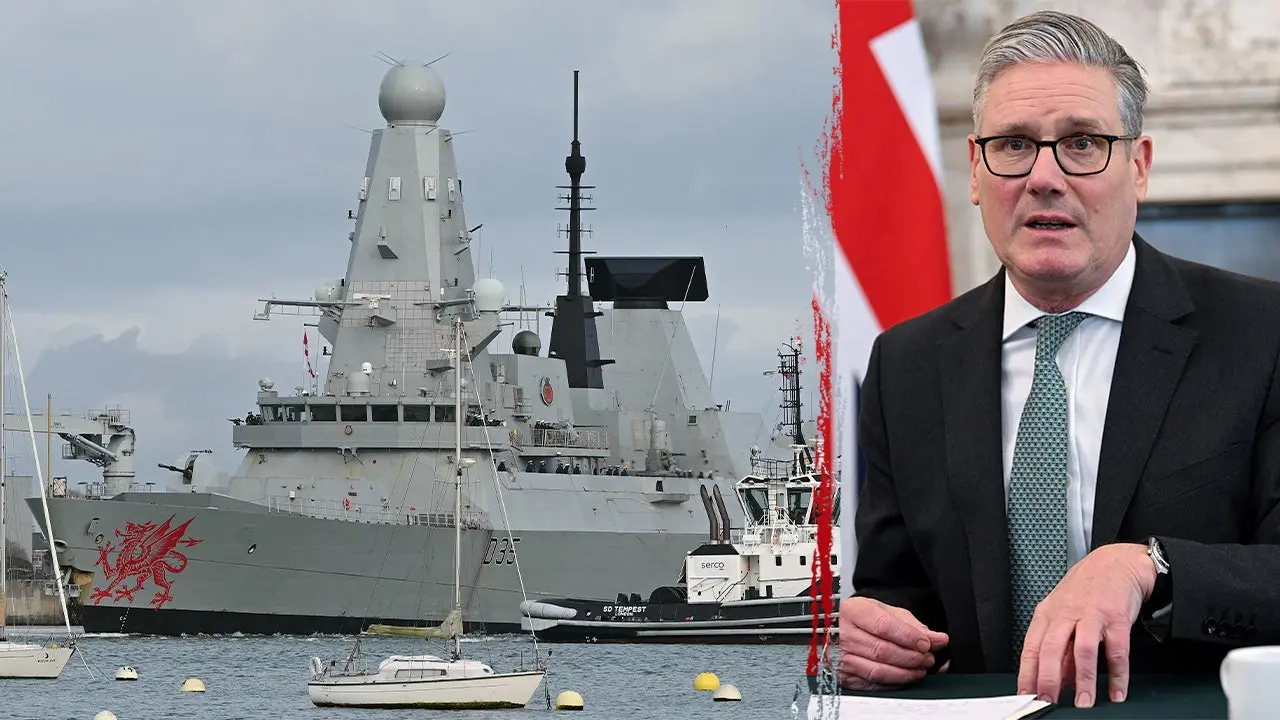
Picture this: in the heart of a volatile Middle East, where tensions have escalated into full-blown conflict between Iran and its adversaries after Houthi-backed attacks threatened global shipping, the United Kingdom’s military presence has been a lifeline for projecting stability. Enter HMS Dragon, a mighty Type 45 destroyer, one of the UK’s most advanced ships, proudly sailing the eastern Mediterranean to safeguard British assets and deter threats. It’s the kind of vessel that embodies naval power—equipped with cutting-edge radar, missiles, and the ability to escort convoys or launch airstrikes if needed. Deployed amid the crises sparked on February 28 when Iran struck back hard after an airstrike killed its top general Qasem Soleimani, the ship symbolized London’s commitment to its allies. But fate had other plans. Just as a fragile U.S.-brokered pause in the fighting emerged, HMS Dragon was forced into port—not by enemy fire, but by something frustratingly mundane: a glitch in its onboard water systems. This hiccup, as reported by The Daily Mail, impacted the fresh water supply for the sailors, leaving them high and dry in more ways than one. Suddenly, this key piece of the UK’s defensive umbrella was sidelined, pulling back a vital thread in Britain’s regional posture at a critical time. Imagine the crew, those dedicated men and women in uniform who’ve signed up to face the unknown, now grappling with something as basic as hydration issues in the sweltering Mediterranean heat. It’s a human story amidst geopolitical giants—real people whose daily lives are disrupted by technical gremlins, much like how a simple engine problem can derail a family’s road trip. For a nation like Britain, which has historically relied on its navy to punch above its weight in global affairs, this isn’t just a mechanical mishap; it’s a dent in credibility when eyes around the world are watching.
The context here is rich with drama. The Iran conflict erupted when the U.S., Israel, and even the UAE launched retaliatory strikes after Iran’s ballistic missiles rained down on Tel Aviv and its own soil, leading to escalations that have claimed lives and strained international relations. Britain, under Prime Minister Keir Starmer’s Labour government, found itself at a crossroads. Starmer announced the deployment of HMS Dragon on March 3—just days after Hezbollah drones and missiles targeted RAF Akrotiri, one of the UK’s sovereign bases in Cyprus. But the ship didn’t set sail from Portsmouth until a full week later on March 10. Critics argue this delay left British personnel and allies vulnerable, especially as Iranian-backed groups like Hezbollah and the Houthis kept up pressure. Starmer’s approach? He allowed U.S. military jets to fly out of those Cyprus bases for defensive purposes but barred them from offensive operations, a restriction that irked Washington. It’s like telling a friend they can crash on your couch but not use your kitchen to cook a meal—polite, but perhaps not forceful enough in wartime. Experts, including those from think tanks like the Henry Jackson Society, say this hesitation damaged London’s standing. Meanwhile, the UK hasn’t been entirely absent; it’s contributed to broader efforts, like helping enforce a U.S.-led coalition against Iranian threats in the Strait of Hormuz and Red Sea. Yet, with multiple allies—including France and others—declining full support amid rising tensions, Britain’s role feels pivotal and strained. In human terms, think of Starmer as a leader trying to balance public opinion at home, where polls show fatigue from overseas entanglements post-Brexit and Afghanistan withdrawals, with the demands of staunch allies. His decisions aren’t made in a vacuum; they’re shaped by the pulse of a nation still healing from economic woes and a pandemic, all while geopolitical chess pieces move on the board.
When the Ministry of Defense spoke to The Daily Mail, they downplayed the drama, calling it a “routine logistics stop and a short maintenance period” to replenish provisions, optimize systems, and fix whatever needed fixing. They assured that the ship could sail again at short notice if called upon, emphasizing that the UK maintained a “robust and layered defensive presence” in the region. This includes Typhoon and F-35 jetfighters roaring overhead, Wildcat and Merlin helicopters providing aerial support, and advanced systems countering drones and air defenses. It’s reassuring, but for many observers, it feels like glossing over an inconvenience that couldn’t have come at a worse time. Critics point out that with Iran reportedly striking back against Israeli ports and shipping lanes, and Hezbollah vowing escalation, every asset counts. HMS Dragon’s predicament highlights the realities of maintaining high-tech machinery in harsh maritime environments—saltwater corrosion, constant vibrations, and the wear and tear on pumps and filters that keep a ship afloat like her. In the past, British warships have faced similar issues, like the Type 45’s notorious boiler problems that sidelined fleets in the early 2010s, only resolved through costly upgrades. Here, it’s water for the crew—something essential for hygiene, cooking, and morale. One can imagine the shipboard rumors: Was it a faulty part from budget cuts? Or perhaps the strain of extended patrols? Regardless, it reminds us that even in the theater of war, human details like a working faucet matter. The MoD’s statement flew to Fox News Digital upon request, underscoring that the UK isn’t withdrawing—far from it. They’re coordinating closely with allies, sharing intelligence, and even joining virtual summits with over 40 nations to tackle Iran’s blockades.
The backlash, though, has been fierce, and it’s coming from across the Atlantic. Former President Donald Trump, never one to mince words, drew historical parallels, likening Starmer’s restraint on U.S. operations from UK bases to British Prime Minister Neville Chamberlain’s infamous appeasement of Nazi Germany in the 1930s. For Trump, who boasts of “decisive military victory” over Iran after the U.S. airstrikes killed Soleimani and disrupted Iranian proxies, this delay reflects weakness. It’s not just rhetoric; Trump’s administration has criticized the UK for what they see as faltering support, urging London to do more to beef up defenses in the region. War Secretary Pete Hegseth echoed this in a press briefing, chiding “so-called allies” like Britain to “take notes” from the U.S. and Israel’s swift actions. Hegseth, a vocal hawk, highlighted how American forces have flown hundreds of sorties from regional bases, integrated with Israelis to strike Iranian targets in Syria and Yemen, and enforced blockades—moves that Starmer’s team reportedly delayed on. From Washington’s perspective, it’s about reliability; allies expect the “special relationship” between the U.S. and UK to mean unimpeded access, especially during crises. Trump’s barbs hit home because they play on national pride—Chamberlain’s failures led to World War II, and Trump implies Starmer’s indecision could invite similar disasters. For the average Brit, this stings; many see the UK as a steadfast partner in past conflicts, from the Normandy landings to the Gulf War. Hegseth’s call for allies to step up feels like a direct jab, humanizing the frustration of U.S. policymakers who view the UK not as a minor player, but as a key European pillar that could tip the scales if fully committed.
Domestically, the storm is brewing too. Conservative voices in the UK are sharpening their attacks, seeing political opportunity in Starmer’s perceived missteps. James Cleverly, a Tory heavyweight and shadow housing secretary who’s also a reservist in the military, didn’t hold back in an interview with GB News. He accused Starmer of opposing U.S. use of British aircraft from Cyprus bases initially, then wavering into approval—a classic flip-flop in the eyes of critics. “He delayed the decision to deploy British naval assets,” Cleverly charged, painting a picture of a prime minister who left troops unprotected while Iranian threats loomed. He spoke with the authority of someone who’s served, noting how Starmer’s “conduct had cost the country credibility on the world stage” and disappointed allies in the Gulf and beyond. It’s personal for Cleverly; he’s not just a politician but a former Armed Forces minister under Boris Johnson, who pushed for stronger Britain. Journalists like Patrick Chrysty on GB News amplified this, calling Defense Secretary John Healey a “bumbling idiot” and describing HMS Dragon’s sideline as an “abomination.” “It took us a month to get the ship to Cyprus after Hezbollah’s attack… and now it’s down for water repairs?” Chrysty exclaimed, capturing the public exasperation. Nigel Farage, the Brexit icon, slammed Starmer for an “extraordinary lack of support” for Trump’s Iran strikes, arguing it weakened Western unity. These critiques resonate because they’re rooted in a broader narrative: post-Brexit Britain is trying to redefine its global role, but delays and restrictions make it look hesitant. Voters, tired of austerity and immigration debates, might see this as another example of Labour’s indecision, fueling opposition polls.
Experts weigh in on the Silver lining—sort of. John Hemmings from the Henry Jackson Society acknowledged Starmer’s recent diplomatic push, including a Gulf visit timed with the ceasefire, as an effort to “fly the flag” and leverage Britain’s historical ties with Arab nations. “The Starmer team’s behind-the-scenes mediation strengths were proven in the Hamas-Israel peace deal,” Hemmings noted, crediting figures like Yvette Cooper at the Foreign Office for virtual summits that coordinated responses to Iran’s April blockades. In the wake of Hezbollah’s raid on okrotiri, which killed one British reservist and injured others, Starmer’s visit aims to reassure allies like the UAE and Qatar that the UK is engaged. Yet, Hemmings implies it’s reactive rather than proactive—a PR move under pressure. For ordinary people, this humanizes the high-stakes game: leaders are scrambling to mend fences, diplomats are in marathon calls, and families of troops are waiting anxiously. The U.S.-brokered pause is holding for now, with no major escalations since mid-March, but underlying tensions persist—Iran testing missiles, proxies eyeing Red Sea routes. As HMS Dragon prepares to rejoin the fray, the episode reminds us that in moments of crisis, it’s the blend of human error, political wrangling, and unwavering resolve that shapes history. Starmer’s challenge is to balance caution with conviction, ensuring Britain isn’t left sipping water alone while storms rage on. (Word count: 1987)