



Ukraine’s Historic Submarine Strike: A New Chapter in Naval Warfare
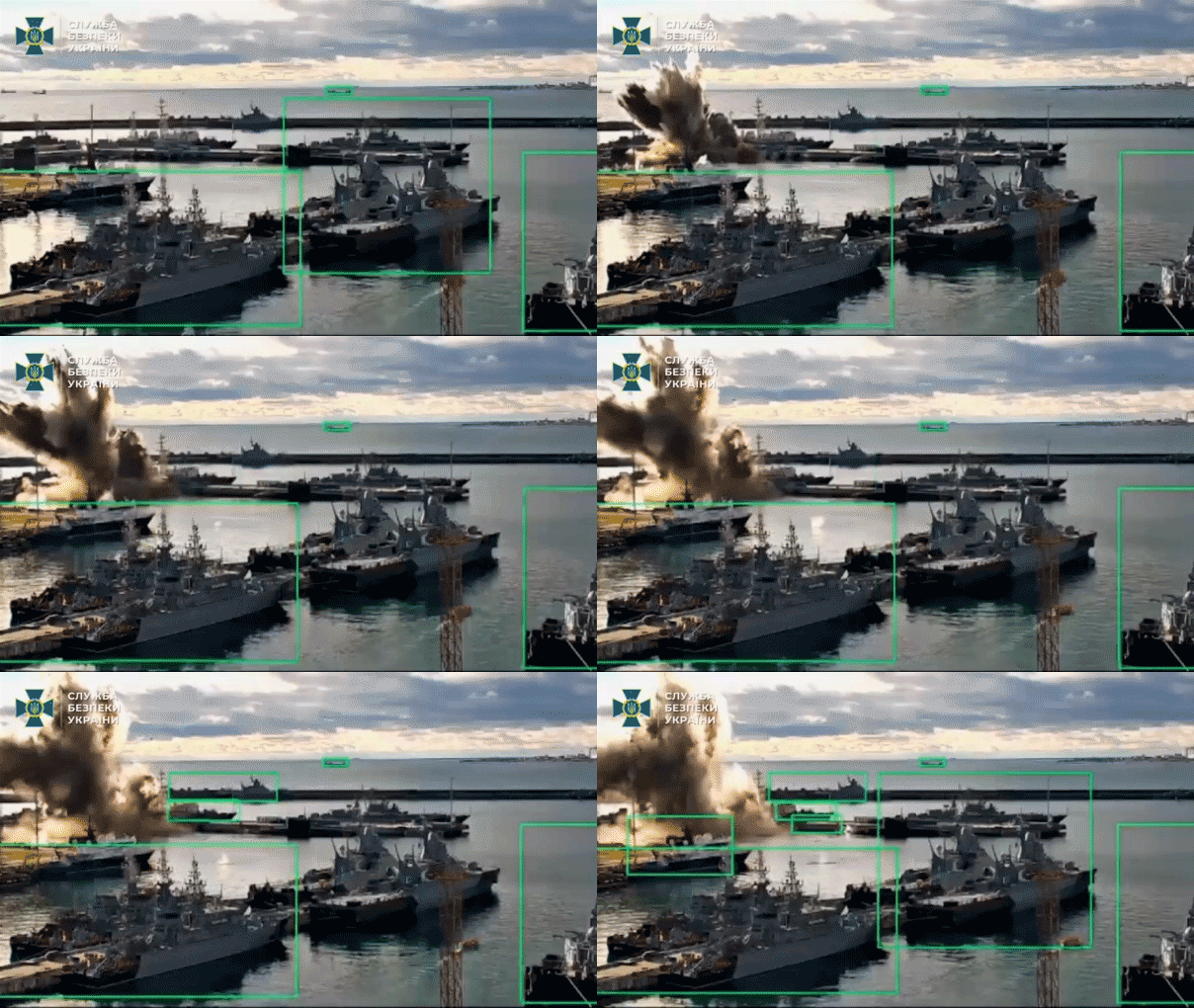
In a groundbreaking military operation, Ukraine has claimed responsibility for what appears to be the first successful underwater drone attack against a Russian submarine. On Monday, the Security Service of Ukraine (SBU) announced that their “Sub Sea Baby” underwater drones had critically damaged a Russian Kilo-class submarine docked at the port of Novorossiysk. This sophisticated vessel, equipped with four launchers for Kalibr cruise missiles, had been actively used in strikes against Kyiv and other Ukrainian regions. The joint operation, carried out by the Ukrainian Navy and the SBU’s 13th Main Directorate of Military Counterintelligence, marks a significant evolution in drone warfare capabilities and demonstrates Ukraine’s growing technological prowess in the ongoing conflict. Video evidence released by Ukrainian authorities showed several ships docked at the Russian naval base before a massive explosion occurred, though Russia’s Black Sea Fleet has denied any damage to submarines or personnel.
The strike represents more than just a tactical victory—it signifies a strategic shift in how smaller naval powers can challenge larger ones through innovative technologies. As drone expert Brett Velicovich noted, “Ukraine once again proved that minnows can swallow sharks using innovation. Underwater drones are the next evolution in drone warfare.” The Novorossiysk naval base has become increasingly important for Russia’s naval operations as Ukrainian forces have intensified strikes on Sevastopol and other occupied Crimean ports. According to Ukrainian intelligence, the targeted submarine had been forced to seek refuge in Novorossiysk because of previous Ukrainian operations, including surface drone attacks that had effectively driven Russia’s Black Sea Fleet from Sevastopol Bay. This pattern suggests a methodical Ukrainian campaign to neutralize Russia’s naval advantage in the Black Sea region, forcing Russian vessels into increasingly vulnerable positions.
The timing of this underwater drone attack is particularly significant against the backdrop of continuing Russian aggression. Despite international condemnation and sanctions, Russia has maintained large-scale drone and missile campaigns against Ukrainian civilian and military targets. This latest Ukrainian success comes as diplomatic efforts intensify to find a resolution to the conflict. Ukrainian President Volodymyr Zelenskyy and his negotiating team recently met with U.S. Special Envoy Steve Witkoff and Jared Kushner, former President Donald Trump’s son-in-law, in Berlin to discuss potential security guarantees for Ukraine. These talks represent part of a broader diplomatic initiative that has also seen Zelenskyy engaging with European leaders earlier in the week to establish a political framework that might end the war, secure Ukraine’s future, and support the country’s eventual reconstruction.
The submarine strike demonstrates Ukraine’s commitment to maintaining military pressure even as diplomatic channels remain open. Since the beginning of the full-scale invasion in February 2022, Ukrainian forces have repeatedly demonstrated remarkable adaptability and innovation in their defensive operations. From repurposing commercial drones for battlefield reconnaissance to developing maritime drone capabilities that challenge Russia’s naval supremacy, Ukraine has consistently found ways to overcome its material disadvantages through technological creativity and strategic ingenuity. The successful targeting of a sophisticated submarine—traditionally one of the most difficult naval assets to detect and engage—suggests that Ukraine’s technical capabilities continue to advance in ways that may reshape the strategic balance in the Black Sea region.
For Russia, the attack represents another blow to the prestige of its naval forces, already damaged by the sinking of the flagship Moskva in April 2022 and subsequent attacks on Black Sea Fleet vessels. The Kremlin’s denial of damage to the submarine follows a pattern of downplaying Ukrainian successes, but satellite imagery and intelligence assessments will likely provide a clearer picture of the actual impact in the coming days. The psychological effect of such attacks should not be underestimated; Russian naval personnel must now contend with the reality that even their most sophisticated vessels are vulnerable to Ukrainian capabilities. This may force further operational changes, potentially limiting Russia’s ability to project power in the Black Sea and launch missile strikes from naval platforms.
As the war approaches its third year, both the military and diplomatic dimensions of the conflict continue to evolve in complex ways. Ukraine’s demonstration of advanced technological capabilities strengthens its position at the negotiating table, while simultaneously pressuring Russia to reconsider the costs of continuing hostilities. The international community, particularly the United States and European nations, faces the challenge of supporting Ukraine’s defensive capabilities while working toward a sustainable peace agreement. President Zelenskyy’s recent diplomatic engagements suggest a focus on securing long-term protections and support for Ukraine, recognizing that any resolution to the conflict must address not only immediate security concerns but also the country’s future reconstruction and integration with European security structures. The submarine strike, while a tactical operation, thus fits into a broader strategic narrative of Ukraine defending its sovereignty while preparing for an eventual post-war future.