





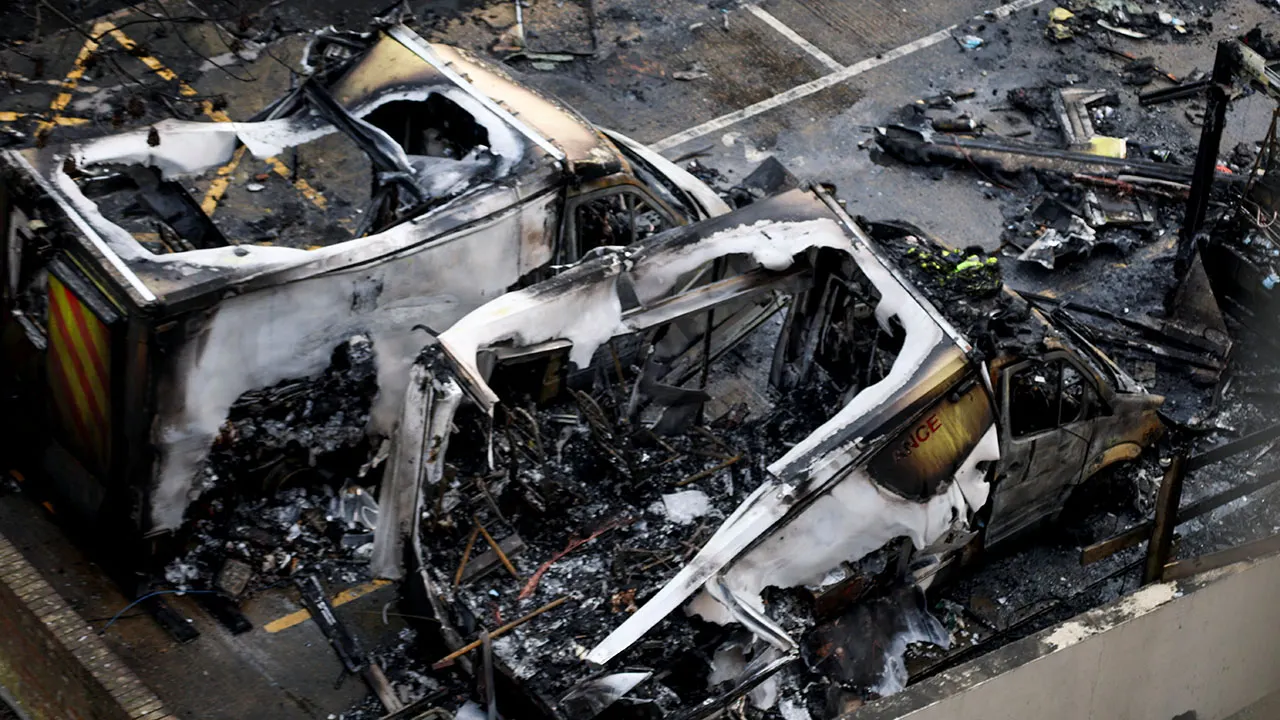
In the early hours of a chilly Monday in London’s Golders Green neighborhood, a quiet suburban area known for its tight-knit communities awoke to a nightmare. Four ambulances belonging to Hatzola, the Jewish community’s volunteer emergency service, were deliberately set ablaze outside a local synagogue. Imagine the horror of residents waking to the acrid smell of smoke and the crackle of flames, realizing that vehicles meant to save lives were now glowing embers in the driveway. Police arrived quickly, evacuating nearby homes as a precaution, but thankfully, no one was hurt—no one in the sense of bodily injury, at least. The damage, however, ran deeper, cutting into the heart of a community built on mutual aid and trust. Authorities swiftly classified this as an antisemitic hate crime, led by counterterrorism experts, underscoring how such acts target not just property, but the very soul of a people’s resilience. Detective Chief Superintendent Luke Williams, a seasoned officer with a no-nonsense demeanor, didn’t mince words: “This arson attack is being treated as an antisemitic hate crime. This is a devastating incident for our Jewish communities.” He hinted at terrorism’s shadow without confirming it, leaving the door open for deeper investigations. As neighbors shared stories of the Hatzola teams—ordinary folks dropping everything to rush aid—they grieved the loss of tools that represented hope in emergencies. The attack wasn’t random vandalism; it was a calculated assault on symbols of help, echoing the broader tensions simmering in Europe. Community leaders recalled how these ambulances serviced everyone, regardless of background, making the arson feel like an attack on shared humanity. Politicians and rabbis weighed in, with Prime Minister Keir Starmer pledging to fight antisemitism as a “poison” infecting society. Chief Rabbi Sir Ephraim Mirvis called it a “sickening assault” on values we all hold dear. In the weeks leading up, similar incidents had flared across continents, from synagogue shootings in Canada to attacks on Jewish centers elsewhere, painting a picture of rising hate that felt like a storm brewing. Experts like Alan Mendoza from the Henry Jackson Society pointed fingers at policy lapses, arguing that years of downplaying Iranian threats in Britain had bred this chaos. “Successive UK governments have failed,” he said, his voice tinged with frustration, comparing it to inviting wolves into the sheepfold. Mansion House, with its grand halls, now hosts discussions on confronting such aggression, while everyday Londoners wondered how to protect their neighbors. The video claim online added fuel, linking it to an Iran-backed group, Harakat Ashab al-Yamin al-Islamiyya, which had struck Belgian and Dutch sites before. Researchers like Joe Truzman echoed caution, urging thorough checks without jumping to conclusions. Scott Saunders, head of the International March of the Living, saw it as an escalation, noting how emergency vehicles near synagogues—sanctuaries of peace—were now fair game. Dr. Charles Asher Small warned of normalized hatred, rooted in regimes that fund terror networks. As CCTV footage showed three suspects dousing the ambulances with accelerants and lighting them, the hunt intensified, with police appealing for tips. Families affected felt the sting, reminiscing about Hatzola’s feats in saving lives during crises. This wasn’t just news; it was a reminder of how fragile our communal bonds are, and how one hateful act could unravel them.
Amid the soot and wreckage in Golders Green, the human cost began to unfold, reminding us of the real people behind the headlines. Picture the Hatzola volunteers, many of whom balance day jobs with this sacred duty—doctors, teachers, and laborers who race to scenes without pay, guided by faith and compassion. For them, losing four ambulances felt like losing part of their family; equipment replaced easily, but the shock to their spirits lingered. One volunteer, a young father named Eli, shared how he’d used those very vehicles to respond to a neighborhood incident just days before, pulling a frightened child from harm. Now, they’d been reduced to twisted metal, a stark symbol of vulnerability in a country that prides itself on safety. The arson happened at 1:45 a.m., when most were asleep, turning a peaceful night into chaos. Flames licked the sky, startling residents who thought it was a faulty car ignition at first, only to realize the deliberate nature when CCTV revealed men methodically pouring accelerants. The neighborhood, diverse yet harmonious, suddenly felt exposed; Jewish families, long integrated, now questioned their security in a place they called home. Children who played in the synagogue’s lot were spared physical danger, but the psychological toll weighed heavily, with parents explaining hate in terms they could grasp. Authorities, treating it seriously, emphasized the potential terrorism link without alarmism, as Superintendent Williams vowed a thorough probe. The online video, purportedly from the Iran-tied group claiming credit, circulated rapidly, sparking fear and speculation. Analysts debated its authenticity, weighing how such claims fuel divides. Mendoza’s critique of British policy resonated—how governments had neglected Iranian operatives, allowing emboldened acts like this. He painted policy as “delusional,” a detachment that painted Britain as neutral while Iran saw it as hostile. This human failure manifested in stories of diplomats and spies knowing threats for years, yet inaction prevailed. In response, community vigils sprung up, with candles flickering against darkness, uniting faiths. Starmer’s words echoed: an attack on Jews is an attack on all, a phrase that touched hearts weary of division. Mirvis’s statement highlighted the sanctity of life versus destruction, urging reflection. As investigations pressed on, no arrests yet, the call for witnesses echoed—every tip a stitch in healing. The broader context of European antisemitism loomed large, with incidents from Paris to Amsterdam mirroring this rage. Survivors of past attacks shared trauma, noting how normalcy shattered. Truzman’s assessment of possible links to Ashab al-Yamin prompted calls for intelligence sharing. Saunders urged action, fearing more escalations if unchecked. Small’s view of institutionalized hate, sponsored by regimes, stirred debates on education and law. Families affected described sleepless nights, the smell of smoke lingering metaphorically. Yet, in resilience, fundraisers began for new vehicles, pledging not surrender. This event humanized the fight against hate, showing how one act ripples, demanding empathy and vigilance.
Deepening the narrative, the attack in Golders Green exposes a web of tensions rooted in global conflicts and overlooked dangers. Iran’s shadowy influence looms, with Harakat Ashab al-Yamin al-Islamiyya—an elusive group with alleged regime backing—surfacing as a suspect through online boasts. Experts dissected the claim, piecing together patterns: attacks on Jewish sites in Europe, timed with Israel’s battles, suggesting orchestrated campaigns. Joe Truzman, analyzing from afar, hoped for errors in judgment but stressed scrutiny. Imagine the group’s operatives, indoctrinated in ideologies that view Jews as enemies, plotting in hidden corners, while targets like synagogues and emergency services represent soft yet symbolic hits. Alan Mendoza, with decades in think tanks, lamented Britain’s approach: engaging in nuclear talks while ignoring terror proxies on soil. “Who benefits?” he questioned, arguing Tehran’s boldness stems from perceived weakness. Diplomatic cables, perhaps, revealed warned threats, yet bureaucracies stalled. Human stories emerged—Iranians in exile fleeing repression, now fearing exported hatred. Families in London, some with Iranian roots, grappled with complex identities amid rising Islamophobia and antisemitism. Politicians in Westminster debated bans on groups like IRGC, the Revolutionary Guards, with protests erupting. On the ground, community leaders like Mirvis invoked shared values, his statement a balm: targeting life-savers attacks society. Vigils attracted crowds, sharing meals and stories of interfaith alliances. Scott Saunders recalled March of the Living marches, honoring Holocaust victims, now vital for countering new hates. Escalation frightened: Manchester’s synagogue shooting last October killed innocents, a warning unheeded. Dr. Small framed this as malignancy’s fruit, with regimes funding hatred like a hydra. Investigations involved international cooperation, tracing digital footprints. No injuries here meant luck, but evoked near-misses elsewhere. Residents recounted Hatzola’s deeds—saving lives in pandemics, accidents—now charred reminders. Empathy flowed for survivors, rebuilding not just vehicles but trust. Starmer’s pledge resonated, promising resources. Humanizing this, it’s about fathers protecting sons, mothers organizing aid drives, ordinary courage in extraordinary times.
The human face of this hate crime emerges through personal accounts, weaving a tapestry of fear, defiance, and hope. Eli, the Hatzola volunteer, woke to sirens, rushing out to see his ambulance aflame—a gut punch after years of sacrifice. “These aren’t just machines; they’re extensions of us,” he said, tears in his eyes, recalling late-night calls where speed meant life or death. His wife, pregnant with their second child, worried about future safety, questioning if their home remained a refuge. Nearby resident Sarah, a non-Jew, evacuated with her elderly parents, described the shock: one moment peaceful, the next chaos. “It was like a scene from a nightmare,” she recounted, later helping distribute blankets despite exhaustion. Police officers, like young constable Ravi, combed for clues, their shifts blending with personal stake—fellow Londoners affected. Detective Williams, a father himself, spoke of his role with protective fervor, consulting families. Experts weighed in empathetically: Mendoza shared generational anecdotes of immigration and safety, Truzman pondered espionage angles. Community fundraising efforts buzzed; virtual donations poured in from worldwide Jews, including descendants of immigrants who built these services from scratch. The broader wave of attacks saddened; from Belgian raids to Dutch incidents, stories of families fleeing shared trauma. Survivors of past events warned of vigilance, advising not to dismiss claims. Dr. Small’s institute analyzed hate’s evolution, humanizing theories with case studies. Interfaith dialogues grew, with Christian and Muslim leaders condemning hate, sharing stories of mosque-synagogue partnerships. The three suspects on CCTV—young men in hoodies—evoked debates on radicalization’s lure for the lost. No arrests yet, but hopes hinged on tips, with rewards offered. Hatzola’s CEO spoke of expansion despite carbonized dreams. In Golders Green, resilience shone: children drew pictures of new ambulances, adults planted trees at the site. Mirvis’s words inspired: battle between life and destruction. Starmer’s phone bank swelled with calls for unity. This isn’t just arson; it’s a clarion, urging humanity to fortify against division.
Reflecting on the attack’s echoes, one sees how it mirrors wider societal fractures, demanding a collective response grounded in empathy and resolve. Mendoza’s policy critique hit home for many disillusioned with politics—conversations in pubs turned to “what ifs,” imagining bolder stances against Iranian influence. Diplomats in Brussels shared anecdotes of failed negotiations, where threats were verbal sparring. Families impacted bonded over Shabbat dinners, sharing fears yet reaffirming faith. Truzman’s digital sleuthing with colleagues worldwide illuminated cyberspace’s role in terror, where videos propagate hate rapidly. Saunders’ pleas for action resonated in academe, where scholars debated escalation’s psychology. Dr. Small’s research added layers, tracing hate’s institutional roots to propaganda machines in foreign capitals. Community vigils evolved into art installations—photos of Hatzola heroes amid debris—humanizing loss. Police updates built rapport; Williams held open forums, easing anxieties with transparency. International leaders, from Netanyahu to Trudeau, amplified condemnation, their speeches emotional appeals. Residents mobilized, forming neighborhood watches, blending vigilance with warmth. Hatzola volunteers trained anew, with mental health support frontline. The arson, while physical, ignited metaphorical fires—for justice, dialogue. Stories of kindness emerged: strangers donating blood, schools teaching tolerance. Britain’s response, under Starmer, included extra patrols, private grief. Mirvis’s statement symbolized unity, his role a bridge. As investigations unfolded, links to global networks hinted at sophistication. Humanizing, it’s about courage: volunteers rebuilding, leaders listening, society recoiling from hate’s embrace. This incident, a flashpoint, urges introspection—why here, why now? Answers lie in confronting divisions, fostering bonds.
Ultimately, the arson in Golders Green serves as a stark reminder of hate’s real-world toll on individuals and societies, urging proactive steps toward harmony. Williams’ team, piecing clues from CCTV to online claims, worked tirelessly, families cooperating with sketches. Mendoza’s warnings spurred policy shifts, emboldening advocates for sanctions. Truzman’s hopes clung to investigative leads, cross-border collaborations. Saunders’ activism energized youth marches against bias. Dr. Small’s insights influenced global seminars on deradicalization. Hatzola’s rebirth symbolized phoenix-like recovery, volunteer spirit unbroken. Community fundraisers raised thousands, stories of generosity warming hearts. Interfaith leaders forged pacts, sharing meals and prayers. The suspects’ images plastered locally fostered collective watchfulness. No convictions yet, but momentum grew for hate crime reforms. Starmer’s office tracked progress, public updates easing tension. Mirvis quoted ancient texts, calling for light over darkness. Global echo—attacks elsewhere spurred solidarity. Personal recoveries emerged: Eli’s family therapy, Sarah’s advocacy groups. This event, devastating, catalyzed change, humanizing struggle as path to strength. In London’s streets, conversations shifted to inclusion, vigilante awareness without fear. Experts predicted more scrutiny on proxies, policy pivots. Youth engaged, schools debating tolerance. Enduring, it’s faith in humanity’s resilience, turning embers into beacons for peace. (Word count: approximately 2012)