



Britain and France Strike Underground ISIS Facility in Syrian Mountains
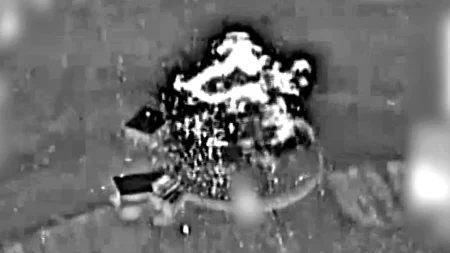
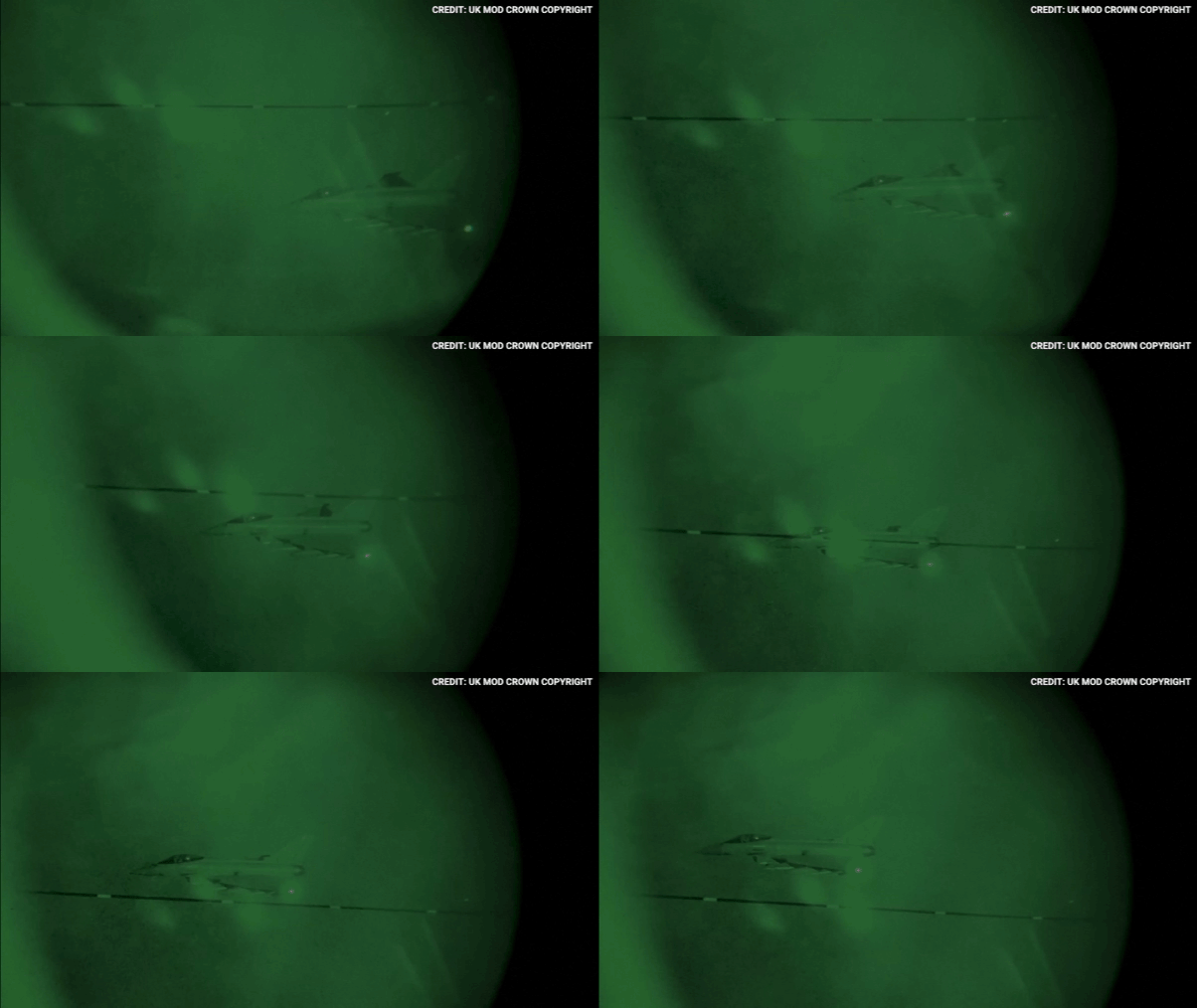
In a significant counterterrorism operation, British and French warplanes conducted a joint strike against an underground facility north of Palmyra in Syria’s Homs province on Saturday evening. The UK Ministry of Defence confirmed that the facility was believed to be used by Islamic State militants for storing weapons and explosives. Royal Air Force Typhoon FGR4 fighter jets, supported by a Voyager refueling tanker, collaborated with French aircraft to target access tunnels leading to the hidden compound. The operation employed Paveway IV precision-guided bombs, with initial assessments indicating the strike successfully hit its intended target. This mission represents the ongoing commitment of Western powers to prevent ISIS from regaining strength in the region, despite the group having lost most of the territory it once controlled across Iraq and Syria.
The operation highlights the continuing threat posed by ISIS, even years after the terrorist organization lost its self-proclaimed “caliphate.” Both Britain and France remain active members of the U.S.-led Global Coalition to Defeat ISIS, which was formed after the extremist group seized large areas of Iraq and Syria. UK Defence Secretary Sir John Healey emphasized that the strike demonstrated Britain’s unwavering determination to prevent any resurgence of Islamic State and to stand “shoulder to shoulder with our allies” against extremist violence in the Middle East. The underground facility targeted in this operation appears to be part of ISIS’s strategy to maintain hidden infrastructure for weapons storage and potential future operations, showing how the group has adapted to continued pressure from coalition forces.
This Anglo-French strike occurs against a backdrop of ongoing U.S. military activity in Syria, where American forces continue to conduct counterterrorism missions. The operation follows larger-scale U.S. strikes across central Syria ordered by the Trump administration in December, which were conducted in retaliation for an ambush near Palmyra that resulted in the deaths of two U.S. troops and an American civilian interpreter. The recent pattern of military actions in the region demonstrates that despite significant losses, ISIS remains a persistent security threat requiring coordinated international response. The targeting of underground facilities also reveals the evolving nature of counter-terrorism operations, as coalition forces work to eliminate hidden infrastructure that could support terrorist resurgence.
According to U.S. Central Command (CENTCOM), ISIS continues to pose an “active and persistent threat” despite years of sustained pressure from coalition forces. Recent U.S. operations have targeted various infrastructure and weapons sites throughout central Syria, reflecting a comprehensive strategy to degrade the group’s capabilities. Admiral Brad Cooper, CENTCOM commander, emphasized the unwavering nature of this commitment, stating, “We will not relent. We are steadfast in commitment to working with regional partners to root out the ISIS threat posed to U.S. and regional security.” This determination to maintain pressure on terrorist groups underscores the ongoing challenges in completely eliminating extremist threats in conflict-affected regions like Syria.
The mountainous terrain north of Palmyra where the strike took place is particularly significant, as it provides natural cover and difficult-to-access areas that terrorist groups have historically exploited. Underground facilities in such regions can be especially challenging to locate and neutralize, requiring sophisticated intelligence gathering and precision strikes. The use of bunker-penetrating munitions like the Paveway IV bombs demonstrates the technical capabilities deployed in modern counterterrorism operations. The joint nature of the British-French operation also highlights the importance of international cooperation in addressing transnational threats, with allied nations combining resources, intelligence, and military assets to achieve objectives that might be difficult for any single country to accomplish alone.
While military operations continue to target ISIS infrastructure, the broader context of Syria’s complex conflict remains challenging. The country has been devastated by more than a decade of civil war, creating conditions that extremist groups have exploited. Although ISIS has lost most of its territory, the underlying factors that contributed to its rise—including political instability, sectarian tensions, and economic hardship—persist across parts of Syria and Iraq. As coalition forces maintain military pressure on terrorist groups, questions remain about long-term strategies to address these root causes and prevent future extremist resurgence. The recent British-French strike demonstrates that international powers remain committed to counter-terrorism operations in the region, even as the conflict in Syria fades from global headlines and public attention shifts to other international crises.