


As the flames of conflict rage across the Middle East, French President Emmanuel Macron’s voice cuts through the chaos like a beacon of hope amidst the turmoil. On a brisk Thursday, Macron took to the digital platform X to demand an immediate halt to the relentless U.S. and Israeli strikes targeting critical infrastructure in Iran and its allied territories. Imagine families huddling in darkened homes, dependent on fragile water and energy systems that could crumble under the weight of bombs— that’s the humanity Macron is pleading to protect. He didn’t mince words: “France calls for the immediate implementation of a moratorium on strikes targeting civilian infrastructure, whether related to water or to energy.” In a world where diplomacy often feels like a faint whisper against the roar of missiles, Macron’s stance reinforces France’s commitment to peace talks over military might. He’s advocating for restoring freedom and security in navigation, a crucial lifeline for global trade. This isn’t just political posturing; it’s a call to prioritize human lives and livelihoods over escalating hostilities. Amid rising tensions, Macron’s words resonate as a reminder that behind the headlines of high-stakes geopolitics, real people—farmers relying on rivers, shopkeepers powering through blackouts—are bearing the brunt. The president from Paris is essentially asking world leaders to hit pause, to choose words over weapons, and to envision a Middle East where infrastructure supports communities rather than fuels conflicts. His message echoes the shared dreams of countless ordinary citizens worldwide who yearn for stability, not strife.
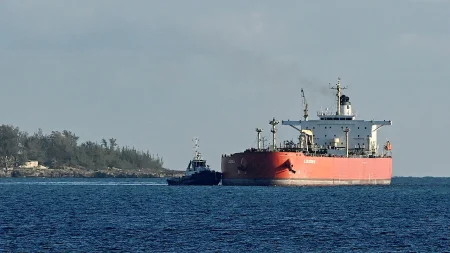
Diving deeper into Macron’s missive, the French leader’s proposal hinges on de-escalation as the path forward, emphasizing that France will never partake in military operations to forcibly open or secure the vital Strait of Hormuz under the current volatile conditions. This narrow waterway, a throbbing artery pulsing with about one-fifth of the world’s daily oil supplies, has become a flashpoint, with Iran’s drones, missiles, and naval threats disrupting shipping like a storm battering fishing boats. Macron insists Paris isn’t entangled as a direct party to the conflict, opting instead for pragmatic steps: escorting commercial vessels only once hostilities simmer down, collaborating with regional players. It’s a stance born of France’s long history of diplomatic finesse, reminiscent of French envoys navigating Europe’s aristocratic intrigues during the Napoleonic era. Yet, this refusal to jump into the fray isn’t isolationism; it’s a calculated bet on patience. Macron envisions a scenario where nations unite post-crisis to safeguard commerce, ensuring that oil tankers and cargo ships sail unmolested. For everyday people, especially those in energy-dependent economies, this means less fear of soaring fuel costs or sudden scarcities that could spike inflation and disrupt daily commutes, school runs, or the simple ritual of brewing morning coffee. Macron’s words aren’t empty; they’re a lifeline for a global economy that thrives on predictable trade routes, signaling that France stands at the crossroads, ready to guide allies toward collaboration rather than confrontation.
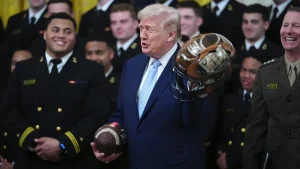
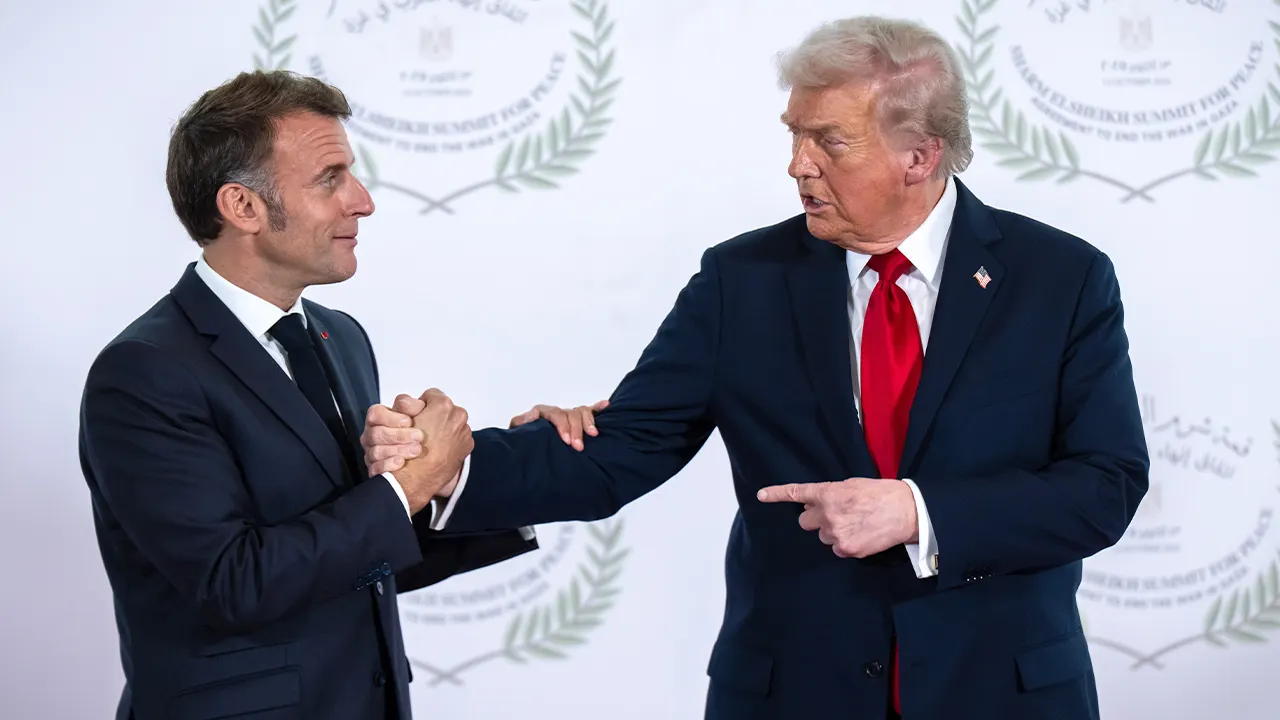
President Donald Trump, ever the outspoken figure with his signature bluster, weighed in on Macron with characteristic candor during a White House briefing, rating the French leader as “an eight” on a zero-to-ten scale of reliability. “Not perfect, but it’s France,” Trump quipped, revealing a cautious optimism after their discussions that Paris might eventually lend a hand in securing the Strait of Hormuz. Trump’s tone was mixed, acknowledging Macron’s potential support while hinting at a broader test of alliances. “I’m almost doing it … because I want to find out how they react,” he admitted, underscoring a strategy of probing NATO partners to prove their mettle. In a world weary of empty promises, Trump’s words resonate with the pragmatism of a leader who’s seen allies falter in past crises—think of game’s casual delays or friendships tested by betrayal. He warned that in true emergencies, “I’ve been saying for years that if we ever did need them, they won’t be there,” painting a picture of imperfect unity. This isn’t just about France; it’s a microcosm of global tensions, where the age-old debate rages: Can talk trump action, or must force dismantle threats like Iran’s expansive network? For ordinary Americans and Europeans alike, reliant on stable oil flows for heating homes or filling car tanks, this divide feels personal. Trump’s bravado reflects a nation’s self-reliance, yet it begs the question—what happens when superpower might isn’t enough, and human connections across oceans become the last line of defense against chaos?
As the spotlight shifts to Lebanon, the conflict spirals into a harrowing second front, transforming the picturesque Mediterranean nation into a battleground echoing with the cries of displaced families. Hezbollah, the Iran-backed militant group, unleashed a barrage of rockets and drones from southern Lebanon shortly after U.S. and Israeli strikes on Iran in late February, sparking retaliatory blows from Israel and drawing the region into a deeper quagmire. Picture the scene: villages once known for olive groves and coastal serenity now scarred by airstrikes, where children play in makeshift shelters and parents fret over the next explosion. Lebanese President Joseph Aoun has signaled openness to direct talks with Israel, a glimmer of hope that France is eagerly amplifying to stabilize the border. French officials see this as a “window of opportunity,” arguing that both sides—Lebanon and Israel—have mutual interests in curbing Hezbollah’s rocket launches. Yet, beneath this veneer of diplomacy lies the stark reality of ongoing defiance; Hezbollah remains a formidable force, its arsenals untouched despite Lebanon’s pledges of national unity. For the people caught in the crossfire, this means perpetual uncertainty—farmers abandoning fields, teachers improvising classes in bomb shelters, and families grappling with the trauma of relocation. The crisis extends beyond Lebanon, with Hezbollah’s actions deemed “naval terrorism” that jeopardizes global trade, reminding us how local skirmishes ripple into worldwide woes like delayed shipments and economic hiccups affecting everything from grocery prices to holiday travel plans.
Israeli officials, however, reject France’s diplomatic overtures as naive idealism, insisting that meaningful talks are impossible while Hezbollah wields its arsenal. Foreign Minister Gideon Sa’ar highlighted the brutal toll: over 2,000 attacks from Lebanese soil since March, a relentless barrage that has shuttered lives and economies. “The obstacle to this is Hezbollah,” Sa’ar declared, demanding real action against the group’s weapons, funding, and leaders before normalization can blossom. Analysts like David Schenker, a seasoned observer from the Washington Institute, critique France’s “carrots without sticks” approach, arguing Paris has squandered its influence and leverage in Lebanon—think of a parent doling out treats without setting boundaries. Schenker points to France’s historical ties, from colonial legacies to UN peacekeeping roles, yet questions if mere talks can alter Hezbollah’s entrenched power or Lebanon’s hesitant army, which prioritizes “national unity” over disarmament. This gap underscores a deeper malaise: repeated initiatives have faltered against the status quo, leaving Israel skeptical and Lebanon fragile. For everyday folks, this isn’t abstract geopolitics; it’s the heartache of a million displaced Lebanese, fleeing as violence surges 400% since the Iran war ignited, per data from Armed Conflict Location & Event Data. Schenker warns of potential Israeli buffer zones or reoccupations, evoking the traumatic 1980s invasion, which plunged families into generational displacement and fear. Beneath the rhetoric lies a human plea—end the cycle so that teachers can return to schools, artists to galleries, and neighbors to shared meals without the dread of the next missile.
The unfolding drama in Lebanon amplifies the transatlantic divides, where France’s carrot-heavy diplomacy clashes with the U.S. and Israel’s stick-wielding resolve, highlighting how this “war launched by Israel and the United States” tests global partnerships. Fox News anchors often muse aloud about these divisions, turning complicated foreign policy into relatable kitchen-table talk—moments that remind us of our interconnected world, where a remote drone strike in Beirut can spike gas prices at American pumps. Critics lambast the UN Interim Force in Lebanon (UNIFIL), France’s backed mission, for its immovable stance amid personal attacks, mirroring the frustration of bystanders watching a playground fight spiral. Schenker asserts that protecting the Strait of Hormuz should be “an international responsibility,” calling out unilateral actions that strain alliances. Yet, this isn’t mere academic debate; for the displaced million in Lebanon—grandma’s knitting interrupted by sirens, kids’ sports games canceled indefinitely—it signifies a failure to safeguard basic freedoms. The violence’s surge, with escalating clashes and river-line ambitions, paints a bleak picture of what-ifs: another occupation, more shattered lives. As nations hesitate or hurl accusations, everyday people worldwide ponder—when will leaders prioritize humanity over headlines, ensuring our often-taken-for-granted stability endures? In this expansive web of shared vulnerabilities, from Parisian cafes to Pacific suburbs, the Middle East’s turmoil becomes a mirror to our collective hopes and hesitations, urging a shift toward solutions that linger beyond the fog of war.