




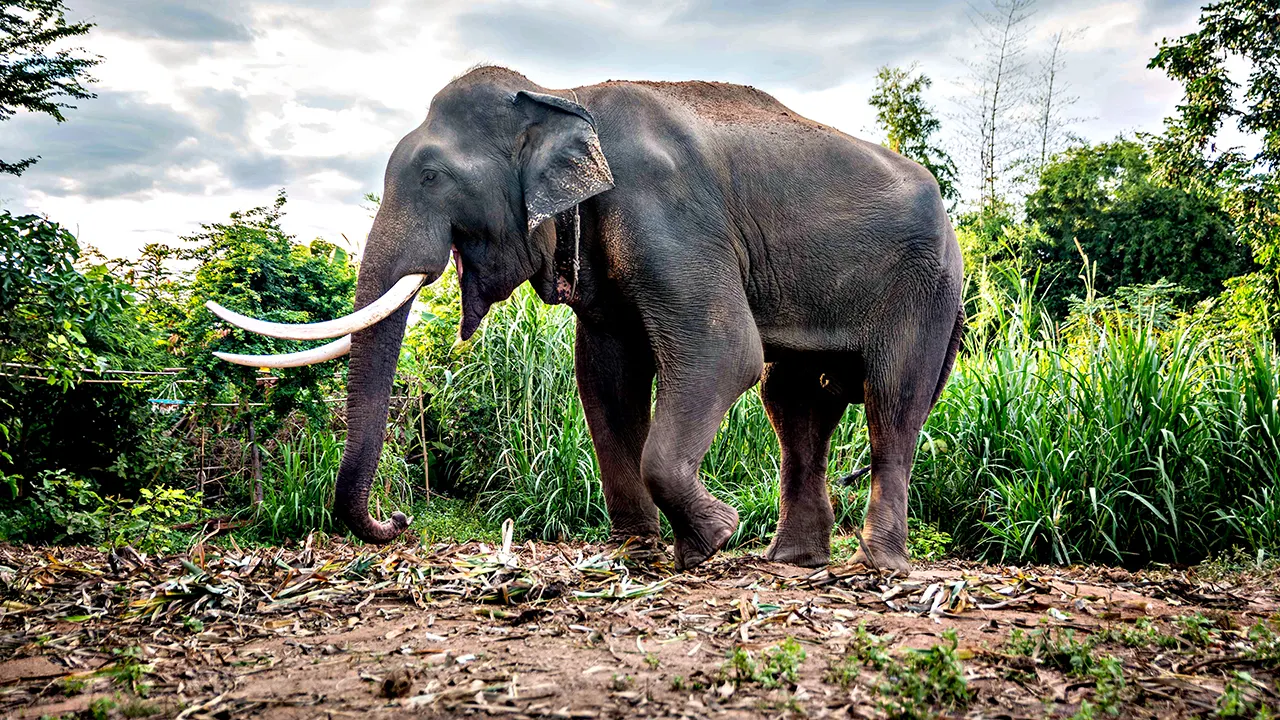
In the heart of Thailand’s lush national parks, where the air hums with the calls of exotic birds and the rustle of ancient foliage, a tragic encounter unfolded one fateful Monday morning that would remind the world of the untamed power of nature. Khao Yai National Park, a UNESCO World Heritage site known for its biodiversity and towering limestone hills, had always been a haven for adventure seekers, families, and wildlife enthusiasts. Tourists from around the globe flocked there to witness wild elephants roaming freely, their massive forms like living landmarks against the vibrant green backdrop. On that particular day, the park seemed serene, bathed in the soft light of dawn. A 65-year-old man named Jirathachai Jiraphatboonyathorn, a retiree from Lopburi province with a lifelong love for the outdoors, decided to take a peaceful morning walk with his beloved wife. They had visited the park before, marveling at the elephants as majestic, almost mythical creatures. Little did they know that this walk would turn into a nightmare, a stark reminder that even in places of beauty, danger lurks unpredictably. As they strolled along a narrow path, admiring the morning mist rising from the valleys, a wild bull elephant approached. This wasn’t just any elephant; it was Oyewan, a formidable figure in the park’s ecosystem, known for his size and temperament. The incident began innocently enough, with the couple observing the elephant from a respectful distance, perhaps sharing a quiet moment of awe. But in an instant, the animal’s behavior shifted, its ears flapping wildly as it charged with primal fury. For Jirathachai and his wife, the world narrowed to sheer terror as the elephant, trumped at an estimated several tons, closed the gap. The ground trembled beneath its heavy feet, leaves crunched, and the air filled with the elephant’s deep, bellowing trumpet. Eyewitnesses later described the scene as chaotic yet eerily quick, a burst of raw power clashing with human vulnerability. Jirathachai, caught off guard, didn’t stand a chance against the charging beast. His wife, in a panic, tried to shield him, but the elephant’s relentless assault claimed him, trampling him underfoot in a matter of seconds. The tragedy underscored a harsh reality: for some, the beauty of wild animals comes at an unthinkable cost, turning personal joy into profound grief. It was a moment that left an indelible mark on the park, prompting urgent questions about coexistence in a world where human and animal territories increasingly overlap.
Fortunately, the story didn’t end in complete devastation. As the elephant continued its rampage, park rangers sprang into action, their years of training and experience guiding them through the crisis. Armed with flares and loud noises designed to deter wildlife without causing harm, they rushed to the scene, their hearts pounding with adrenaline. Chaiya Huayhongthong, the national park chief who recounted the events to AFP, detailed how the rangers’ quick thinking bought precious time. They managed to scare Oyewan away by creating a cacophony of sounds and lights, mimicking disturbances that elephants instinctively fear. This diversionary tactic, born from countless encounters in Thailand’s parks, allowed Jirathachai’s wife to escape unscathed, though she was left traumatized, her mind replaying the horror of seeing her husband fall. She fled to safety, tears streaming as she called for help, the park’s emergency protocols kicking in like a well-oiled machine. Jirathachai, sadly, succumbed to his injuries on the spot—severe trampling that no medical intervention could reverse. The rangers, now in a state of heightened alert, monitored Oyewan as he retreated into the underbrush, his massive form disappearing among the trees. In the aftermath, the scene was cordoned off, investigators piecing together the timeline, from the morning’s tranquility to the abrupt eruption of violence. Jirathachai’s death wasn’t just a statistic; it was a personal loss, profoundly affecting his family and friends who had known him as a kind, adventurous soul. His life, filled with travels and quiet joys, culminated in this heartbreaking final chapter. For the park staff, it was yet another sobering lesson in the fragility of human-wildlife interactions, reminding them that every day in the field carried inherent risks. They worked tirelessly to comfort the widow, offering support while ensuring the park remained secure for others. Authorities promised a thorough review, emphasizing that such incidents, while rare, demanded proactive measures. As news spread, the story resonated globally, sparking empathy and debate about balancing conservation with visitor safety. People from all walks of life shared stories of their own encounters with wildlife, some miraculous, others cautionary, highlighting a universal truth: respect for nature’s boundaries is paramount.
Delving deeper into Oyewan’s past, it became clear this wasn’t his first offense in the annals of human-elephant conflicts. Park officials revealed he had already claimed two other lives before this incident, marking him as a repeated aggressor—a rarity in the elephant world where such patterns raise profound ethical dilemmas. Chaiya Huayhongthong explained that Oyewan, a bull elephant in his prime, had developed a reputation for unpredictability, possibly stemming from territorial instincts, resource competition, or even past traumas from poaching or habitat loss. Elephants, after all, are highly intelligent and social creatures, forming bonds and memories that can influence their behavior. Perhaps Oyewan had encountered humans in ways that left him wary or aggressive, leading to these tragic outcomes. The third fatality in five years painted him as a outlier, not representative of the gentle nature many elephants exhibit. Authorities were scheduled to convene on Friday, a high-stakes meeting to decide Oyewan’s fate, weighing options like relocation to a more isolated area or behavioral interventions such as aversion training. Relocation, for instance, would involve carefully transporting him to a reserve far from human trails, minimizing future risks while preserving his life. Behavioral modification might include conditioning him to associate humans with negative stimuli, teaching him boundaries without resorting to drastic measures. This discussion mirrored broader conversations in wildlife management, where judgments must balance animal welfare with human safety—Ethically, no one wanted to harm an animal that’s a cornerstone of Thailand’s natural heritage, yet preventable tragedies demanded action. Eyewitness accounts of Oyewan’s previous encounters added layers to his story; rangers had seen him charge vehicles and hikers alike, his sheer intimidation factor earning him notoriety. Some speculated he was a victim of circumstance, with dwindling habitats pushing elephants closer to populated zones. Others viewed him as a rogue threat, prompting calls for stricter park access. Regardless, the decision would set a precedent for handling such crises, influencing how Thailand protects both its people and its iconic wildlife. In human terms, Oyewan’s saga evoked sympathy for the elephant—an orphaned calf in his youth, perhaps, now hardened by survival’s trials—while evoking fear for the communities he impacted.
The ripple effects of this incident extended far beyond Khao Yai National Park, painting a broader picture of escalating human-elephant clashes across Thailand. Reports indicated that between 2012 and 2024, wild elephants had been responsible for an astounding 227 human fatalities, a grim toll compiled by the Department of National Parks, Wildlife, and Plant Conservation. Each number represented a life cut short, a family shattered, and stories of hope turned to sorrow. These encounters often occurred in rural farmlands or parks like Khao Yai, where elephants ventured in search of food or water, their paths intersecting with unsuspecting villagers or travelers. Imagine a farmer tending his crops at dusk, only to be startled by a herd raiding for sustenance, or a group of hikers crossing paths with a solitary bull like Oyewan. Such incidents weren’t isolated; they reflected a systemic issue driven by habitat fragmentation, climate shifts, and urbanization encroaching on elephant territories. For affected communities, the fear was palpable—parents warning children to stay indoors at night, farmers fortifying fences with barriers and electric wires, once common only in zoos or reserves. News outlets like The Nation amplified these statistics, turning anonymous figures into narratives of resilience and loss. One story emerged of a young teacher who narrowly escaped a charging elephant while walking home, her heart racing as she sprinted to safety. Another told of a grandfather whose bond with local herds ended tragically when an unexpected attack claimed him during harvest season. These personal accounts humanized the data, illustrating how elephants, while a national symbol of strength and wisdom, could also embody peril. Conservationists argued that education and awareness were key to prevention, urging tourists and locals to maintain safe distances, avoid feeding wildlife, and support habitat preservation. Yet, the toll stirred empathy for those directly impacted, fostering movements to improve compensation for victims and invest in mitigation strategies. In essence, these 227 lives lost underscored a delicate dance between progress and preservation, challenging Thailand to innovate solutions for a harmonious future.
Compounding these conflicts is the rapid expansion of Thailand’s elephant population, which has surged dramatically in recent years, straining resources and amplifying risks. Back in 2015, the country estimated around 334 wild elephants roaming its landscapes, a number that had exploded to nearly 800 by last year—a growth rate that’s both a triumph of conservation efforts and a looming challenge. This boom stemmed from successful anti-poaching campaigns, stricter wildlife protections, and international aid aimed at bolstering populations decimated by past exploitation. Elephants, revered in Thai culture as symbols of prosperity and power, found renewed sanctuary in expanding reserves, where maternity rates soared amid safer conditions. For enthusiasts, it was a win: more elephants meant richer sightings, ecotourism revenues, and a boost to biodiversity. But with numbers came complications—overcrowding in habitats, increased foraging pressures on human areas, and a rise in aggressive behaviors as bulls competed for mates and resources. National park officials, grappling with this double-edged sword, reported instances of elephants damaging crops, trampling rice fields, and even invading villages, turning agricultural heartlands into battlegrounds. Farmers, the backbone of Thailand’s communities, bore the brunt, their livelihoods threatened by the same animals they once admired. Reports detailed how entire harvests were destroyed overnight, pushing families to install motion-sensor lights and noise machines to deter the intruders. This situation highlighted the paradoxes of conservation: saving a species could inadvertently endanger human well-being. Pulse with emotion, stories from these affected zones spoke of sleepless nights and anxious days, where a mother’s worry for her children blended with grudging respect for the elephants’ majesty. Authorities, recognizing the imbalance, launched proactive initiatives, but the upward trend demanded more aggressive action to prevent the scale from tipping further. In the end, Thailand’s elephant proliferation was a testament to human efforts in reversing decline, yet it begged for wiser management to avert disasters like Jirathachai’s death.
As Thailand navigates this complex terrain of wildlife and human interaction, innovative methods like contraceptive vaccines offer a glimmer of hope for sustainable balance. In response to the ballooning elephant population, conservation teams have been administering these vaccines to female elephants, gently curbing reproduction to stabilize numbers without harming individuals. Pioneered by organizations like the Wildlife Conservation Society, this approach involves darting elephants with non-invasive shots that suppress fertility for up to a year, allowing populations to naturally adjust. It’s a compassionate strategy, avoiding culling that could provoke outrage and ethical debates. Ranging officials described the process as precise and humane, drawing from veterinary advancements and fieldwork observations. One ranger shared anecdotes of tracking elephants through dense jungles, timing vaccinations during tranquil periods to minimize stress. While not a panacea, these efforts have shown promise, correlating with slower growth rates in treated areas and reduced habitat pressure. Critics, however, pointed out logistical hurdles—locating and vaccinating elephants in vast wilderness demanded skilled teams and substantial funding. Yet, for local communities enduring the brunt of conflicts, it represented progress, potentially lowering the risk of encounters like Oyewan’s rampage. Broader visions emerged from these initiatives, envisioning integrated solutions including enhanced park barriers, community education programs, and ecotourism reforms to generate income without endangering lives. Ultimately, as Thailand reflects on tragedies like Jirathachai’s, the path forward lies in empathy-driven innovation, ensuring that elephants’ stories continue as symbols of wonder rather than sources of fear. In human terms, it’s about preserving heritage for generations to come, blending respect for wildlife with the right to safety, fostering a world where coexistence thrives over conflict.