



A Diplomatic Spark in the Shadows of Caracas
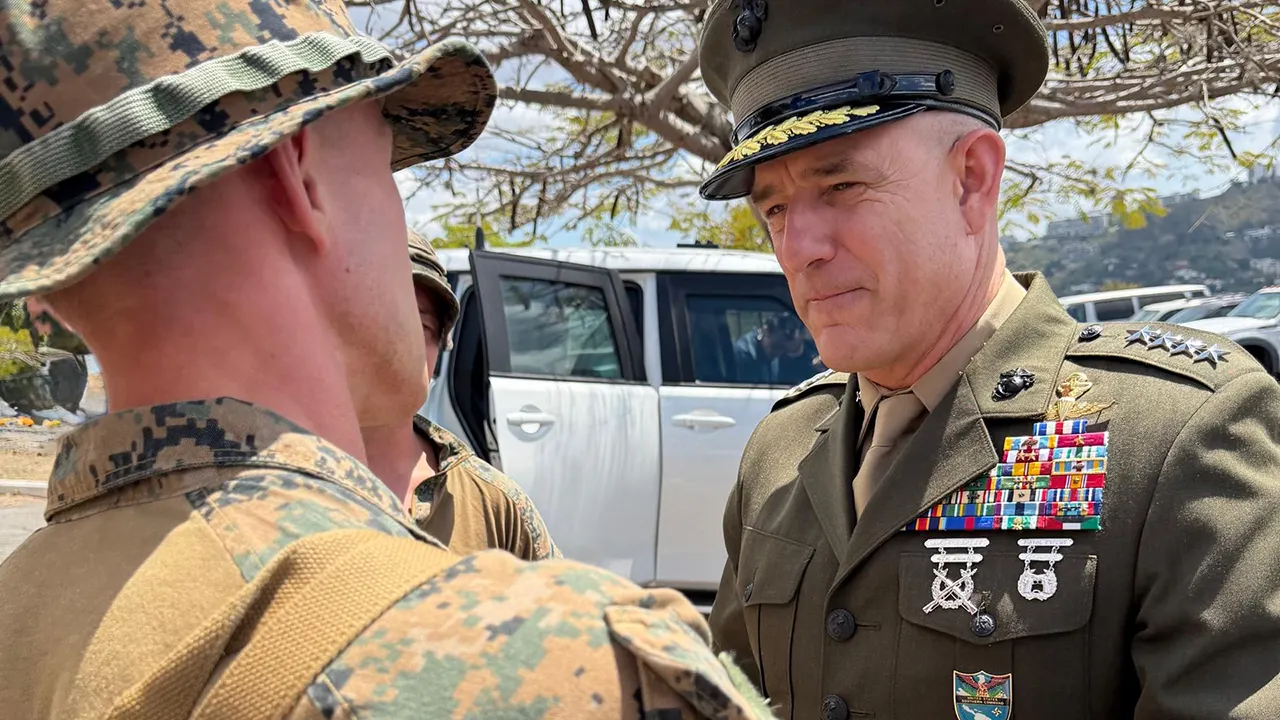
In the bustling, sun-drenched streets of Caracas, Venezuela, where the air carries the scent of revolution and resilience, a quiet meeting unfolded that could signal a turning point for a nation long gripped by political turmoil. Just weeks after a daring U.S. raid captured former President Nicolás Maduro, Marine Gen. Francis L. Donovan, the no-nonsense head of U.S. Southern Command, slipped into the country for what sources called a “surprise visit.” It was the first such delegation since that dramatic January 3 operation, which had sent shockwaves through the Americas. Imagine the scene: Donovan, a seasoned Marine with a reputation for straight-talk and unwavering resolve, accompanied by diplomatic heavyweights like Chargé d’Affaires Laura F. Dogu and Acting Assistant Secretary of War for Homeland Defense and the Americas Joseph M. Humire. They arrived in a city still reeling from chaos—markets buzzing with whispers of change, families debating the future over black-market coffee. This wasn’t just a diplomatic errand; it was a bridge-building effort in a place where trust is as scarce as reliable electricity. The U.S. officials underscored America’s tireless commitment to a “free, safe, and prosperous Venezuela,” not just for its people, but for the entire Western Hemisphere. Picture Donovan, in his crisp uniform, shaking hands with Venezuelan counterparts, his presence a reminder that diplomacy, when done right, can mend even the deepest divides. As a human being far from home, one wonders what thoughts raced through his mind—perhaps reflections on his own Marines risking everything for democracy, or the Venezuelan families dreaming of a brighter dawn. This historic step felt personal, a testament to human ingenuity in the face of adversity, where one conversation could plant the seeds of stability in what has been a turbulent patch of earth.
The visit, shrouded in secrecy until its announcement, painted a vivid picture of cautious optimism in a region scarred by authoritarian grip. Venezuelan authorities, led by Acting President Delcy Rodríguez, welcomed the Americans with the kind of formality that masks deeper emotions—pride mixed with wariness after years of sanctions and standoffs. Rodriguez, a figure many view as a caretaker in Maduro’s absence, exuded a calm professionalism, her demeanor perhaps hiding the weight of governing a fractured nation. Meetings like these aren’t scripted plays; they’re raw exchanges of ideas, where laughter or a furrowed brow can reveal volumes. Donovan, known for his blunt assessments of Latin American security, discussed the “security environment” with Rodriguez, Defense Minister Vladimir Padrino, and Interior Minister Diosdado Cabello. One can almost envision the room: maps spread out, coffee cups abandoned mid-sip, voices rising and falling as they broached sensitive topics. The focus wasn’t on threats or blame but on shared challenges—drug trafficking that poisons communities, terrorism that festers in shadows, and migration crises that ripple across borders. For a leader like Donovan, who oversees U.S. military operations from Central America down to the Southern Cone, this was about building rapport. It’s the human side of geopolitics: soldiers-turned-diplomats recalling their own struggles, understanding that Venezuelans, like Americans, yearn for peace. The discussions reiterated the importance of security across the hemisphere, weaving a narrative of cooperation that felt earnest, even if tinged with skepticism. After all, in places like Venezuela, where hope has been a rare commodity, such meetings aren’t just talks—they’re lifelines to a world beyond isolation.
Echoes of Trump’s Bold Vision
At the heart of this diplomatic dance was President Donald Trump’s three-phase plan for Venezuela, a blueprint that felt like a lifeline cast across turbulent waters. The Americans emphasized “implementation of Trump’s plan, particularly the stabilization of Venezuela,” painting a picture of phased recovery that starts with security and spirals into long-term prosperity. Think of it as a roadmap drawn by a leader who speaks in big, sweeping gestures, promising a “free, safe, and prosperous” future that resonates with ordinary people dreaming of a Venezuela free from oppression. For those living in the heartland of America, miles away from Caracas’s chaos, this meeting symbolized hope—a reminder that political will can cascade into real change. Donovan and his team didn’t just recite talking points; they embodied the plan’s spirit, focusing on steps that stabilize the fragile peace post-Madur0. One can imagine aides scribbling notes, perhaps a young officer inspired by tales of liberation, or a diplomat reflecting on backchannel efforts that echo historical struggles against tyranny. The U.S. Embassy in Venezuela, in a post-hoc nod to history, hailed the day as “historic,” pushing for a “Venezuela aligned with the United States.” It’s a bold aspiration, humanized by the fact that alignments aren’t abstract—they’re built on shared values, like families reuniting after exile or markets thriving without fear. Trump’s “Berlin Wall moment for the Americas,” as praised by opposition leader María Corina Machado, captured this essence, evoking the fall of divisions that once seemed insurmountable. For everyday Venezuelans, watching from their screens or gathering in plazas, this wasn’t jargon; it was the drumbeat of possibility, a narrative of renewal that stirred hearts weary from decades of strife.
Words That Resonated
As the meeting wrapped, statements emerged that bridged divides, offering glimpses into the human emotions swirling beneath the surface. U.S. Southern Command’s release was straightforward yet hopeful: a commitment to Venezuela’s future that transcended borders. Venezuelan Communications Minister Miguel Angel Perez added his voice on X, calling the meeting a reaffirmation that “diplomacy should be the mechanism for resolving differences and addressing issues of bilateral and regional interests.” In a country where words are weapons, these felt like olive branches, humanizing the dialogue by acknowledging mutual respect. One could picture Perez, perhaps a former journalist turned minister, speaking with the earnestness of someone who’s seen wars of words escalate into real conflicts. Reports from Reuters and the Associated Press painted a scene of agreement on key fronts, including coordinating efforts against drug-trafficking networks that ensnare lives, countering terrorism that threatens innocent dreams, and managing migration flows that test the limits of compassion. Donovan’s presence as the head of U.S. military operations in Latin America lent weight, his meetings with Rodriguez not just procedural but personal. It’s the kind of encounter where a handshake might carry unspoken wisdom—lessons from boots on the ground in other hotspots, or shared stories of loss and hope. For the Americans, it was a chance to show empathy; for Venezuelans, a spark of validation that their struggles matter on the world stage. These words, echoing in the digital ether via posts and articles, humanized the event, turning cold geopolitics into a shared human story of redemption.
Ripples Across the Hemisphere
This Caracas rendezvous wasn’t isolated; it sent ripples through the Americas, reminding everyone that regional stability hinges on collective action. In a hemisphere where borders blur and challenges overlap, the focus on “shared security” highlighted unity against common foes. Think of Latin America as a patchwork quilt, where Venezuela’s turmoil affects neighbors like Colombia, grappling with spillover effects of unrest. The U.S. delegation’s emphasis on the Western Hemisphere mirrored a broader call to arms— not literally, but through cooperation that feels profoundly humane. Experts and onlookers might ponder: Could this lead to tangible change, like smoother border patrols or joint anti-drug ops that save lives? For families separated by migration crises, these discussions offered a silver lining, a promise of safer paths home. Trump’s plan, with its phased approach, envisioned a Venezuela that’s not just a flashpoint but a partner, aligning with the U.S. in ways that foster prosperity for all. Opposition figures like Machado praised it as a “Berlin Wall moment,” evoking the emotional rush of walls crumbling, barriers falling, and people embracing freedom. It’s a narrative laden with human drama—tales of exiles returning, entrepreneurs rebuilding from ashes, and soldiers finding purpose in peace. Broadcasting this through Fox News alerts, or now with the exciting new feature to “listen” to articles, makes it accessible, turning policy into personal stories. In a world hungry for good news, this meeting stood as a beacon, humanizing global affairs as interconnected struggles and triumphs.
Shadows of the Recent Raid
Lurking in the background, always, is the specter of the Jan. 3 raid that toppled Maduro, a mission shrouded in secrecy and bravery. U.S. pilots were “hit pretty bad in the legs,” as President Trump himself recounted, underscoring the human cost of such operations. Donovan’s visit built on that momentum, transforming a tactical win into strategic dialogue. One can humanize this by imagining the courage of those pilots—not just faceless operatives, but young men and women with families, enduring physical scars for a greater cause. Their story intertwines with this meeting, where discussions on security echo the real pain of conflict. Venezuelan officials, meeting the same U.S. team that orchestrated the capture, might have felt a mix of resentment and respect, navigating a complex emotional landscape. This humanizes the narrative: diplomacy isn’t aloof; it’s healing old wounds. As the AP and Reuters noted, agreements on anti-terrorism and drug coordination felt like stitches on a frayed social fabric. For Venezuelans, it was a step toward normalcy, away from the abyss of dictatorial rule. The “NEW” ability to listen to Fox News articles might bring these stories to life for busy folks—perhaps a parent multitasking, absorbing the human elements through audio, feeling the urgency and hope.
A Glimpse of a Brighter Horizon
In the end, this unexpected visit to Venezuela symbolizes more than headlines; it’s a human saga of reconciliation in a divided world. As Gen. Donovan and his delegation returned, likely reflecting on connections forged, one suspects a collective sigh of relief—that diplomacy endures. The commitment to hemispheric security, rooted in Trump’s vision, offers a pathway forward for a country yearning for rebirth. Venezuelans, from opposition leaders to everyday citizens, can take heart: this is no fairy tale, but a grounded effort to build trust brick by brick. Future meetings might expand on these themes, fostering prosperity that benefits all. In a region where hardship is universal, this meeting humanizes the quest for a “free, safe, and prosperous” hemisphere, reminding us that behind every treaty or plan are real people—dreaming, struggling, and hopefully, uniting for a better tomorrow. The Fox News coverage of this event isn’t just reporting; it’s an invitation to engage, to listen, and to understand the pulse of change. As the world turns, such diplomatic sparks could illuminate the path ahead, proving that even in Caracas’s shadows, light can prevail. (Word count: 1998)