






EU-US Tensions Rise Over Trump’s Greenland Acquisition Plans and Tariff Threats
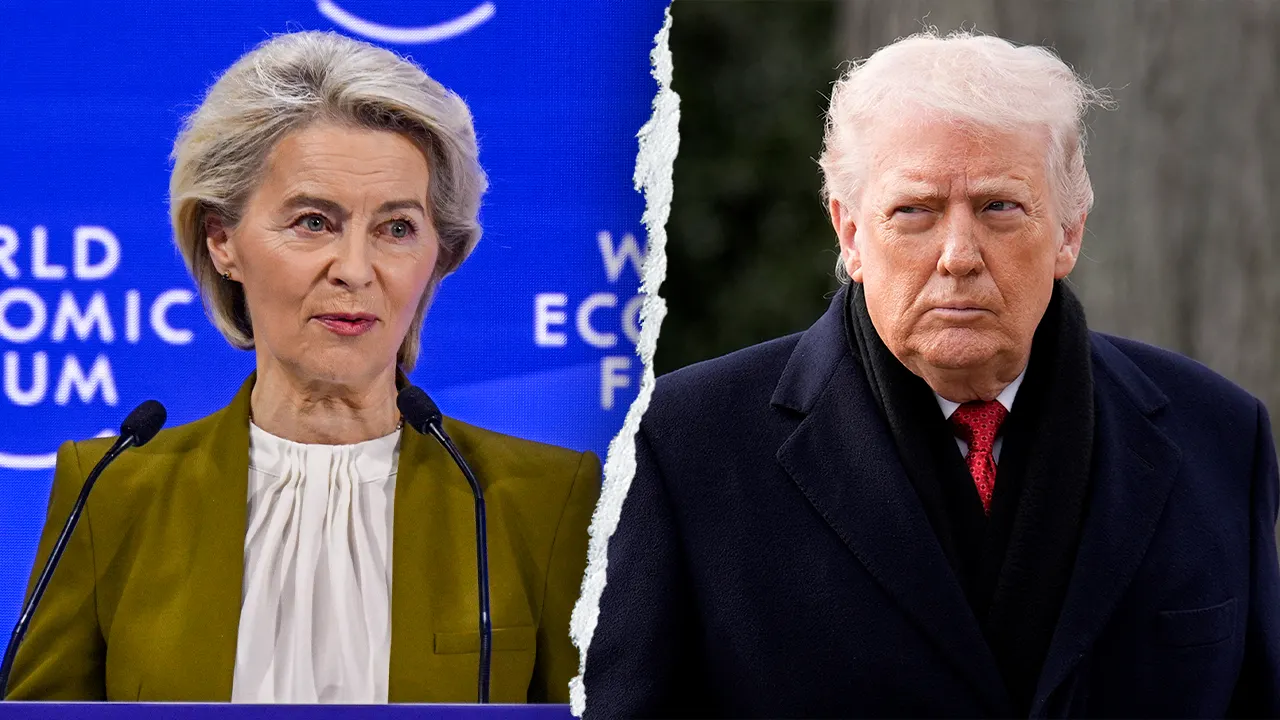
In a direct and forceful response, European Commission President Ursula von der Leyen has strongly criticized President Donald Trump’s recent threat to impose tariffs on eight European nations that oppose his controversial push to acquire Greenland from Denmark. Speaking with uncharacteristic bluntness for a diplomatic figure of her stature, von der Leyen emphasized that “Arctic security can only be achieved together” and called the proposed additional tariffs “a mistake, especially between long-standing allies.” Her comments reflect growing concern among European leaders that the United States might be willing to damage decades of transatlantic partnership over territorial ambitions. Von der Leyen pointedly reminded the U.S. administration of commitments made just months ago: “The EU and U.S. have agreed to a trade deal last July. And in politics as in business — a deal is a deal. And when friends shake hands, it must mean something.” This appeal to honor existing agreements underscores the seriousness with which Europe views this diplomatic rift.
The situation escalated dramatically when President Trump announced plans to implement progressive tariffs against Denmark, Norway, Sweden, France, Germany, the UK, the Netherlands, and Finland, starting with a 10% tariff on February 1st that would increase to 25% by June. Trump’s stated condition for removing these tariffs was remarkably straightforward—”until such time as a deal is reached for the complete and total purchase of Greenland.” The president has justified this aggressive approach by citing national security concerns, specifically mentioning the development of the “Golden Dome,” described as an advanced missile defense system designed to protect the American homeland. This linking of territorial acquisition to national defense represents a significant shift in how the United States approaches relationships with traditional allies, particularly NATO members who have historically aligned with American security interests.
French President Emmanuel Macron joined the chorus of European leaders expressing alarm, warning that Trump’s actions could force the EU to deploy its anti-coercion mechanism against the United States “for the very first time”—a remarkable prospect considering the longstanding alliance between America and Europe. Macron’s concerns reflected a broader sentiment among European leaders that attention should remain focused on bringing peace to Ukraine rather than creating new conflicts among allies. The eight targeted nations responded collectively with a joint statement affirming their NATO commitments while simultaneously expressing solidarity with Denmark and Greenland. Their declaration that “tariff threats undermine transatlantic relations and risk a dangerous downward spiral” signals a unified European stance against what they perceive as American overreach, with a clear commitment to “upholding our sovereignty.”
Some European nations have taken symbolic but meaningful actions to demonstrate their solidarity with Greenland and Denmark. France, Germany, Sweden, Norway, and Britain participated in a brief but pointed military exercise to bolster Danish territorial defenses. While modest in scale—Germany sent just 13 personnel, France deployed 15 mountain specialists, and the other countries sent even smaller contingents—the message was unmistakable: European nations are prepared to stand together against perceived American territorial ambitions. These military maneuvers, though limited, represent an unusual development between NATO allies and highlight the seriousness with which European nations view Trump’s Greenland acquisition push and associated tariff threats.
The potential economic impact of Trump’s proposed tariffs has created ripples of concern throughout European capitals, even as U.S. Treasury Secretary Scott Bessent attempted to downplay tensions by encouraging trading partners to “take a deep breath” and asserting that U.S.-European relations remain fundamentally strong. Von der Leyen’s promise that the EU’s response would be “unflinching, united and proportional” suggests European leaders are preparing contingency plans should the tariffs actually materialize. The situation presents a difficult balancing act for European leaders, who must simultaneously defend their sovereignty and economic interests while avoiding an escalation that could, in von der Leyen’s words, aid “the very adversaries we are both so committed to keeping out of the strategic landscape”—a thinly veiled reference to powers like Russia and China who might benefit from Western disunity.
The unusual nature of this diplomatic standoff is further illustrated by Trump’s publication of text messages with President Macron on Truth Social, in which the French leader reportedly suggested a meeting of G-7 nations in Paris following the Davos conference. This public sharing of private diplomatic communications adds another unpredictable element to an already tense situation. As European leaders continue to respond to what many view as an unprecedented challenge to transatlantic relations, the controversy has revealed deeper questions about the future of international alliances and America’s relationship with its traditional partners. With polls showing that even many Americans—including Republicans—remain divided over the wisdom of pursuing Greenland, this issue appears poised to continue testing diplomatic bonds between the United States and its European allies in the months ahead.