





Syria Makes History by Recognizing First Jewish Organization
In a landmark decision that marks a new chapter for religious pluralism in Syria, Minister of Social Affairs and Labor Hind Kabawat has officially approved the registration of the Jewish Heritage in Syria Foundation (JHS). This historic move, the first of its kind in Syria’s history, represents a significant step toward reconciliation and recognition of the country’s diverse religious heritage. Kabawat, who made history herself as the first woman appointed to Syria’s transitional government cabinet, emphasized that “Judaism and Syrian Jews have long been part of Syria’s religious and cultural landscape.” The registration gives JHS the authority to establish an office, work officially with the government, protect Jewish sites, coordinate the return of Jewish properties, and facilitate regular visits by Jewish delegations to the country.
This development comes at a crucial time of transition for Syria, which is rebuilding after decades of repressive rule and fourteen years of devastating civil war. The Syrian Jewish community, which once numbered in the tens of thousands, has dwindled dramatically since 1948 as restrictions and regional tensions forced most families to emigrate. Today, only a handful of Jews remain in the country, and most synagogues have been destroyed during the long conflict. The registration of JHS marks a symbolic turning point in how Syria approaches its religious minorities and cultural heritage. As Kabawat explained, “Restoring their right to belong, to visit and to live back in their homeland is a natural step toward a more just, tolerant and inclusive society.”
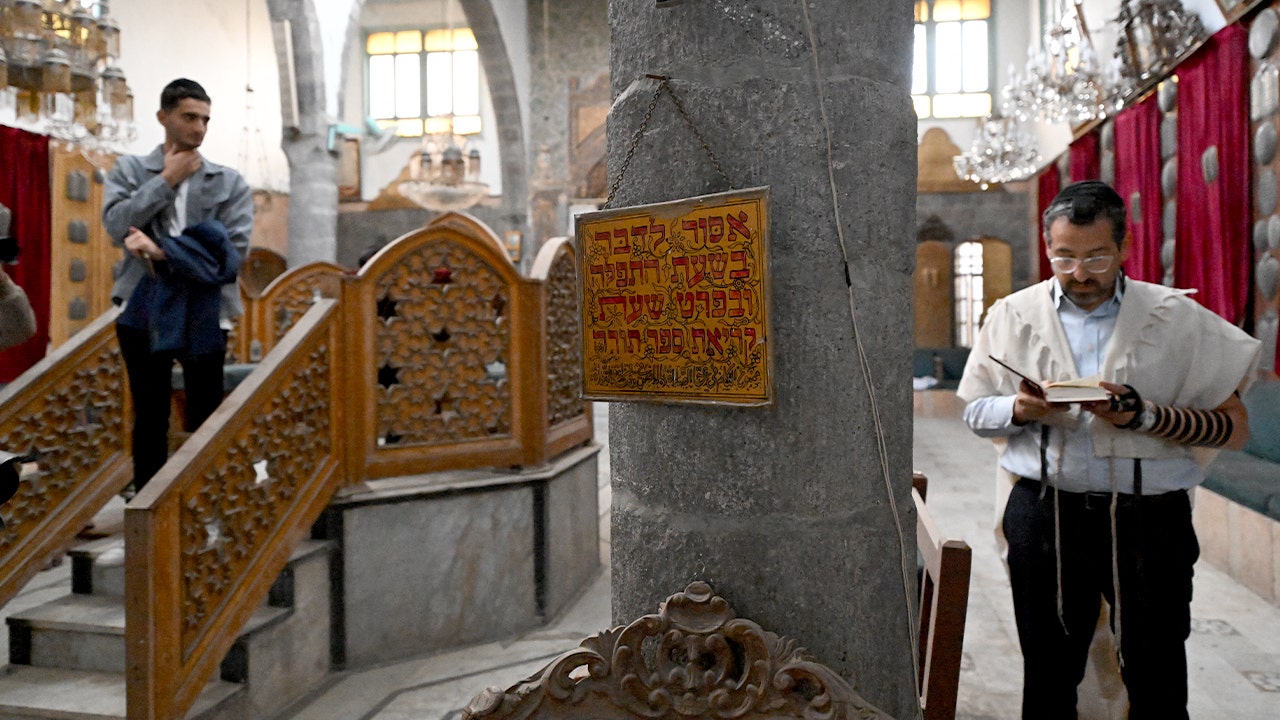
For Henry Hamra, a Syrian-American Jew and president of JHS, this recognition represents a deeply personal victory. Speaking from the Jewish quarter in Damascus alongside his son Joseph, Hamra expressed his joy at being able to regularly return to Syria after years of forced absence. “We’re ready to start working on the synagogues and to start getting all the people to come see what we have here — a beautiful place. And we’re ready for everybody to come,” he said. Hamra has already visited Syria four times since former dictator Bashar al-Assad’s government was overthrown last year—a dramatic change from the previous regime, which “would arrest anyone who even met with a Jew or hosted a Jewish person.” This shift reflects the broader changes occurring in Syria as it attempts to rebuild and reintegrate into the international community.
The timing of this announcement is particularly significant, coming just after Syrians celebrated the first anniversary of the fall of the Assad regime. Tens of thousands gathered in Damascus to commemorate the end of five decades of family rule that had systematically marginalized religious minorities. Parallel to these domestic developments, Syria’s international standing also appears to be improving. The Caesar Syria Civilian Protection Act, which imposed severe sanctions on the country since 2019, is now on the verge of being rolled back. This potential relief from sanctions was included in the 2026 National Defense Authorization Act, which passed the House on Wednesday and now awaits Senate approval before heading to President Trump’s desk for signature. These developments suggest a potential path forward for Syria to emerge from its isolation and rebuild relationships both internally with its diverse communities and externally with the global community.
The physical state of Syria’s Jewish heritage starkly illustrates the challenges ahead. According to Hamra, of the 22 synagogues that once stood in Damascus, most have been destroyed. During his recent visits, he witnessed the rubble of the Jobar Synagogue (also known as Eliyahu Hanavi), one of the world’s oldest synagogues and a testament to Syria’s ancient Jewish presence. The Faranj Synagogue stands as a rare exception, remaining largely intact with its books and Torah scrolls preserved—”a work of art,” as Hamra described it. The task ahead for JHS is enormous: documenting what remains, preserving what can be saved, and potentially restoring some of Syria’s lost Jewish heritage. This work represents not just architectural conservation but the recovery of a cultural memory that was nearly erased.
This historic registration represents more than just bureaucratic recognition; it symbolizes Syria’s potential evolution toward a more pluralistic society that acknowledges its multi-religious past and works toward a more inclusive future. By embracing its Jewish heritage after decades of denial and neglect, Syria takes a symbolic step toward reconciliation with its own history. As Kabawat noted, “For decades, Syrian Jews were denied the right to celebrate their own cultural and religious heritage, and today we take a step toward long-term peace, security and stability.” The success of this initiative will depend on continued government support, international cooperation, and the dedication of organizations like JHS. However, the very existence of such an organization—officially recognized and empowered to operate—suggests that Syria may be finding its way toward a new national identity that makes space for all its historical communities, including its once-vibrant Jewish population.