




Albania’s Political Turmoil: A Nation at a Crossroads
In the heart of the Balkans, Albania is experiencing a significant political crisis that threatens to undermine its democratic institutions and international standing. The removal of Deputy Prime Minister Belinda Balluku from her position by an Albanian court, followed by her subsequent reinstatement by the Constitutional Court at Prime Minister Edi Rama’s request, has highlighted the fragility of Albania’s anti-corruption efforts. This unfolding drama represents more than just an isolated case of alleged corruption; it showcases the complex power dynamics within a country striving for European Union membership while grappling with accusations of systemic government overreach and corruption.
The allegations against Balluku are substantial and concerning. The Special Anti-Corruption and Organized Crime Structure (SPAK) issued criminal indictments against her, claiming she was improperly influenced in her decision to favor a particular company for a tunnel construction project in southern Albania. Additional charges followed concerning violations in a Tirana road construction project, leading to her temporary removal from office in November. Balluku has vehemently defended herself, dismissing the accusations as “mudslinging, insinuations, half-truths and lies” during a parliamentary address. As the second member of Rama’s cabinet to face corruption accusations since 2023, her case has become a lightning rod for broader criticisms of the government. The Constitutional Court’s decision to reinstate her pending a “final decision” has only intensified public scrutiny and debate about judicial independence in the country.
Former Albanian ambassador to the U.S. and the United Nations, Agim Nesho, has been particularly outspoken about the situation, suggesting that the Rama government is actively working to shield Balluku from justice rather than allowing the judicial system to function independently. His concerns extend beyond this particular case, painting a picture of a government engaged in “state capture” where checks and balances have eroded over multiple terms, enabling “a recurring system of corruption.” Nesho goes further, claiming that Balluku’s case points to broader involvement of the Rama government in questionable decision-making processes. He references allegations made by former Deputy Prime Minister Arben Ahmetaj, who fled the country while under investigation by SPAK, that Rama personally “directed all key decisions on tenders, finances, and public assets” and had connections to organized crime figures. Rama has dismissed these accusations, stating that “Albanian politics is not tainted by the mafia” and suggesting that Ahmetaj’s claims should not be taken seriously.
The current situation is particularly problematic given the United States’ significant investment in judicial reforms in Albania. These reforms were specifically designed to combat corruption and support Albania’s aspirations to join the European Union. However, the implementation has been marred by legal backlogs that have frustrated the public and occasionally led to violence. Nesho’s assessment is blunt: “It is hard to see how a government that behaves like a banana republic gains accession to the E.U.” He characterizes Albania as “a living contradiction in terms of law and order,” where opposition has been weakened through what he terms “lawfare” and the compromising of legal institutions, while Rama remains in power despite allegations of corruption, electoral irregularities, and links to international drug cartels. One particularly concerning allegation involves Rama’s meeting with Luftar Hysa, who has connections to the Sinaloa Cartel and is sanctioned by the U.S. Department of Treasury. Rama has acknowledged meeting Hysa but claims it happened only once, an explanation that has done little to quell concerns.
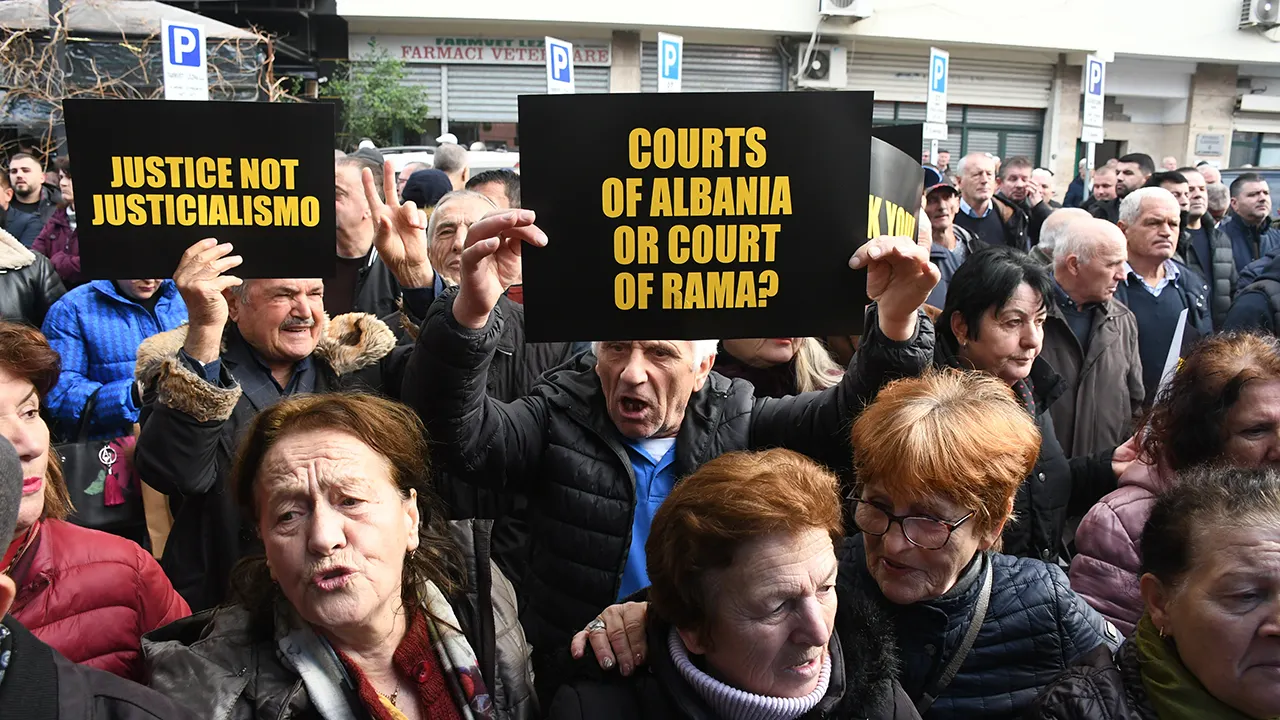
Public sentiment in Albania appears increasingly negative toward the government. Nesho suggests that anger is directed not only at Balluku but also at what many see as an unaccountable regime that mismanages public resources without facing consequences. The nickname “Ramaduro” – a comparison to Venezuelan leader Nicolás Maduro – has reportedly gained traction among critics of the prime minister, reflecting concerns about authoritarian tendencies. When approached for comment on these allegations, Rama’s press office declined to respond. Similarly, the U.S. State Department has maintained a neutral stance, with a spokesperson stating, “We have no comment on ongoing legal matters” when asked about potential sanctions against Balluku similar to those imposed on former Prime Minister Sali Berisha in 2021 over corruption allegations. The U.S. Embassy in Tirana echoed this position when questioned about the potential suspension of Balluku’s visa.
The unfolding situation in Albania represents a critical test for the country’s democratic institutions and its relationships with international partners, particularly the United States and the European Union. The handling of Balluku’s case will likely serve as a bellwether for Albania’s commitment to genuine anti-corruption efforts and the rule of law. As Albania stands at this crossroads, much hangs in the balance – its EU aspirations, its standing as a U.S. ally in the Balkans, and most importantly, the faith of its citizens in their government and judicial system. The coming months will reveal whether Albania’s leadership will embrace transparency and accountability or continue down a path that critics fear could further erode democratic norms in this strategically important Balkan nation. For a country that has made remarkable progress since emerging from decades of isolation under communist rule, the stakes could not be higher.