






Former South Korean President Faces Potential Death Penalty in Martial Law Trial
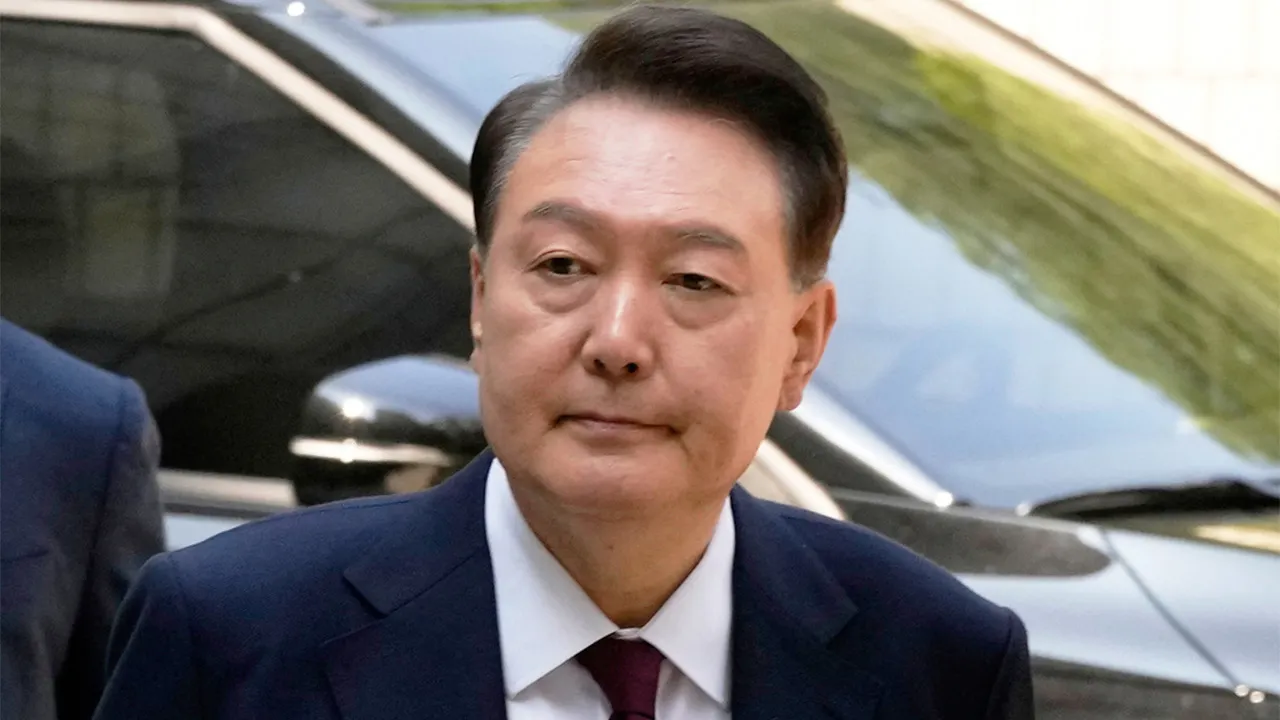
In a dramatic turn of political events in South Korea, prosecutors have requested the death penalty for former President Yoon Suk Yeol, accusing him of orchestrating a rebellion through his controversial martial law declaration of December 2024. The Seoul Central District Court heard these serious allegations on Tuesday as Independent Counsel Cho Eun-suk characterized Yoon’s actions as “anti-state activities” and a “self-coup” designed to maintain his grip on power beyond constitutional limits. The gravity of these proceedings marks an extraordinary moment in South Korean politics, where a former head of state now faces the most severe punishment available under the law. Currently in custody, Yoon confronts multiple criminal proceedings related to the martial law episode and other controversies that defined the latter part of his presidency, which ended with his removal from office last spring.
The prosecution’s case centers on the claim that Yoon deliberately undermined South Korea’s constitutional governance system when he declared martial law. According to Counsel Cho’s team, this declaration wasn’t a legitimate exercise of presidential emergency powers but rather a calculated attempt to circumvent democratic processes and extend his political authority. This interpretation frames Yoon’s actions not as policy decisions made within the bounds of presidential discretion, but as a direct attack on the constitutional order of South Korea—a particularly serious allegation in a nation with vivid memories of past authoritarian rule. The rebellion charge being pursued against Yoon carries the most severe potential consequences among the various accusations he faces, reflecting the prosecution’s view that his actions struck at the very heart of the nation’s democratic foundations.
In his defense, Yoon has forcefully rejected these characterizations, describing the investigations into his conduct as “frenzied” and marred by “manipulation” and “distortion” of facts. Speaking directly to the court, the former president maintained that his declaration of martial law was intended as an alert to the South Korean public about what he perceived as growing threats posed by the opposition Democratic Party. From Yoon’s perspective, the Democratic Party’s legislative majority had effectively blocked his political agenda, creating a governance crisis that warranted extraordinary measures. Furthermore, he has argued that presidential emergency powers, even when exercised in controversial ways, cannot legally be construed as rebellion—a technical but potentially crucial legal distinction that could determine his fate.
This case carries profound historical resonance in South Korea, where the relationship between executive power and democratic governance remains a sensitive subject. Yoon is the first South Korean president since Chun Doo-hwan to face potential execution after leaving office. Chun, who was sentenced to death in 1996 for various crimes including his role in the violent suppression of pro-democracy protests, ultimately had his sentence commuted to life imprisonment before receiving a pardon. This historical parallel underscores both the exceptional nature of the current proceedings and the complex ways in which South Korea continues to wrestle with questions of accountability for those who hold the highest office. Despite the prosecution’s request for the death penalty, legal experts suggest a life sentence is more likely, noting that South Korea has maintained a de facto moratorium on executions since 1997.
The trial also reflects broader tensions in South Korean politics, where sharp partisan divisions have increasingly led to the criminalization of political differences. Yoon’s supporters view the proceedings as politically motivated retribution orchestrated by his opponents, while his critics see them as a necessary accountability mechanism for a leader who they believe abused his authority. This polarization mirrors global trends of democratic backsliding and heightened political hostility, raising questions about how democracies can maintain institutional integrity while navigating intense partisan conflict. The court’s handling of this case may establish important precedents about the boundaries of presidential authority and the consequences for exceeding them in South Korea’s democratic system.
As the court prepares to deliver its verdict next month, the eyes of the nation and international observers remain fixed on this extraordinary trial. Beyond determining the personal fate of former President Yoon, the court’s decision will likely influence South Korea’s political landscape for years to come. It may define new parameters for presidential conduct, shape the relationship between different branches of government, and potentially affect how future political conflicts are resolved. Whatever the outcome, the trial represents a critical moment of reckoning in South Korea’s ongoing democratic journey—a stark reminder that even presidents must ultimately answer to the rule of law and constitutional principles that form the foundation of the nation’s political system.