






Tourist Mauled by Snow Leopard After Ignoring Warnings for Photo Opportunity
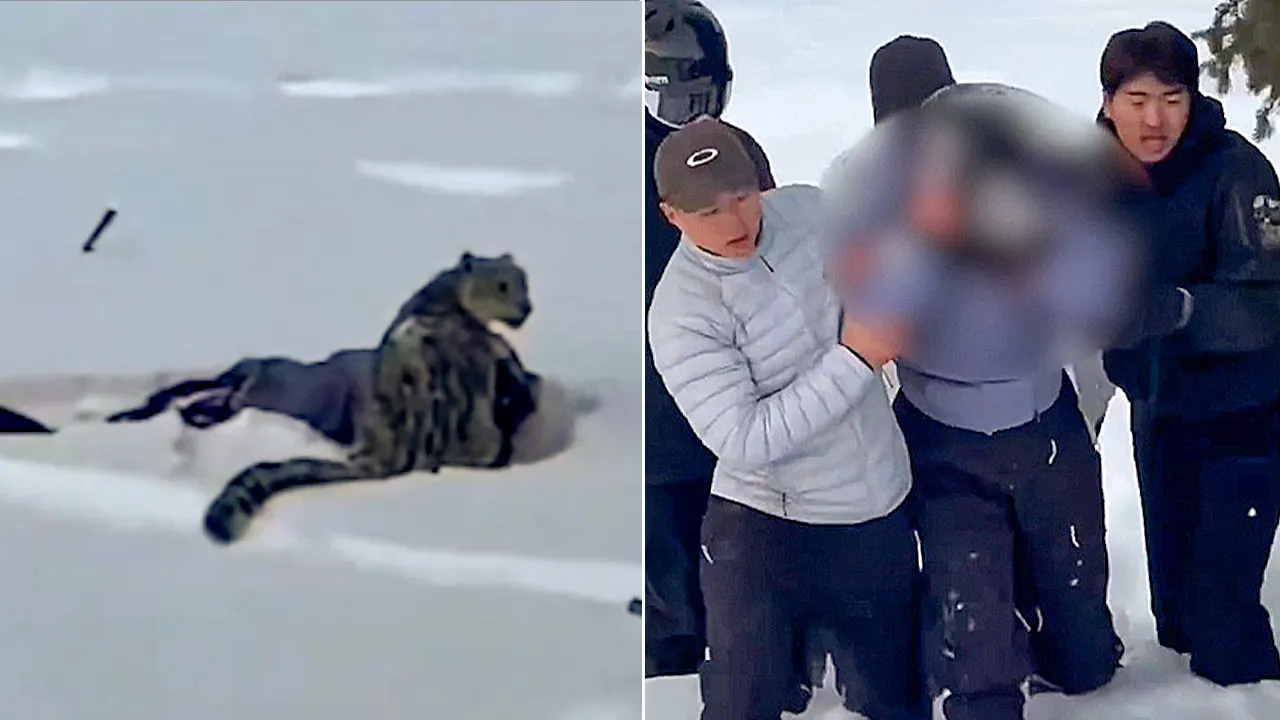
In a chilling reminder of nature’s unpredictable power, a female skier in China suffered severe facial injuries after being attacked by a snow leopard when she approached too closely for a photograph. The incident occurred around 7 p.m. in Fuyun County near China’s northern border with Mongolia, an area known to be home to these elusive predators. According to witnesses, the woman had ventured dangerously close—approximately 10 feet from the wild animal—despite recent warnings from local authorities about snow leopard sightings in the vicinity. The aftermath was captured on video, showing the injured woman lying motionless in the snow with the leopard still nearby, her face bloodied from the attack. Reports indicate that her helmet likely prevented more severe injuries, possibly saving her life as bystanders eventually helped guide her away from the dangerous situation.
The encounter happened despite explicit warnings from local officials, who had alerted visitors about multiple snow leopard sightings around the hotel area just the day before. Authorities had noted that the predator was likely lingering in the vicinity due to food scarcity, a situation that can make wild animals more unpredictable and potentially aggressive. According to local reports, the sequence of events began when a skier spotted the leopard while returning to her hotel. Not satisfied with the angle for her photograph, she reportedly continued approaching the animal until it suddenly pounced, attacking her face. The dangerous situation was only diffused when a ski instructor intervened, waving ski poles to drive the predator away from the injured woman, who was subsequently transported to a local hospital where she was reported to be in stable condition.
Prior to this incident, authorities had issued clear and direct warnings to tourists about the dangers posed by these powerful predators. “Snow leopards are large predators with strong aggressive tendencies,” the official warning stated, instructing visitors to “move quickly and do not linger” when passing through areas where the animals had been spotted. The advisory specifically cautioned against the exact behavior that led to this attack—getting out of vehicles or approaching the animals for photographs—and emphasized that people should never walk alone in the surrounding areas. These warnings highlight the serious nature of wildlife encounters, particularly with large predators, and the responsibility of visitors to respect both the animals and safety protocols designed to protect both humans and wildlife.
The presence of snow leopards in the area was not unexpected, as China hosts the largest population of wild snow leopards globally according to the Snow Leopard Trust. Tourists staying at a nearby guesthouse confirmed seeing a leopard in the area before the attack, though they couldn’t confirm if it was the same animal. “We saw it last night, a few kilometers from where the attack took place,” one witness reported, underscoring the known presence of these animals in the region. This context makes the decision to approach the predator all the more concerning, as it represents a disregard for both personal safety and wildlife conservation principles that advocate for maintaining appropriate distances from wild animals, especially apex predators like the snow leopard.
This incident serves as a powerful reminder of the consequences that can result from prioritizing photo opportunities over safety and respect for wildlife. While attacks by snow leopards on humans are historically rare due to the animals’ naturally shy and elusive nature, this does not diminish their status as powerful predators capable of inflicting serious harm when they feel threatened or cornered. The woman’s decision to move closer despite warnings exemplifies a troubling pattern seen in many wildlife areas worldwide, where the pursuit of the perfect photograph or social media moment can lead people to make dangerous choices. Conservation experts consistently emphasize that wild animals should be observed from a safe distance, using binoculars or telephoto lenses rather than physical proximity to capture images.
As authorities continue to investigate this incident, it stands as a cautionary tale about respecting wildlife and heeding safety warnings in natural areas. The injured skier’s experience highlights the very real dangers that can occur when the boundaries between humans and wild predators are not maintained. In an era where close encounters with wildlife are increasingly sought for social media content, this mauling underscores the potential consequences of such behavior—not only for human safety but also for the animals themselves, which may face negative consequences if deemed a threat to humans after such incidents. The greatest takeaway from this frightening encounter may be the importance of admiring nature’s most magnificent creatures from a respectful and safe distance, allowing them to exist undisturbed in their natural habitat while we observe with wonder from afar.