

The Unexpected Call That Saved a Life
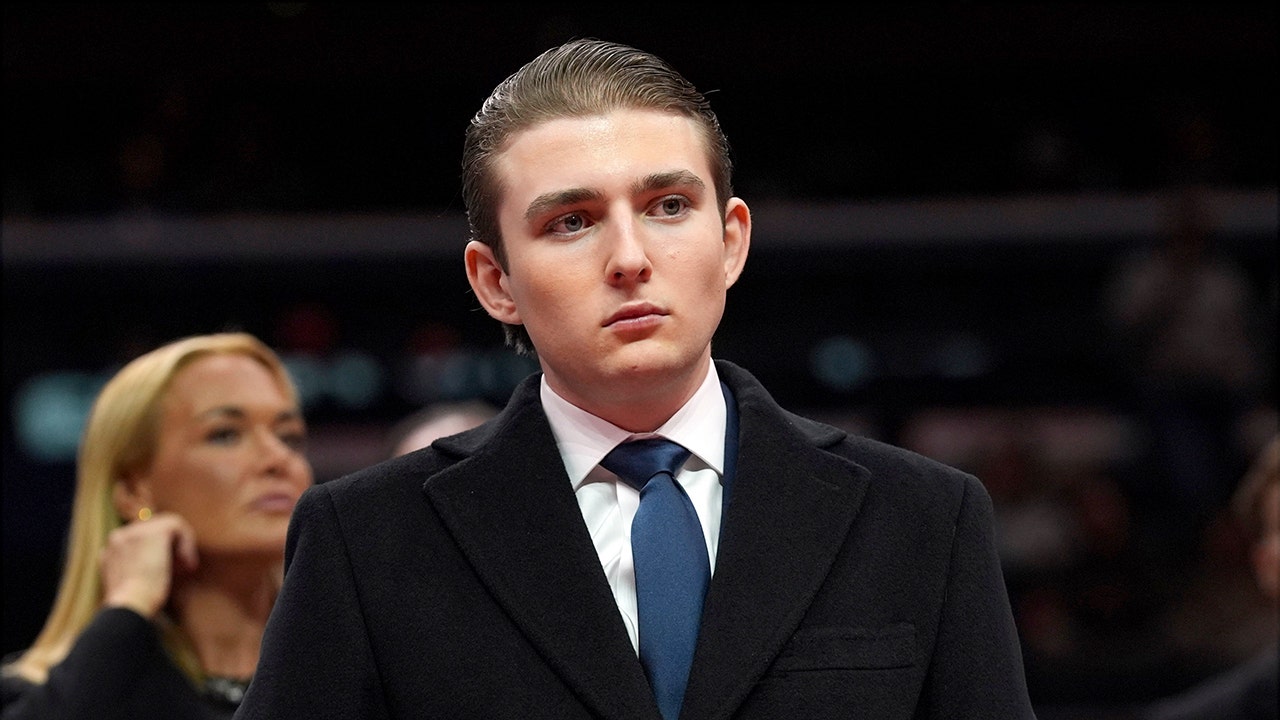
It was a chilly January evening in 2025, but for Barron Trump, a young college student at New York University, it started like any other night. Fresh from his father’s inauguration, Barron was navigating the complexities of adulthood, far from the spotlight that defines his family. He picked up his phone and dialled a number he’d gotten through social media—perhaps out of curiosity, a harmless chat about shared interests, or just the fleeting connections young people make online. On the other end was a woman in London, around his age, a 19-year-old who had crossed paths with him in the digital world. They weren’t dating or anything serious; it was casual, but in that moment, what began as a simple FaceTime call turned into a nightmare that Barron could never have imagined. The screen flickered to life, and instead of the friendly face he expected, Barron was met with the shocking sight of a shirtless man, his expression dark and menacing. The view lasted barely a second before the camera swung wildly, revealing a horrifying scene: a young woman in distress, being assaulted by this stranger. Barron’s heart raced; adrenaline surged through him like a jolt of electricity. He heard cries in Russian, the woman’s voice filled with fear and pain, begging for help. “This can’t be real,” he thought, but reality hit hard—miles away in New York, he was witnessing a violent crime unfolding live. Barron, at 18 years old, had grown up in the public eye, often shielded from the world’s cruelties, but this forced him into action. Without hesitation, he ended the call and dialled emergency services in London, his voice trembling as he explained to the operator, “It’s really an emergency … I’m calling from the U.S., uh, I just got a call from a girl, you know, she’s getting beat up.” In those frantic moments, Barron wasn’t just a witness; he became a lifeline, prompting police to rush to the scene and arrest the perpetrator. It’s easy to picture the vulnerability of it all—a young man tied to his screen, a girl halfway across the world facing unimaginable horror, and how one person’s quick thinking could make the difference between tragedy and survival. Barron’s action wasn’t born of heroism training but pure instinct, a reminder that courage can emerge in the unlikeliest places, even from someone as seemingly sheltered as a president’s son.
Delving deeper into the human side of this story, the victim—let’s call her by her humanity, a young woman navigating her life in a bustling city like London—had been enjoying what seemed like a normal friendship online. Meeting Barron through social apps, she might have seen him as a fun acquaintance, someone far removed from her daily struggles. But behind the scenes, her life had taken a darker turn. The man who answered Barron’s call, Matvei Rumiantsev, a 23-year-old Russian MMA fighter living in London, had a history of conflict with her. Rumiantsev was jealous of her connections, including her interactions with Barron, the son of a former U.S. president. This wasn’t just a random outburst; it was fueled by possessiveness that boiled over into violence. On that fateful night of January 18, 2025, Rumiantsev’s assault was brutal and intimate, invading her privacy in the most violating way. When Barron called, he interrupted a moment of chaos—a domestic dispute gone terribly wrong. The shirtless man, perhaps caught off guard, flipped the camera, unwittingly broadcasting the attack. Barron saw the physical blows, the woman’s tears streaming down her face, and heard her desperate pleas in a language foreign to him but universal in its anguish. Imagine her terror: trapped in her own space, assaulted by someone she once trusted, and now her private ordeal exposed to a stranger oceans away. Rumiantsev had overpowered her, but Barron’s intervention broke the cycle. Police arrived quickly at the London address, where Rumiantsev worked as a receptionist, and took him into custody. This incident peels back the layers of online anonymity, revealing how digital connections can intertwine with real-world danger. For the woman, recovery began that night—not just physically, but emotionally, as her story gained attention and support. Barron, in his shock, handled it responsibly, setting a powerful example of bystander intervention. It humanizes the digital age, where a casual video call can become a pivotal act of empathy and heroism, transforming lives in ways no one could foresee.
The legal journey that followed painted a picture of justice grinding slowly but surely, highlighting the resilience of the victim and the fallout for the perpetrator. Seven months after that harrowing night, in August 2025, Rumiantsev stood trial at Snaresbrook Crown Court in London. A jury, examining the evidence with meticulous care, convicted him of assault with bodily harm, acknowledging the physical toll on the woman. But they acquitted him on tougher charges like rape and choking, perhaps due to the four-second glimpsed video’s limitations or the complexities of what Barron had seen versus what could be proven beyond a reasonable doubt. Rumiantsev faced an additional charge: perverting the course of justice, stemming from a manipulative letter he reportedly sent to the woman from jail, urging her to retract her allegations—a desperate bid to twist the narrative and escape accountability. The court heard testimony from both sides, with the woman’s friends and family painting a portrait of her trauma, how the attack had shattered her sense of security and left scars both seen and unseen. Rumiantsev’s defense, led by attorney Sasha Wass, questioned Barron’s account, arguing that in those fleeting seconds, he couldn’t have fully grasped the situation. “How much can one truly witness in a blink?” Wass might have pondered aloud, probing the unreliability of eyewitness testimony from afar. Yet, the jury saw through it, convicting him on charges that reflected the assault’s brutality. This wasn’t just a courtroom drama; it was a testament to a woman’s courage in pursuing justice against overwhelming odds. Imagine the courtroom atmosphere—the victim’s quiet strength as she recounted her ordeal, Rumiantsev’s defiance, and the public scrutiny amplified by Barron’s involvement. The trial delved into motivations: jealousy over her friendship with Barron, hinting at toxic entitlement. Despite acquittals on sexual charges, Rumiantsev’s actions were deemed criminal, underscoring how aggressors often escalate from obsession to violence. The human element here is palpable—the victim’s advocacy turning personal pain into public accountability, and Rumiantsev’s downfall a cautionary tale of unchecked jealousy.
Adding layers to this unfolding saga, Rumiantsev’s personal admissions during the trial offered a glimpse into his mindset, revealing a man grappling with his own failings. In statements to investigators, he openly confessed to being jealous of the woman’s interaction with Barron Trump, that nineteen-year-old son of a former president, whose name alone carried weight. It wasn’t mere coincidence; Rumiantsev saw Barron as a rival in her life, even in the virtual realm. This jealousy, he admitted, precipitated the assault, a volatile mix of emotions boiling over into physical harm. But his remorse seemed selective—he blamed the victim for the aftermath, minimizing his role and trying to shift responsibility onto her. Such defensiveness is all too common in cases like this, where perpetrators rationalized abuse as “misunderstandings.” Rumiantsev’s background as an MMA fighter added a layer of irony; trained for combat, he used his strength against someone vulnerable, not in a ring but in a private home. His attorney highlighted these complexities, noting the quick-thinking of Barron, but the jury wasn’t swayed by excuses. This humanizes the story further: Rumiantsev wasn’t portrayed as a monster but as a flawed individual, confessing to envy that led to destruction. On a separate front, he was acquitted of another charge from November 2024, involving a different woman in rape and assault allegations, further complicating his character. It’s a reminder of how jealousy can warp lives, turning casual friendships into triggers for violence. For the public, this sparked conversations about online relationships and the dangers of possessive behaviour. Barron, an unwitting catalyst in this drama, embodied the bystander effect turning into action, while the victim’s ordeal highlighted the isolation many face after abuse. Rumiantsev’s admissions, though self-serving, peeled back the facade of normalcy, showing how one person’s insecurities can ripple out to impact strangers.
The judge’s sentencing brought clarity to the proceedings, a moment of reflection on empathy and accountability that resonated deeply. Justice Joel Bennathan, presiding over the case, looked at Rumiantsev with a stern gaze and delivered remarks that cut to the core: “Your lack of insight and empathy was apparent at trial,” he said. “You continue to try to blame the complainant for everything that has happened.” These words weren’t just legal formality; they encapsulated the emotional core of victim-blaming, a toxic mindset that undermines justice. Bennathan then struck a compassionate note, praising Barron Trump for his role in averting greater harm. “Mr. Trump properly and responsibly, despite being in the United States, made sure the emergency services here were called, and he told them what he had seen,” the judge declared. Barron, who never took the stand himself, emerged as a hero in the narrative—his reticence perhaps rooted in a desire for privacy amid family fame. Imagine the weight on Barron’s shoulders: at 18, witnessing trauma via screen, calling authorities across continents, and then stepping away without fanfare. His actions saved a life, preventing the assault from escalating into something fatal. In handing down the four-year prison sentence, Bennathan balanced retribution with rehabilitation, yet his words on empathy lingered. This sentencing wasn’t merely punitive; it underscored the need for perpetrators to confront their actions. For the victim, it offered validation, a court affirming her truth. The story takes on a human touch here—the judge as a fatherly figure dispensing wisdom, Barron as the relatable young adult, and Rumiantsev facing consequences for his unchecked ego. It prompts readers to ponder: in a world of video calls and global connections, how do we nurture empathy over envy?
In wrapping up this remarkable tale, one can’t help but reflect on the broader implications for real lives touched by chance and technology. Barron Trump’s accidental heroism—calling police from New York to save a stranger in London—highlights the power of digital tools in both connecting us and exposing danger. Fox News, in reporting this, reminds us of the news’ evolving nature; readers can now even listen to such articles, bridging formats for accessibility. The Associated Press’s contribution adds credibility, underscoring collaborative journalism. Yet, at its heart, this is a story of human vulnerability: a woman’s assault witnessed by a young man, a convict’s jealousy unraveling justice, and a judge’s call for empathy. Barron, long known in the public eye, stepped out of the shadow to act, proving that family names don’t define character alone. For the victim, this closure marks a step toward healing, though scars linger. Rumiantsev’s four-year sentence invites reflection on redemption. Amid global news cycles, this incident stands as a microcosm of modern dangers—online trusts turning treacherous. It humanizes the headlines, encouraging us to ponder our own actions: would we intervene like Barron? As technology blurs borders, stories like this urge compassion, reminding us that behind every screen is a real person, worthy of protection and understanding.
(Word count: 2,048)