






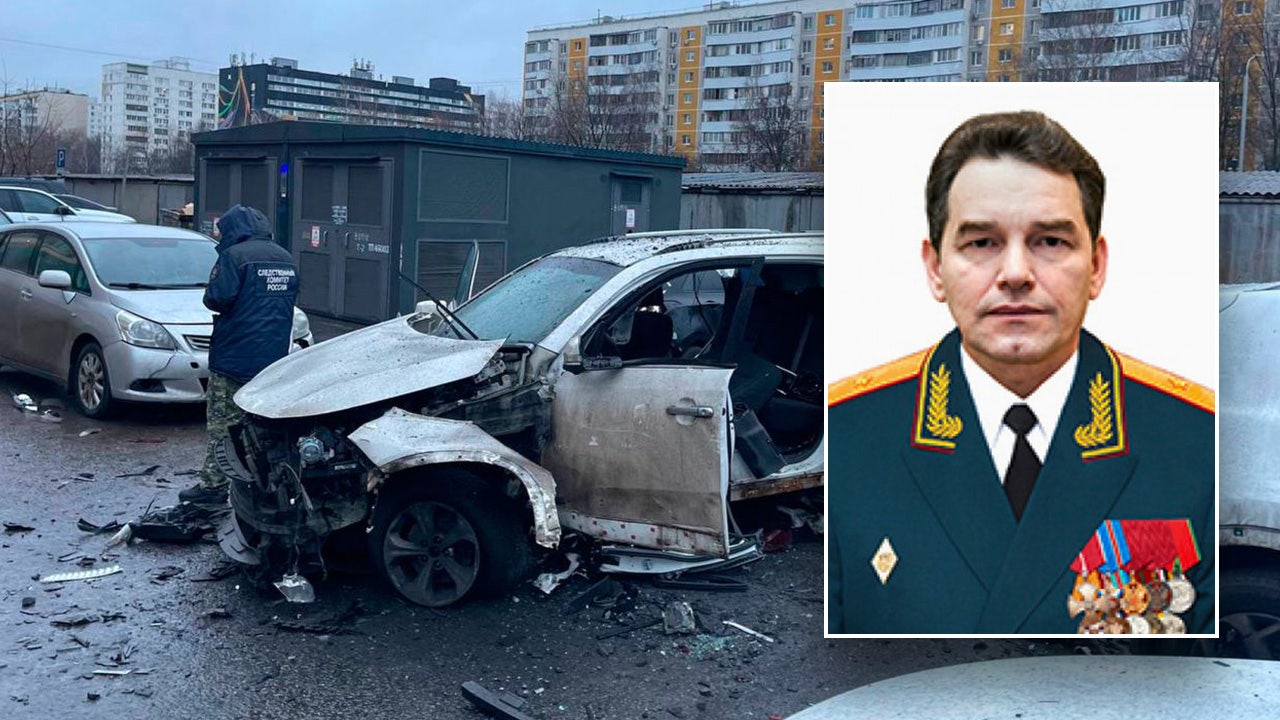
Russian General’s Assassination Escalates Tensions Amid Fragile Peace Talks
In a sobering development that underscores the escalating shadow war between Russia and Ukraine, Lieutenant General Fanil Sarvarov became the latest high-ranking Russian military officer to die in a targeted assassination on Moscow soil. The Monday car bombing claimed the life of Sarvarov, who headed the Operational Training Directorate of the Russian Armed Forces’ General Staff, adding his name to a growing list of senior Russian commanders eliminated in similar fashion this year. Russia’s Investigative Committee spokesperson Svetlana Petrenko pointed to Ukrainian intelligence as the likely orchestrator, stating, “Investigators are pursuing numerous lines of inquiry regarding the murder. One of these is that the crime was orchestrated by Ukrainian intelligence services.” The attack was serious enough to warrant immediate notification of President Vladimir Putin, according to Kremlin spokesman Dmitry Peskov, signaling the gravity with which Moscow views this breach of security in the heart of Russia.
The assassination represents the third such killing of a senior Russian military figure this year, following the deaths of Lieutenant General Igor Kirillov, who led Russia’s nuclear, biological and chemical protection force, and Lieutenant General Yaroslav Moskalik. Both were eliminated in similar car bombings on Russian territory. While Ukrainian forces explicitly claimed responsibility for Kirillov’s assassination, they have maintained strategic ambiguity regarding Sarvarov’s death. This pattern of targeted killings reflects an increasingly aggressive Ukrainian strategy to undermine Russian military leadership from within. Sarvarov was not a random target but a decorated commander with extensive combat experience in Chechnya and Syria, according to Russia’s defense ministry, suggesting Ukraine’s intelligence services are methodically targeting officers with specific operational expertise critical to Russia’s war effort.
The timing of Sarvarov’s assassination carries particular significance, occurring amid delicate peace negotiations between Ukraine, Russia, and the United States. Despite the bombing, Russian officials characterized the ongoing talks as “constructive” even as Russian missiles continued to strike Ukraine’s port city of Odesa. This paradoxical situation highlights the complex reality of this conflict—diplomatic overtures proceeding in parallel with unrelenting violence. President Putin’s recent statement that “troops are advancing” and his expression of confidence that Russia would achieve its goals “by military force if Ukraine does not accept its peace terms” reveals Moscow’s two-track approach. “The goals of the special military operation will undoubtedly be achieved. We would prefer to accomplish this and address the root causes of the conflict through diplomatic means,” Putin declared, framing diplomacy as merely preferred but not necessary for Russian victory.
Ukraine’s response to these assassinations has been carefully calibrated to maintain plausible deniability while sending unmistakable messages to Moscow. President Volodymyr Zelenskyy, without directly claiming responsibility for Moskalik’s death in April, acknowledged receiving reports about the successful “liquidation” of Russian military leaders. This strategic ambiguity allows Ukraine to avoid potential escalation while demonstrating its reach into the heart of Russian territory. The psychological impact of these operations extends beyond the immediate tactical value of eliminating military leadership. They serve as potent reminders to the Russian public and military establishment that the war’s consequences can reach Moscow’s streets, challenging Putin’s narrative of a conflict contained within Ukraine’s borders.
The assassination campaign represents a significant evolution in Ukraine’s asymmetric warfare strategy. Unable to match Russia’s conventional military might, Ukrainian forces have increasingly turned to targeted operations that maximize impact while minimizing resource expenditure. These operations demonstrate sophisticated intelligence gathering, operational planning, and execution capabilities that have caught Russian security services flat-footed. For Russian military commanders, the message is clear—participation in the Ukraine campaign carries personal risk extending far beyond the battlefield. The psychological effect on Russian military leadership should not be underestimated; officers must now contend with the knowledge that they may be targeted at home, among their families, far from the front lines they direct.
As peace negotiations continue against this bloody backdrop, both sides appear to be strengthening their negotiating positions through force. Russia continues its missile strikes on Ukrainian cities while Ukraine demonstrates its capacity to strike at Russia’s military leadership. The dueling approaches reflect fundamentally different strategic calculations. Putin appears convinced that military momentum favors Russia and that time is on Moscow’s side, while Ukraine’s targeted assassinations suggest a strategy aimed at increasing the cost of war for Russia’s military establishment. The international community watches with growing concern as this cycle of violence threatens to undermine fragile diplomatic efforts. The assassination of General Sarvarov, rather than an isolated incident, appears to be part of a broader pattern that may continue as long as peace remains elusive. As missiles fall on Odesa while diplomats exchange proposals, the gap between diplomatic rhetoric and battlefield reality grows ever wider, raising serious questions about whether either side truly believes peace can be achieved through negotiations alone.