




The Collector’s Passion and Misadventure
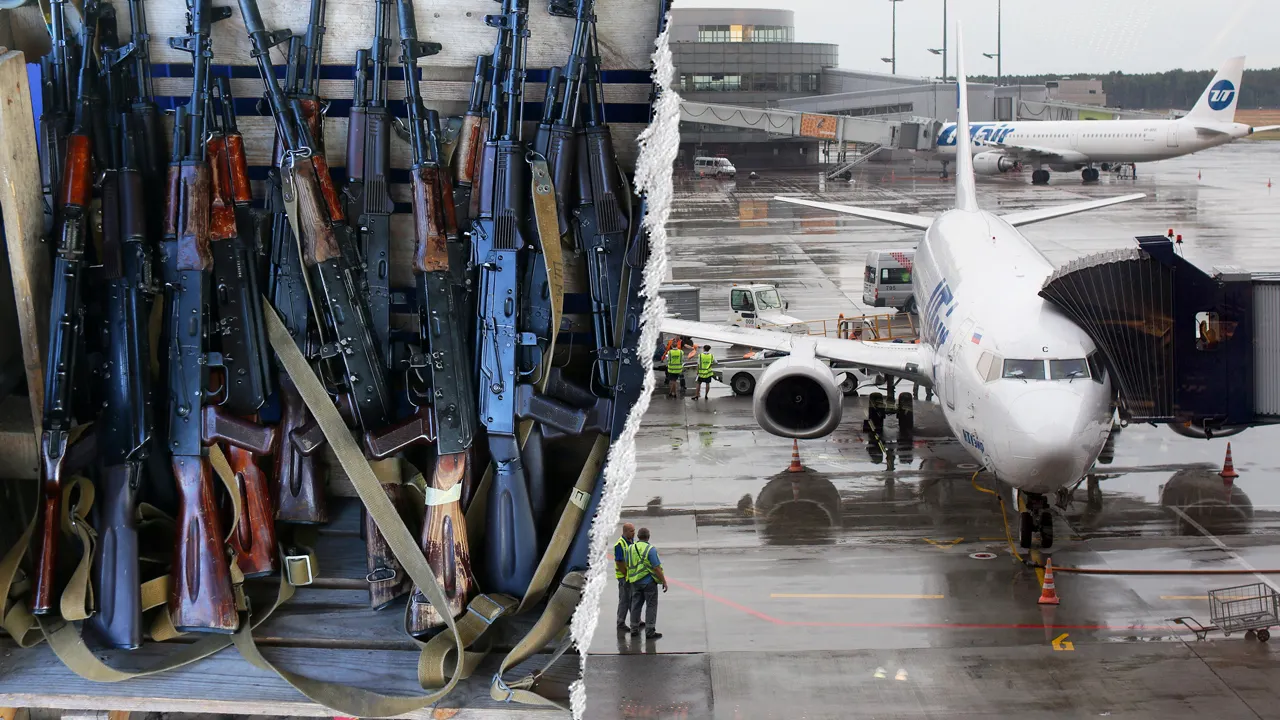
In the sprawling suburbs of a quiet Midwestern town, where pickup trucks lined the driveways and American flags fluttered in the breeze, lived a man named Alex Thompson. Alex wasn’t your typical retiree; at 52, he was obsessed with firearms, particularly the legendary Kalashnikov assault rifle, an icon of military history that symbolized resilience in his eyes. Growing up during the Cold War, he’d devoured stories of Soviet engineering, and over the years, his hobby turned into a collection of replicas, parts, and memorabilia. His basement was a museum of sorts, filled with disassembled guns and historical artifacts. But nothing beat owning an original piece. When business trips took him abroad, he’d scour antique markets and specialty shops for additions to his prized collection. In 2023, word spread about affordable Kalashnikov stocks in Moscow—those distinctive wooden or polymer grips that slotted onto the rifle’s frame. Alex, itching for an adventure and seeing it as a harmless extension of his passion, booked a flight to Russia. He reasoned it was just parts for display, not functional weapons, and customs wouldn’t care about a collector’s enthusiasm. He packed his suitcase with souvenirs, unaware that stepping into Russia post-Covid and amid geopolitical tensions would turn his dream trip into a nightmare. Upon arrival in Moscow, Alex immersed himself in the city’s vibrant underbelly: bustling markets where vendors hawked everything from matryoshka dolls to military surplus. He met a shady dealer in a dimly lit café, exchanging rubles for two Kalashnikov stocks—the kind that fit seamlessly onto an AK-47, engraved with serial numbers that whispered of production lines in Izhevsk factories. Holding them, Alex felt a thrill; these weren’t toys, they were history tangible. He tested how they felt in his hands, imagining assembling a complete rifle back home to show at gun shows. Euphoric and exhausted from jet lag, he rushed back to his hotel, eager to fly out the next day. Little did he know, his casual oversight—failing to declare the items—would cascade into a legal horror show, highlighting how easily misplaced innocence could unravel under the weight of foreign laws. As he zipped up his suitcase that night, Alex joked to himself that Russians loved their guns; surely, they’d understand a fellow enthusiast.
The Airport Fiasco and Denial
The morning of his departure at Moscow’s Vnukovo Airport was chilly, with snow dusting the runways and weary travelers shuffling through security. Alex, bleary-eyed from a poor night’s sleep, joined the line at the check-in counter, his mind preoccupied with plans for a quick layover in Berlin. His suitcase, stuffed with the two Kalashnikov stocks nestled among shirts and socks, felt heavier than before, but he wrote it off as excitement. Customs forms lay untouched; in his naiveté, he figured these were mere accessories, not weapons, and Russia wasn’t like the stringent U.S. border. After all, he’d read online forums where collectors shared similar anecdotes without issues. He hauled his bag onto the scale, flashed his passport, and breezed through. But as he waited at the gate, sipping airport coffee, a commotion broke out. Two uniformed officers approached, their faces stern, escorting him to a side room. In broken English, they demanded to inspect his luggage. His heart sank as they unearthed the stocks—clearly identifiable as firearm components. “These are for my collection!” Alex protested, his voice rising in panic. “They’re not loaded or anything; I bought them legally!” The officers exchanged glances, rifling through his documents. Alex’s mind raced: he had no declaration, no receipt proving lawful purchase. He tried to explain his passion for history, showing photos on his phone of his home collection, but it fell on deaf ears. They confiscated the items, handcuffed him, and led him away, the crowd averting their eyes. In that sterile interrogation room, fluorescent lights buzzing overhead, Alex realized his mistake. The smugglers’ code or whatever it was called—he hadn’t thought about smuggling at all. Flashes of his family back home played out: his wife worried sick, kids wondering where he was. The officers questioned him relentlessly, but Alex clung to his story, adamantly denying intent to smuggle. Yet, deep down, he knew denial might not suffice in a system wary of foreigners. Hours turned into a blur; no calls were allowed, and the embassy seemed a distant lifeline. He pleaded for understanding, painting himself not as a criminal, but as an enthusiast whose hobby had crossed invisible lines, a human error magnified in a land of strict enforcement.
The Legal Labyrinth and Partial Confession
Days bled into nights in the cold confines of a Moscow detention center, where iron bars and echoing footsteps became Alex’s new reality. Transferred from airport holding, he found himself in a cell with fluorescent lights that never dimmed, sharing space with fellow detainees who whispered tales of corruption and arbitrary justice. His pleas for consular assistance met bureaucratic walls; the U.S. Embassy, as advised by the State Department, had limited powers here, and consular access wasn’t guaranteed. Alex paced, questioning every decision: why hadn’t he researched Russian customs laws? Internet searches revealed smuggling carry up to 12 years, but surely, as an accidental offender, he’d get leniency. His lawyer, appointed through embassy strings, was a stern Russian advocate who advised cooperation. Under pressure, during interrogations that stretched late into the night, Alex partially admitted guilt—not to deliberate smuggling, but to negligence. “I should have declared them,” he conceded, his voice weary. “I’m just a collector, not a spy.” The admission, extracted under duress, was spun by prosecutors as a confession. Court proceedings were swift and opaque, with judges flipping through files as Alex sat in a cage-like dock, the weight of cultural misunderstanding pressing down. Witnesses from the dealer named him, and airport logs confirmed lack of declaration. Alex’s defense hinged on his ignorance: in America, gun parts flew under the radar if not prohibited. But Russia saw it differently— these were components of deadly weapons, illicit exports. He testified about his home life, his collection’s legitimacy, pleading for mercy as a tourist gone astray. The judge, impassive, listened without interruption. Alex thought of his wife, packing his meals with notes of encouragement, now unreachable. Friends back home rallied, contacting media, but in Russia’s echo chamber, it felt futile. By the trial’s end, exhaustion led him to accept a lesser plea, hoping for a reduced sentence. He wasn’t a hardened criminal; he was a man whose passion had become his undoing, humanized by remorse in a system that rewarded denials rarely.
The Sentence and Isolation
On a frigid Tuesday morning, the gavel fell, sentencing Alex to four years in a Russian penal colony. The judge cited Article 222 of the Criminal Code—smuggling firearms—branding him a threat despite his pleas. Shock rippled through the courtroom; his lawyer’s appeals crumbled under evidentiary dismissal. Alex, shackled and dazed, was led away, the words echoing: “Guilty of attempting to transport weapon stocks without declaration.” Back in his cell, reality hit hard. Four years—half a decade in Siberia’s harsh labor camps, away from family, his collection gathering dust. Letters filtered in sporadically, censored missives from his wife alleging embassy failures, but Alex penned responses imbued with false hope: “I’ll be home soon, babe—this is just a mix-up.” But nights were torment, replaying the airport scene, wondering if a simple form could have spared him. Russian media spun the tale as another American intrigue, claiming partial admission, while U.S. outlets decried wrongful detention. Alex’s days filled with futile exercise, bland meals, and barred windows overlooking snowy wastelands. Isolation bred introspection; he read smuggled books on firearms history, reflecting on how his love for Kalashnikovs mirrored global divides. Prison staff, eyeing him warily, interrogated further, probing for ties to CIA or worse. Denied fair treatment, denied swift release, Alex languished, a cog in Russia’s anti-terror machine. Friends petitioned Congress, but geopolitical winds—Ukraine tensions, sanction standoffs—muffled cries. He dreamed of forgiveness, of reuniting with his clutch of photos: outings with sons, gun shows with buddies. In this limbo, Alex became a statistic, humanized by letters to daughters about resilience, urging them to cherish freedoms he now grasped were fragile abroad.
Broader Warnings and Ripple Effects
As Alex’s story filtered into headlines, it underscored the State Department’s dire warnings against travel to Russia. For any reason—tourism, business, even collection hobbies—the risks loomed large: terrorism alerts, unrest, wrongful detentions. Presaging turmoil, officials cautioned U.S. citizens about limited embassy support, where detentions could drag indefinitely without access, sentences served in full regardless of perceived injustice. Russian authorities, opaque and punitive, had a track record: questioning innocents on whims, arresting on fabricated charges like Alex’s, denying due process. Religious tourists faced probes, expatriates bogus trials—all in a climate of heightened scrutiny post-annexation. For Alex, it wasn’t just personal woe; his case highlighted how hobbyist zest clashed with geopolitical realities. Bulgarian journalists echoed fears, noting expats’ vulnerabilities. Diplomats speculated on motives—Moscow flexing muscles or genuine enforcement? Either way, Americans heeded calls to stay put, with travel advisories flashing red. His wife’s advocacy grew, joining groups for detained spouses, her days filled with embassy runs and fundraisers. News cycles spun narratives: Fox anchors humanized him as an average Joe, while Russian outlets demonized smugglers. The episode rippled, prompting collectors to rethink overseas hunts, favoring domestic dealers. In a polarized world, Alex’s plight questioned whether passion justified risks, or if homebound contentment sufficed. Yet, hope flickered; precedents hinted at swaps or early releases, though none assured. As winter deepened, Alex clung to rituals—carving reminders on walls—of resilience, a reminder that even collectors could become pawns in international dramas, their human stories igniting debates on travel, law, and cultural misunderstandings. The Kalashnikov stocks, impounded as evidence, symbolized more than metal; they were emblems of borders traversed too carelessly, lessons painfully learned in cold isolation.
Reflections and Listening Innovation
In the quiet aftermath, Alex’s ordeal prompted introspection among those he left behind, bridging digital divides through an unexpected medium. While he languished, Fox News debuted an audio feature, allowing readers to “listen” to articles, transforming static reports into immersive narratives. This innovation felt serendipitous yet eerie; now, stories like Alex’s could play aloud, drawing listeners into the human drama—his rustling in suitcases, the clink of cuffs, the judge’s somber tone. By humanizing news this way, audiences engaged empathetically, voices narrating detentions, warnings, and warnings anew. For Alex’s family, these pod-like articles became solace, audio loops replaying hopes for parole amidst geopolitical thaws. Critics saw it as commodification, but advocates hailed inclusion for the visually impaired or busy. In a cell deprived of screens, Alex might’ve appreciated such advancement, dreaming of podcasts charting his journey. This tech uplift, born from media evolution, underscored how tales of wrongful detentions transcended print, fostering global awareness. As years passed, Alex released in a swap, reunited with collection and kin, his story an audio testament to risks abroad. Beneath the headlines, foxes might tell tales, but human voices amplified justice’s call, turning trials into triumphs. The feature, a nod to modernity, ensured stories like his endured, listened to in living rooms worldwide, reminding that behind every detention lay a life, a passion, a plea for understanding in an unforgiving world. From airport blunders to global broadcasts, Alex’s saga wove threads of warning and warmth, inviting listeners to tune in, reflect, and perhaps avoid the pitfalls that snared one man’s adventurous heart. In this era of audio immersion, news wasn’t just read—it was lived, humanized through sound, echoing resilience against odds.