




Russia Escalates Conflict with Hypersonic Strike on Ukraine amid Disputed Claims
In a significant escalation of the ongoing conflict, Russia has reportedly deployed its new hypersonic Oreshnik missile against Ukraine, marking only the second time this advanced weapon has been used in combat. The Kremlin claims the strike was retaliation for an alleged Ukrainian drone attack on one of President Vladimir Putin’s residences – an assertion vehemently denied by Ukrainian officials and met with skepticism from international leaders, including President Donald Trump. The Russian Defense Ministry stated the attack targeted critical infrastructure, though specific details about the location remain unclear. Russian military bloggers suggest the missile struck an underground natural gas storage facility in Ukraine’s western Lviv region, while local Ukrainian officials confirmed damage to critical infrastructure without providing further specifics.
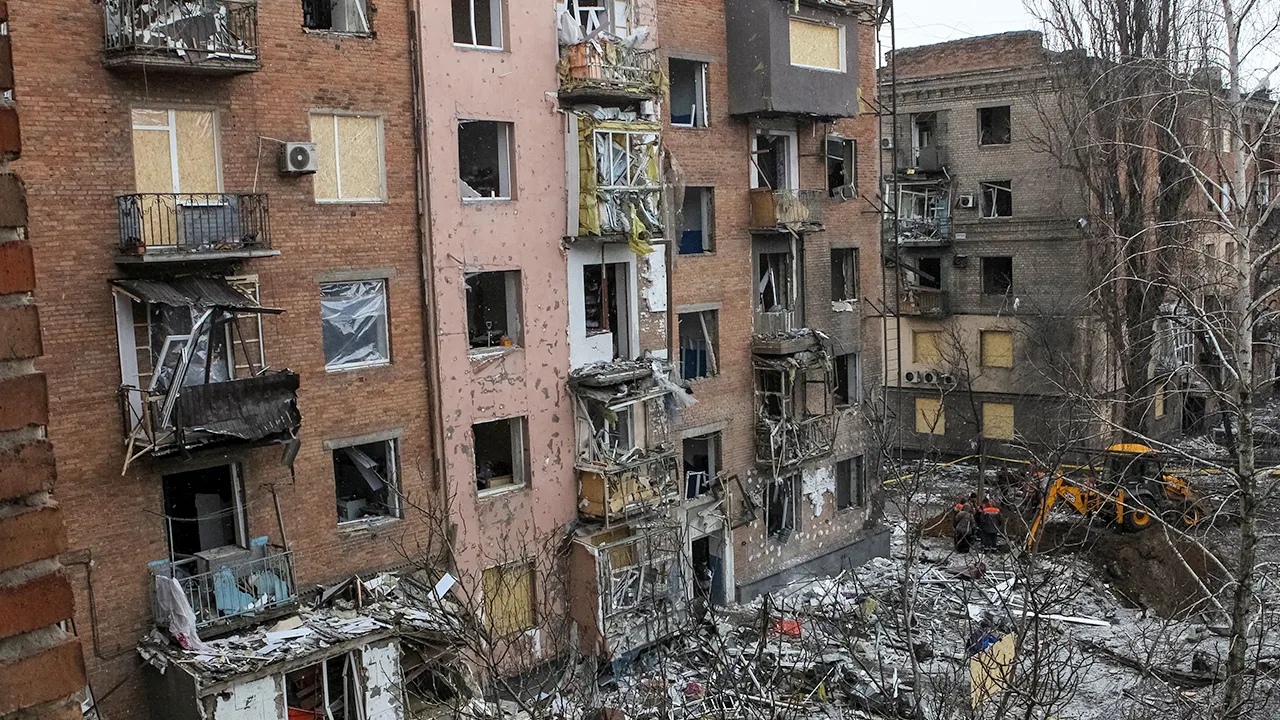
The human cost of this latest assault has been devastating. Ukrainian President Volodymyr Zelenskyy reported that at least four people were killed in Kyiv alone, including a member of an ambulance crew responding to the emergency. The attack damaged at least twenty residential buildings across affected areas, with recovery operations continuing throughout multiple regions. According to Zelenskyy, the Russian offensive involved an overwhelming array of weapons: 242 drones, 13 ballistic missiles, the Oreshnik hypersonic missile, and 22 cruise missiles. This coordinated strike targeted energy facilities and civilian infrastructure during a particularly harsh cold spell, deliberately affecting ordinary Ukrainians’ access to heating and electricity during winter – a tactic that appears designed to maximize civilian suffering beyond direct military objectives.
What makes the Oreshnik missile particularly concerning is Putin’s claim that it is impossible to intercept due to its extraordinary velocity. This technological advantage represents a troubling development in modern warfare, potentially rendering traditional air defense systems obsolete against such advanced weapons. The missile is part of a larger Russian attack that included various precision weapons launched from land and sea, demonstrating Moscow’s willingness to deploy its most sophisticated military technology against Ukrainian targets. Adding diplomatic complexity to the situation, Zelenskyy also reported damage to Qatar’s embassy building during the assault, potentially drawing more international attention to Russia’s targeting practices and raising questions about compliance with diplomatic protocols and international law.
The timing of this attack coincides with growing international debate about the path forward in the nearly four-year conflict. Zelenskyy has called for a “clear reaction from the world,” specifically emphasizing the need for the United States to send strong signals that Russia should focus on diplomacy rather than destruction. “Russia must receive signals that it is its obligation to focus on diplomacy, and must feel consequences every time it again focuses on killings and the destruction of infrastructure,” the Ukrainian president stated. This appeal comes as questions about future Western support for Ukraine intensify, with Ukrainian officials concerned about maintaining critical military and financial assistance needed to counter Russian aggression.
The disputed narrative surrounding the alleged attack on Putin’s residence highlights the information warfare dimension of this conflict. While Russia uses the claim to justify its escalation, both Ukraine and the United States have expressed serious doubts. President Trump specifically stated that he did not believe the strike occurred as described, suggesting instead that “something” unrelated happened nearby. This disagreement over basic facts underscores how challenging it has become to establish truth in a conflict where information manipulation serves strategic purposes for both sides. The contested narrative also complicates diplomatic efforts, as negotiating parties cannot even agree on the sequence and nature of events that have transpired.
As the war approaches its fourth anniversary with no clear end in sight, diplomatic solutions remain elusive despite stated commitments to peace. A State Department spokesperson reaffirmed that the United States remains dedicated to ending the war through diplomatic means, describing this approach as “the only path toward a durable peace.” The spokesperson also highlighted President Trump’s desire to end the conflict. However, with Russia continuing to deploy increasingly sophisticated weapons against Ukrainian targets while maintaining its territorial ambitions, and Ukraine determined to defend its sovereignty with Western support, the gap between diplomatic rhetoric and battlefield reality appears wider than ever. The use of the hypersonic Oreshnik missile signals Russia’s willingness to escalate rather than compromise, raising serious questions about the prospects for meaningful negotiations in the immediate future.