





Putin Reaffirms Russia’s Commitment to Ukraine Goals, Open to Diplomatic or Military Solutions
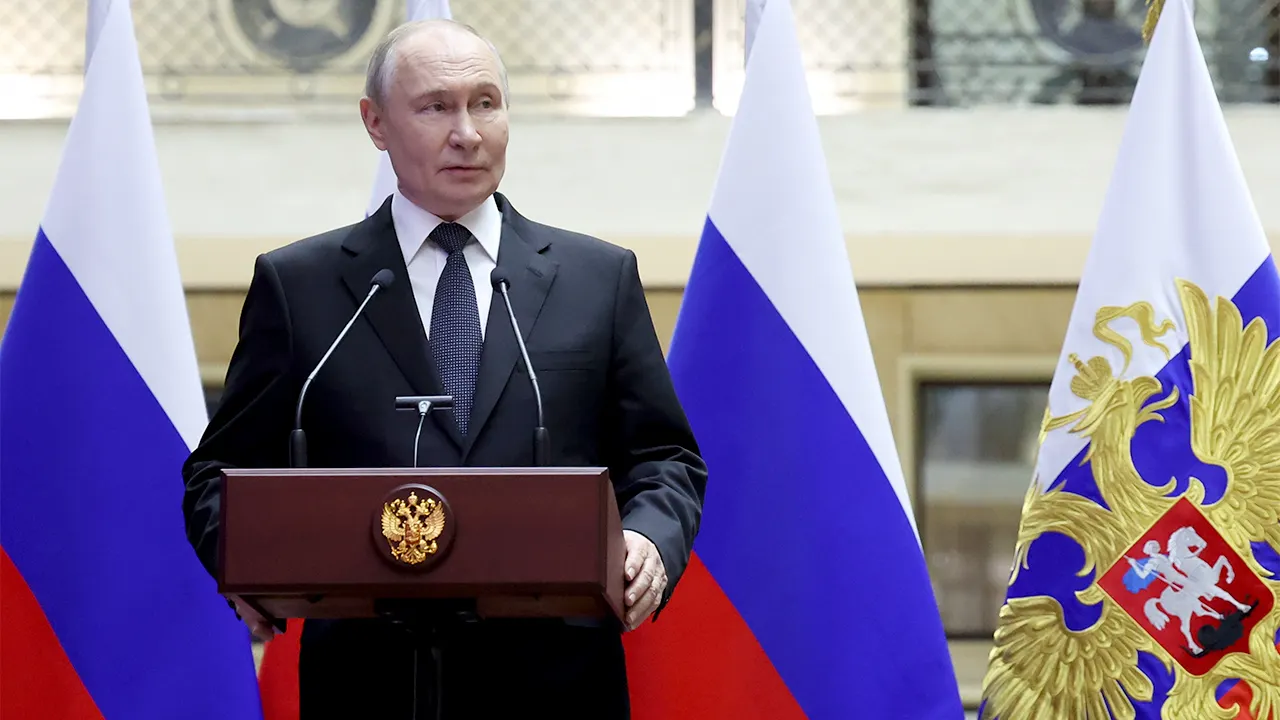
In a decisive address at the annual Defense Ministry board meeting, Russian President Vladimir Putin reaffirmed that Russia’s objectives in Ukraine remain unchanged and will be achieved one way or another. Speaking with characteristic resolve, Putin expressed a preference for diplomatic solutions while simultaneously warning that military means remain on the table if negotiations fail. “We would prefer to accomplish this and address the root causes of the conflict through diplomatic means,” Putin stated, using measured language that revealed his strategic thinking. “However, if the opposing side and its foreign patrons refuse to engage in substantive dialogue, Russia will achieve the liberation of its historical lands by military means.” This dual-track approach showcases Putin’s pragmatic stance as the conflict enters its fourth year, indicating Russia’s unwavering commitment to what it sees as protecting its historical interests.
The Russian leader’s confidence appears bolstered by what he perceives as successful military advancements and technological progress on the battlefield. Throughout his address, Putin emphasized that “the goals of the special military operation will undoubtedly be achieved,” continuing to use the Kremlin’s preferred terminology rather than acknowledging a war or invasion. This framing has been consistent since February 2022, when Russia launched what most of the international community recognizes as a full-scale invasion of Ukraine. Putin’s choice of words reflects the Kremlin’s narrative that portrays the conflict not as aggression but as a necessary security operation, a perspective that has faced widespread rejection from Western governments but remains central to Russia’s domestic justification for the prolonged military campaign.
In particularly pointed remarks, Putin directed his criticism toward European leaders, whom he dismissively referred to as “piglets,” while accusing them of manufacturing hysteria about Russian intentions as the Trump administration works toward ending the war. This colorful language came as NATO Secretary General Mark Rutte recently warned alliance members that Russia could be prepared to use military force against NATO within five years, urging increased defense spending and military production. Putin forcefully rejected such characterizations, framing them as part of a larger Western strategy. “They were hoping to profit from the collapse of our country. To get back something that was lost in previous historical periods and try to take revenge,” Putin asserted, adding with evident satisfaction that “as it has now become obvious to everyone, all these attempts and all these destructive plans towards Russia completely failed.”
The timing of Putin’s remarks is particularly significant as diplomatic efforts to end the conflict have intensified across multiple fronts. Ukrainian President Volodymyr Zelenskyy and his negotiating team recently met with Jared Kushner and U.S. special envoy Steve Witkoff in Berlin to discuss potential security guarantees for Ukraine. This meeting followed a significant five-hour discussion between Putin and the American envoys in Moscow earlier in December, where they reportedly exchanged multiple documents, including one containing 27 points that could form the basis of a peace proposal. While specific details remain confidential, these diplomatic engagements represent the most substantial peace-building efforts since the conflict began, suggesting that despite Putin’s tough rhetoric, serious behind-the-scenes negotiations are advancing.
These diplomatic maneuvers take place against a complex backdrop where the incoming Trump administration has signaled a desire to end the conflict, potentially creating new dynamics in the peace process. Putin’s recent comments suggest he sees this transition as an opportunity, having previously called Trump’s peace ideas a “starting point” while simultaneously warning Ukraine to pull back or face “force.” This balanced approach—engaging with peace proposals while maintaining military pressure—appears to be a deliberate strategy to strengthen Russia’s negotiating position. By demonstrating both willingness to talk and readiness to fight, Putin aims to secure the most favorable terms possible in any potential agreement, leveraging what he perceives as Russia’s strengthened position on the battlefield.
As the war approaches its third anniversary in February 2023, Putin’s speech reveals a leader confident in his country’s ability to withstand international pressure while pursuing what he views as Russia’s essential security interests. His simultaneous openness to diplomacy while threatening continued military action presents world leaders with both an opportunity and a challenge. The success of any peace process will likely depend on finding solutions that address Russia’s stated concerns while preserving Ukraine’s sovereignty and territorial integrity—a delicate balance that has eluded negotiators thus far. With high-level diplomatic channels now actively engaged and military operations continuing on the ground, Putin’s latest pronouncements suggest that 2023 could be a pivotal year in determining whether this devastating conflict moves toward resolution or deepens further into protracted warfare with far-reaching global consequences.