

Bulgaria’s Young Citizens Rise Up Against Budget and Corruption, Forcing Government Retreat
In a remarkable display of civic activism, tens of thousands of young Bulgarians have successfully forced their government to withdraw an unpopular draft budget planned for 2026. The protests, which swept through Sofia and other major cities across Bulgaria, represent a significant moment in the country’s ongoing struggle against corruption and economic mismanagement. The demonstrations were predominantly led by members of Generation Z who, rather than seeking to leave their homeland, are fighting to transform it into a place where they can build their futures. “Gen Z took to the streets because they want to stay in Bulgaria, but they want a renewed, different, corruption-free Bulgaria,” explained Daniel Lorer, a member of Bulgaria’s parliament, highlighting the protesters’ vision for reform rather than exodus.
The government, headed by Prime Minister Rosen Zhelyazkov, initially appeared unmoved by the demonstrations. However, as the protests intensified and gained wider public support, officials were forced to reconsider their stance. The controversial budget proposal included tax increases, higher social security contributions, and additional national debt – policies that businesses, opposition groups, and everyday citizens viewed as harmful to Bulgaria’s economic prospects, particularly as the nation prepares to adopt the Euro in early 2026. After days of sustained pressure, the government relented, promising to withdraw the most contentious elements of the budget. During a press conference, Prime Minister Zhelyazkov acknowledged the legitimacy of the protesters’ concerns: “This is a visible protest of young people who are looking for their place in the future of Bulgaria, which we are obliged to hear.”
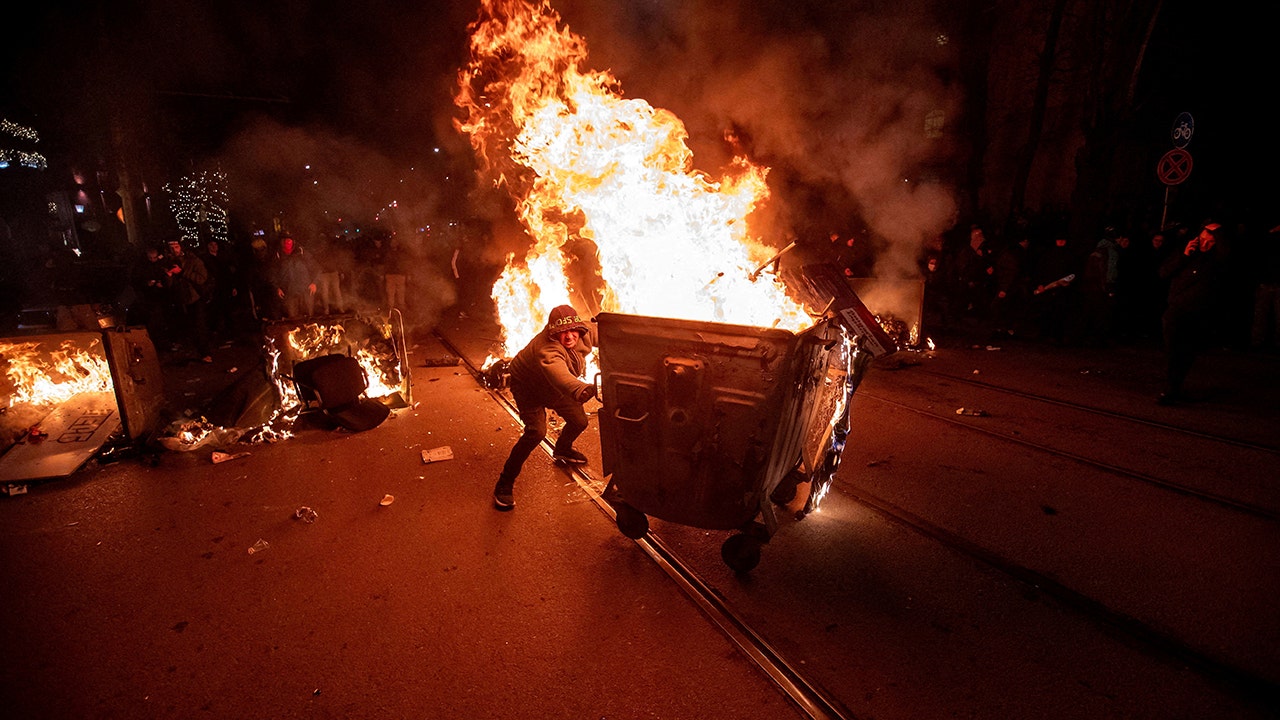
While the demonstrations remained largely peaceful, there were isolated incidents where masked protesters clashed with police and attacked offices of the ruling party in Sofia. These moments of tension underscore the depth of frustration among Bulgarians who feel their government has failed to address endemic corruption and economic inequality. The protests have also exposed political divisions within Bulgaria’s leadership. President Rumen Radev, whose role is largely ceremonial, sided with the opposition against the government’s budget proposal and called for both the resignation of the government and early elections. This stance has raised concerns among some analysts about potential political gridlock that could weaken Bulgaria’s alignment with its NATO allies and the European Union.
Bulgaria’s political instability creates a vulnerability that outside forces, particularly Russia, might seek to exploit. As a former communist bloc ally, Bulgaria maintains complex historical ties with Russia, making it susceptible to Russian interference. “Russia is always glad to stir unrest. Anything that upsets the democratic process in any EU country is welcome, and even more so in Eastern Europe, their former sphere of influence,” noted parliamentarian Lorer. Ruslan Stefanov, director for the Center for the Study of Democracy in Sofia, expressed similar concerns, pointing specifically to President Radev’s role: “Radev, who echoes Kremlin talking points and opposes the Euro, could still sabotage the process despite it being legally irreversible. This is a volatile mix that threatens stability and could invite more unwelcome Russian meddling.”
The protests unfold against the backdrop of Bulgaria’s planned adoption of the Euro in January 2026, a milestone in the country’s integration with the European Union that it joined in 2007. Despite the economic significance of joining the Eurozone, the currency change remains controversial among many Bulgarians. As the poorest nation in the European Union, Bulgaria faces unique challenges in this transition. Many citizens fear that adopting the Euro will trigger inflation and further increase their cost of living, concerns that some analysts believe have been amplified by Russian disinformation campaigns designed to undermine public confidence in European integration. Since Bulgaria formally began the process of joining the Eurozone in 2018, and its currency, the Lev, was included in the European Exchange Rate Mechanism in 2020, skepticism has persisted despite the technical progress toward monetary union.
The current wave of protests represents more than just opposition to a specific budget proposal – it reflects a generational shift in Bulgarian politics. Young Bulgarians are increasingly unwilling to accept the corruption and economic stagnation that has characterized much of their nation’s post-communist period. Rather than emigrating to seek opportunities elsewhere, as many of their predecessors did, they are demanding fundamental reforms at home. This activism presents both challenges and opportunities for Bulgaria’s future. If harnessed constructively, it could drive meaningful anti-corruption measures and economic reforms that strengthen the country’s democratic institutions and European integration. However, if political leaders fail to respond adequately to these demands, Bulgaria risks further instability and vulnerability to external influence at a critical moment in its development. As the government works to draft a new budget proposal, the world watches to see whether this popular movement will succeed in reshaping Bulgaria’s trajectory toward a more transparent and prosperous future.